
India's rare 'World Cup' insect appears once every four years, and scientists have now discovered it in a new region


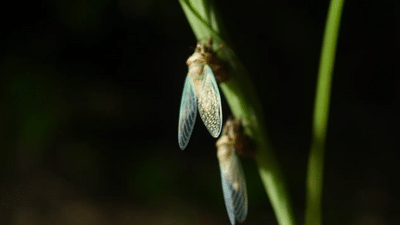
Every four years, as millions of football fans around the world turn their attention to the FIFA World Cup, a remarkable natural event unfolds in northeast India. A little-known cicada emerges from the ground on an almost identical four-year cycle, earning it the nickname the " World Cup cicada ." First described by scientists in 2013, the species has fascinated researchers because of its unusually predictable life cycle. This year, however, the insect made headlines for another reason. During a biodiversity survey , researchers recorded the World Cup cicada ( Chremistica ribhoi ) outside its known range for the first time, raising new questions about its distribution and ecology.
Which is this rare Indian insect and why does it appear with the word cup
According to Journal of Threatened Taxa, the World Cup cicada (Chremistica ribhoi) is a rare species of cicada endemic to northeast India. It was formally described in 2013 by entomologists after being discovered in Ri-Bhoi district, Meghalaya, from which it derives its scientific name. Unlike most cicadas in India, whose emergence patterns are irregular or annual, Chremistica ribhoi is known for appearing once every four years, a cycle that has closely coincided with successive FIFA World Cups. This unusual timing inspired researchers to nickname it the "World Cup cicada."
Cicadas spend most of their lives underground as nymphs, feeding on the roots of trees before emerging as adults for a brief period to mate, reproduce and die. While periodical cicadas with 13- or 17-year life cycles are well known in North America, a four-year emergence cycle is exceptionally rare and makes Chremistica ribhoi one of India's most distinctive insect species.
Why scientists are excited about its discovery in Assam
For more than a decade, the World Cup cicada had only been documented in Meghalaya mostly. However, during a recent field assessment around the Rani Reserve Forest in neighbouring Assam, wildlife biologist Pulakeswar Basumatary, along with Langtuk Terang of Pragjyotish College, research scholar Mann Kumar Thapa, M.Sc. student Lakhinandan Dutta and butterfly researcher Rajat Joshi, recorded the species beyond its previously known range. They were only spotted in northern parts of West Bengal from the year March 2014 to May 2019 and in Assam in the year 2017 and 2018 where the cicadas were only recorded and observed but not collected.
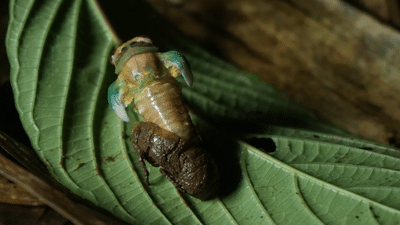
The finding suggests that the cicada's distribution may be broader than scientists had previously believed. It also highlights how biodiversity surveys continue to uncover overlooked species in the forests of northeast India, one of the world's recognised biodiversity hotspots. Researchers believe further studies are needed to determine whether the Assam population has long existed unnoticed or whether the species is gradually expanding its range.
Which is this rare Indian insect and why does it appear with the word cup
According to Journal of Threatened Taxa, the World Cup cicada (Chremistica ribhoi) is a rare species of cicada endemic to northeast India. It was formally described in 2013 by entomologists after being discovered in Ri-Bhoi district, Meghalaya, from which it derives its scientific name. Unlike most cicadas in India, whose emergence patterns are irregular or annual, Chremistica ribhoi is known for appearing once every four years, a cycle that has closely coincided with successive FIFA World Cups. This unusual timing inspired researchers to nickname it the "World Cup cicada."
Cicadas spend most of their lives underground as nymphs, feeding on the roots of trees before emerging as adults for a brief period to mate, reproduce and die. While periodical cicadas with 13- or 17-year life cycles are well known in North America, a four-year emergence cycle is exceptionally rare and makes Chremistica ribhoi one of India's most distinctive insect species.
Why scientists are excited about its discovery in Assam
For more than a decade, the World Cup cicada had only been documented in Meghalaya mostly. However, during a recent field assessment around the Rani Reserve Forest in neighbouring Assam, wildlife biologist Pulakeswar Basumatary, along with Langtuk Terang of Pragjyotish College, research scholar Mann Kumar Thapa, M.Sc. student Lakhinandan Dutta and butterfly researcher Rajat Joshi, recorded the species beyond its previously known range. They were only spotted in northern parts of West Bengal from the year March 2014 to May 2019 and in Assam in the year 2017 and 2018 where the cicadas were only recorded and observed but not collected.
The finding suggests that the cicada's distribution may be broader than scientists had previously believed. It also highlights how biodiversity surveys continue to uncover overlooked species in the forests of northeast India, one of the world's recognised biodiversity hotspots. Researchers believe further studies are needed to determine whether the Assam population has long existed unnoticed or whether the species is gradually expanding its range.
Next Story