
Killer Orca Whale Tahlequah's 'tour of grief': The story of a 'grieving' mother who carried her dead calf for 1,600 kms over 17 days


Humans are considered creatures with great emotional intelligence, caring deeply for their young and loved ones. However, we rarely realise that animals, including those swimming through vast waters, can also care for their young so deeply that their actions can move even the hardest of human hearts.
One such incident is about a killer orca whale spotted in the summer of 2018, in the waters off the Pacific Northwest, that did something which made scientists pause.
The heart-wrenching story of Tahlequah, the orca mother who wouldn't let go
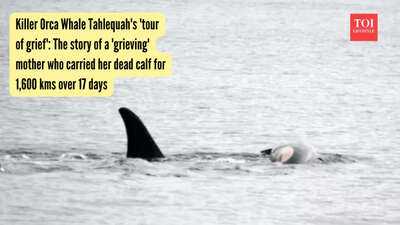
In July 2018, a calf was born to a southern resident killer whale named Tahlequah, also known to researchers as J35, off the coast of Victoria, British Columbia. The baby lived only briefly. Within half an hour of her birth, her mother was seen pushing the newborn's body to the surface, according to the Center for Whale Research, the Washington state-based organisation that has tracked this population of orcas for decades.
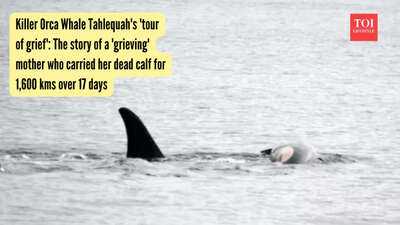
What happened next could make even the stone-hearted teary-eyed. Tahlequah carried her dead calf on her head and nose for at least 17 days, travelling more than 1,600 kilometres through the Salish Sea. She would balance the small body on her rostrum, occasionally letting it slip beneath the surface before diving to retrieve it again.
The ‘tour of grief’
The behaviour was called a "tour of grief" by scientists, and it became one of the most talked-about moments in wildlife research in years. Ken Balcomb, the late founding director of the Center for Whale Research, described the toll the ordeal was taking on Tahlequah at the time. When she finally released the calf's body in August 2018, Balcomb wrote in an email to the Seattle Times, later shared publicly, that the ordeal of her carrying a dead calf for at least seventeen days and 1,000 miles was finally over, adding that he was thankful for it.
Researchers said that as the days wore on, Tahlequah appeared to tire under the physical strain of keeping her calf's body afloat, since orca calves can weigh well over 180 kilograms. According to Fox 13 Seattle, other members of her family took turns supporting her during this period, helping carry the deceased calf so she could be relieved.
The whale showed the same behaviour yet again
One such incident is about a killer orca whale spotted in the summer of 2018, in the waters off the Pacific Northwest, that did something which made scientists pause.
The heart-wrenching story of Tahlequah, the orca mother who wouldn't let go
In July 2018, a calf was born to a southern resident killer whale named Tahlequah, also known to researchers as J35, off the coast of Victoria, British Columbia. The baby lived only briefly. Within half an hour of her birth, her mother was seen pushing the newborn's body to the surface, according to the Center for Whale Research, the Washington state-based organisation that has tracked this population of orcas for decades.
What happened next could make even the stone-hearted teary-eyed. Tahlequah carried her dead calf on her head and nose for at least 17 days, travelling more than 1,600 kilometres through the Salish Sea. She would balance the small body on her rostrum, occasionally letting it slip beneath the surface before diving to retrieve it again.
The ‘tour of grief’
The behaviour was called a "tour of grief" by scientists, and it became one of the most talked-about moments in wildlife research in years. Ken Balcomb, the late founding director of the Center for Whale Research, described the toll the ordeal was taking on Tahlequah at the time. When she finally released the calf's body in August 2018, Balcomb wrote in an email to the Seattle Times, later shared publicly, that the ordeal of her carrying a dead calf for at least seventeen days and 1,000 miles was finally over, adding that he was thankful for it.
Researchers said that as the days wore on, Tahlequah appeared to tire under the physical strain of keeping her calf's body afloat, since orca calves can weigh well over 180 kilograms. According to Fox 13 Seattle, other members of her family took turns supporting her during this period, helping carry the deceased calf so she could be relieved.
The whale showed the same behaviour yet again
Next Story