
Kākāpō: The World’s Heaviest Parrot And Its Unique Lifestyle

The kākāpō is no ordinary parrot. Native to New Zealand, it holds the title of the world’s heaviest parrot and is famously flightless. Its unique appearance, nocturnal habits, and quirky behaviour have captured the fascination of scientists and bird enthusiasts alike. Despite its heavy body and inability to fly, the kākāpō has a remarkable story of survival and conservation.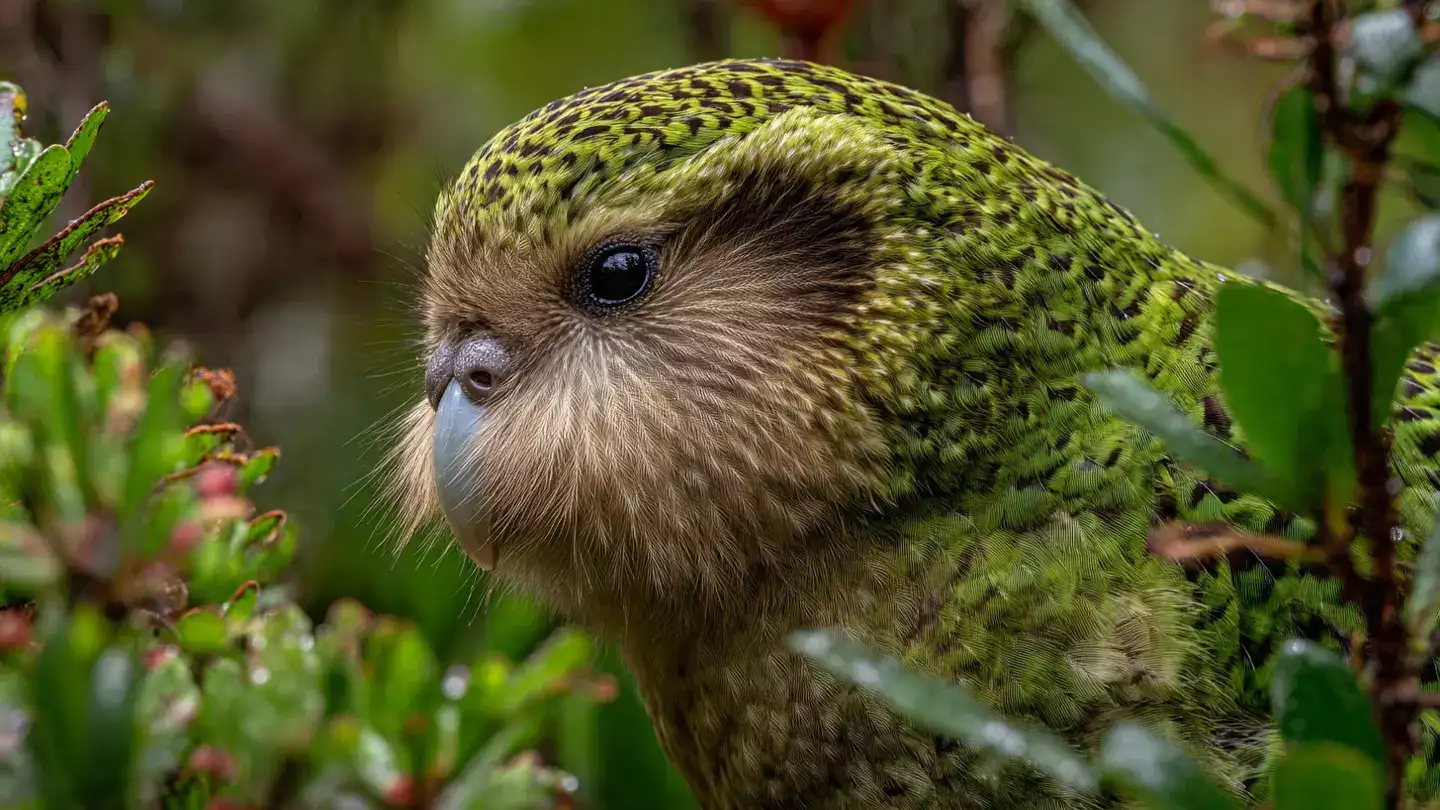
Kākāpōs are large, green-feathered parrots with a distinctive owl-like face. Adult birds can weigh up to 4 kilograms (around 9 pounds), making them the heaviest parrots on Earth. Unlike most parrots, kākāpōs are nocturnal and ground-dwelling, meaning they are active at night and spend most of their time on the forest floor. This unusual lifestyle evolved due to the absence of land mammals in New Zealand before humans arrived.
Read More: How Some Species Survive Without Deep Sleep
One of the most fascinating facts about the kākāpō is that it cannot fly. Its wings are relatively small compared to its heavy body, so instead of flying, it uses them for balance and support while climbing trees or gliding short distances. Its flightlessness, while unusual among parrots, allowed it to thrive in predator-free habitats until humans and introduced species like cats and rats arrived, putting the species at risk of extinction.
Kākāpōs also have a unique breeding system known as a lek mating system. Males gather in special display arenas and attract females with booming calls that can travel over several kilometres. The females then choose their mates based on these calls. This behaviour, along with their low reproductive rate, made population recovery challenging for decades.
Thanks to intensive conservation efforts, including predator-free sanctuaries and close monitoring by scientists, the kākāpō population has slowly increased. Today, there are just over 300 individuals, making the species critically endangered but slowly recovering. Conservationists continue to protect their habitats and support breeding programs to ensure this extraordinary parrot survives for future generations.
The kākāpō is more than just a quirky, flightless parrot . It represents the resilience of nature and the importance of human intervention in preserving endangered species. From its heavy body and nocturnal habits to its unique mating calls, the kākāpō is a remarkable symbol of New Zealand’s wildlife heritage.
Kākāpōs are large, green-feathered parrots with a distinctive owl-like face. Adult birds can weigh up to 4 kilograms (around 9 pounds), making them the heaviest parrots on Earth. Unlike most parrots, kākāpōs are nocturnal and ground-dwelling, meaning they are active at night and spend most of their time on the forest floor. This unusual lifestyle evolved due to the absence of land mammals in New Zealand before humans arrived.
Read More: How Some Species Survive Without Deep Sleep
You may also like
- Euphoria Season 3 Dialogues: Zendaya's Brutal Dialogues Signals a Dark New Beginning
- Parents spot son on a poster for the first time; he says, 'This moment means everything'
- A Great Opportunity to Get a PAN Card: Apply Using Just Your Aadhaar—March 31st is the Deadline...
- Digital Door Lock: Preventing Accidents While Ensuring Security—Here Is the Emergency Exit Solution for Smart Locks..
- How to Book Online Darshan at Jhandewalan Mata Temple? Here is the Complete Process—No More Standing in Long Queues..
One of the most fascinating facts about the kākāpō is that it cannot fly. Its wings are relatively small compared to its heavy body, so instead of flying, it uses them for balance and support while climbing trees or gliding short distances. Its flightlessness, while unusual among parrots, allowed it to thrive in predator-free habitats until humans and introduced species like cats and rats arrived, putting the species at risk of extinction.
Kākāpōs also have a unique breeding system known as a lek mating system. Males gather in special display arenas and attract females with booming calls that can travel over several kilometres. The females then choose their mates based on these calls. This behaviour, along with their low reproductive rate, made population recovery challenging for decades.
Thanks to intensive conservation efforts, including predator-free sanctuaries and close monitoring by scientists, the kākāpō population has slowly increased. Today, there are just over 300 individuals, making the species critically endangered but slowly recovering. Conservationists continue to protect their habitats and support breeding programs to ensure this extraordinary parrot survives for future generations.
The kākāpō is more than just a quirky, flightless parrot . It represents the resilience of nature and the importance of human intervention in preserving endangered species. From its heavy body and nocturnal habits to its unique mating calls, the kākāpō is a remarkable symbol of New Zealand’s wildlife heritage.






More from our partners


Loving Newspoint? Download the app now
