
Madagascar Hissing Cockroach: Meet the Giant Insect That Makes a Snake-Like Sound

The Madagascar hissing cockroach is unlike the ordinary cockroaches that occasionally appear in our homes. This unusual giant insect has no wings, can grow up to 3 inches long and produces a surprisingly loud hissing sound that resembles a snake. Found in the forests of Madagascar, this fascinating species has several unusual characteristics, from its fighting behaviour to the way it gives birth. Despite its intimidating appearance, it is not a household pest and plays an important role in its natural ecosystem.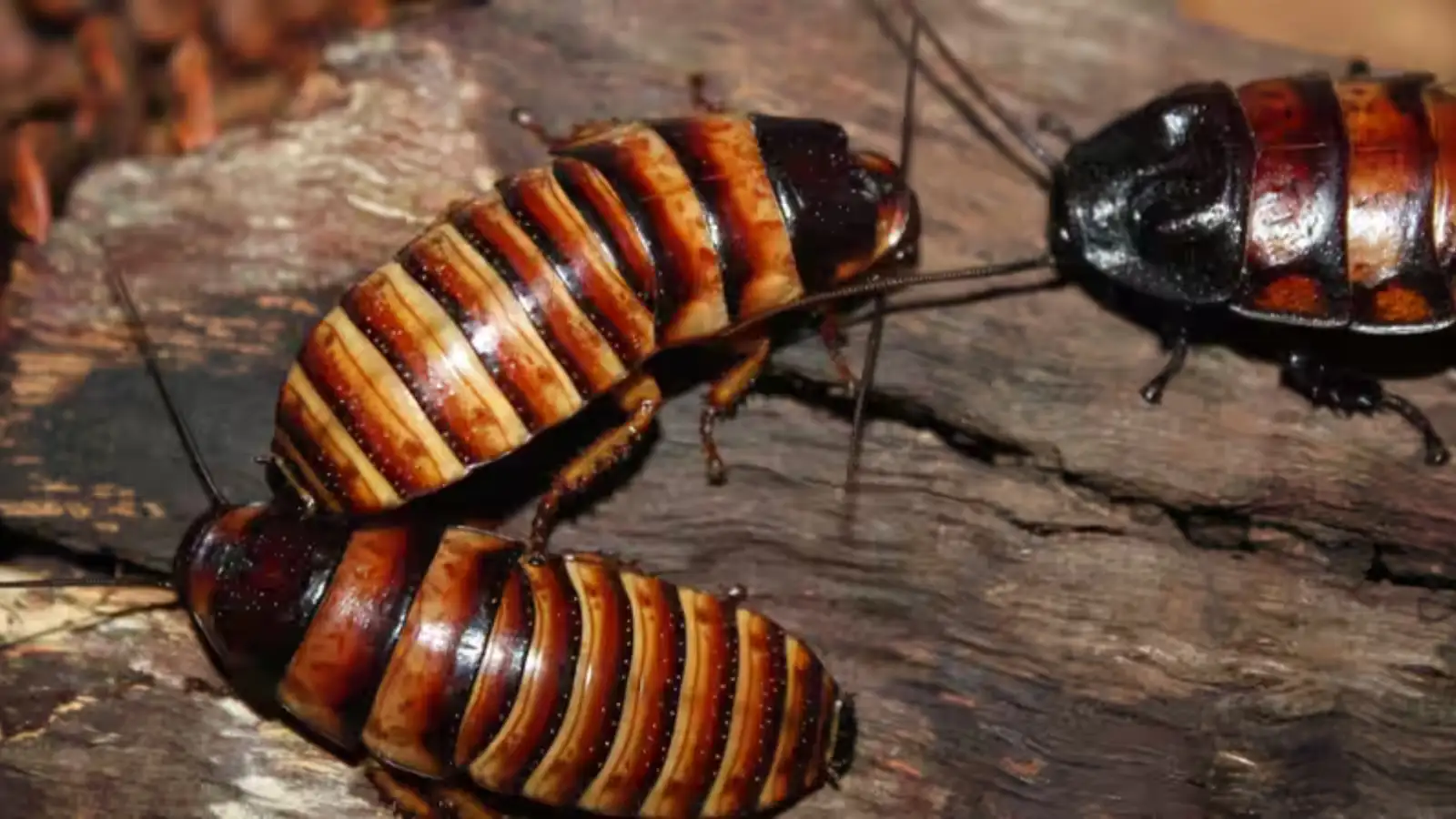
The Madagascar hissing cockroach is among the most unusual members of this group. Native to the island of Madagascar, it is considered one of the world's largest cockroach species . An adult can measure around 2 to 3 inches (5 to 7.5 cm) in length, making it considerably bigger than the common cockroaches found in households.
However, its size is not the only thing that makes this insect fascinating. Its ability to produce different types of hissing sounds has earned it a distinctive place in the animal kingdom.
According to Peoria Zoo, male and female Madagascar hissing cockroaches also have visible physical differences. Males have prominent horns on their heads, while females have comparatively flatter heads.
These horns are not just for appearance. Male cockroaches use them during fights with other males, particularly when competing for dominance and access to females.
According to the Smithsonian, citing Animal Diversity Web and other zoo sources, this cockroach produces sound by forcing air through small breathing openings called spiracles on its abdomen. This method of producing sound through the respiratory system is more commonly associated with vertebrates, or animals that have backbones.
Its hissing is not limited to one situation. The insect produces different sounds depending on what is happening around it. An alarm hiss helps frighten potential threats, while males use aggressive hissing during confrontations with rivals. A long, slow hiss is also associated with courtship and attracting females.
These encounters can resemble fights between horned mammals, with the rivals charging at each other and attempting to push their opponents away using their horns.
Interestingly, research observations suggest that victorious males tend to hiss more frequently than those that lose these contests. These sounds may help establish dominance and determine the social standing of individual males.
Despite their aggressive appearance, such fights generally do not result in significant physical injuries.
Unlike household cockroaches, this species does not typically invade kitchens, bathrooms or other human living spaces. It naturally inhabits forest environments, where it hides beneath fallen leaves, logs and other organic material.
The insect is primarily nocturnal, meaning it is more active at night. Its diet mainly consists of fruits and plant matter found on the forest floor.
It also contributes to the rainforest ecosystem by helping break down decaying organic material and returning nutrients to the environment. This makes it an important part of its natural habitat rather than a household nuisance.
Female Madagascar hissing cockroaches produce an egg case known as an ootheca. However, instead of leaving it outside to hatch, they retain the egg case inside their bodies until the young are ready to emerge.
As a result, the females give birth to live young rather than laying eggs that hatch externally.
According to National Geographic, a female can give birth to as many as 60 babies, which are known as nymphs. These young cockroaches gradually grow and develop into adults.
This reproductive behaviour is another reason why the Madagascar hissing cockroach stands out among the thousands of cockroach species found around the world.
It also serves as a reminder that cockroaches are an incredibly diverse group of insects, and not every species deserves the bad reputation associated with the ones found in our homes.
What Is The Madagascar Hissing Cockroach?
Not all cockroaches are the unwanted insects we associate with dirty corners and kitchen cupboards. The insect world is home to thousands of cockroach species, many of which live far away from human settlements.The Madagascar hissing cockroach is among the most unusual members of this group. Native to the island of Madagascar, it is considered one of the world's largest cockroach species . An adult can measure around 2 to 3 inches (5 to 7.5 cm) in length, making it considerably bigger than the common cockroaches found in households.
However, its size is not the only thing that makes this insect fascinating. Its ability to produce different types of hissing sounds has earned it a distinctive place in the animal kingdom.
What Does A Madagascar Hissing Cockroach Look Like?
The Madagascar hissing cockroach has a shiny, brown, oval-shaped body and a pair of antennae. One of its most noticeable features is that it does not have wings, unlike several other cockroach species.According to Peoria Zoo, male and female Madagascar hissing cockroaches also have visible physical differences. Males have prominent horns on their heads, while females have comparatively flatter heads.
These horns are not just for appearance. Male cockroaches use them during fights with other males, particularly when competing for dominance and access to females.
Why Does This Cockroach Make A Hissing Sound?
The most remarkable feature of this insect is its ability to hiss like a snake. Unlike crickets and several other noisy insects that create sounds by rubbing body parts together, the Madagascar hissing cockroach uses a completely different technique.According to the Smithsonian, citing Animal Diversity Web and other zoo sources, this cockroach produces sound by forcing air through small breathing openings called spiracles on its abdomen. This method of producing sound through the respiratory system is more commonly associated with vertebrates, or animals that have backbones.
Its hissing is not limited to one situation. The insect produces different sounds depending on what is happening around it. An alarm hiss helps frighten potential threats, while males use aggressive hissing during confrontations with rivals. A long, slow hiss is also associated with courtship and attracting females.
Male Cockroaches Use Their Horns To Fight Rivals
The Madagascar hissing cockroach has an interesting social behaviour, particularly among males. Their prominent horns become useful weapons when two males compete for territory or the attention of females.These encounters can resemble fights between horned mammals, with the rivals charging at each other and attempting to push their opponents away using their horns.
Interestingly, research observations suggest that victorious males tend to hiss more frequently than those that lose these contests. These sounds may help establish dominance and determine the social standing of individual males.
Despite their aggressive appearance, such fights generally do not result in significant physical injuries.
Are Madagascar Hissing Cockroaches Dangerous Household Pests?
Although the name cockroach is enough to make many people uncomfortable, the Madagascar hissing cockroach is very different from the insects commonly found inside homes.Unlike household cockroaches, this species does not typically invade kitchens, bathrooms or other human living spaces. It naturally inhabits forest environments, where it hides beneath fallen leaves, logs and other organic material.
The insect is primarily nocturnal, meaning it is more active at night. Its diet mainly consists of fruits and plant matter found on the forest floor.
It also contributes to the rainforest ecosystem by helping break down decaying organic material and returning nutrients to the environment. This makes it an important part of its natural habitat rather than a household nuisance.
How Do Madagascar Hissing Cockroaches Give Birth?
Another surprising characteristic of this species is its unusual reproductive process.Female Madagascar hissing cockroaches produce an egg case known as an ootheca. However, instead of leaving it outside to hatch, they retain the egg case inside their bodies until the young are ready to emerge.
As a result, the females give birth to live young rather than laying eggs that hatch externally.
According to National Geographic, a female can give birth to as many as 60 babies, which are known as nymphs. These young cockroaches gradually grow and develop into adults.
This reproductive behaviour is another reason why the Madagascar hissing cockroach stands out among the thousands of cockroach species found around the world.
A Cockroach That Is More Fascinating Than Frightening
From its impressive size and horned appearance to its snake-like hissing and unusual reproductive habits, the Madagascar hissing cockroach is certainly not an ordinary insect. While its appearance may be intimidating, it is a forest-dwelling species that plays a useful role in maintaining the health of its ecosystem.It also serves as a reminder that cockroaches are an incredibly diverse group of insects, and not every species deserves the bad reputation associated with the ones found in our homes.
Next Story