
How to Ferment Dosa Batter Perfectly for Crispy, Light Dosas

A well-fermented dosa batter has a faintly sour smell, a surface dotted with small bubbles, and a consistency that pours like thin cream. When it hits a hot tawa, the moisture turns to steam fast enough to lift the batter from below, giving you that characteristic lace of holes and a crisp underside. Without fermentation, none of that happens. The batter stays dense, sticks, and tears.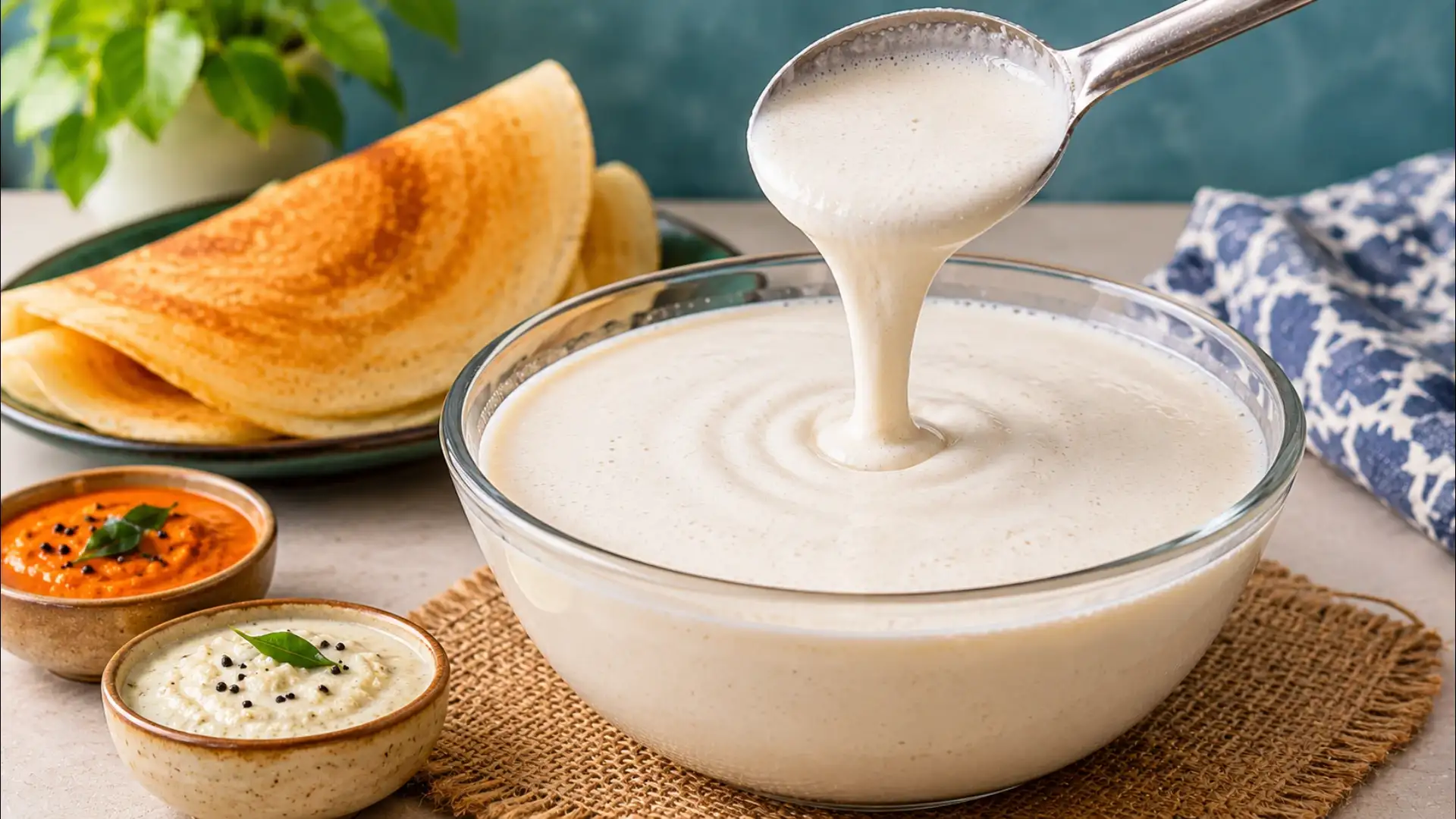
Soak the rice for at least four hours and the dal for three to four. Grind the dal first, adding cold water in small pours, until it becomes a thick, airy paste that almost looks whipped. That aeration is not cosmetic, it traps oxygen that the microbes will use in the early hours of fermentation. Grind the rice separately to a slightly coarser texture, then combine both and mix by hand for a minute or two. The warmth of your hands and the mechanical action of mixing helps distribute the microbial population evenly through the batter.
In a warm Indian kitchen in summer, eight hours is usually enough. In a cooler kitchen or during winter, the batter may need twelve to fourteen hours, or longer. The fix for a cold kitchen is not to add more time blindly, it is to find warmth. A switched-off oven with just the light on holds a gentle, consistent heat. Wrapping the vessel in a thick cloth helps. Some cooks place the bowl inside a larger vessel of warm water, changing the water once if the kitchen is very cold. The goal is a stable environment, not a hot one.
Before spreading on the tawa, add salt and mix gently. Salt goes in after fermentation, not before, because salt inhibits microbial activity and slows the process if added to the raw batter. The consistency for pouring should be thinner than the fermented batter as it comes out of the vessel, add a little water and stir until it spreads easily when you tilt the bowl.
Leave it alone. The dosa is ready to flip only when the edges have lifted from the surface on their own and the top looks dry and set. Trying to flip before that point tears it. A thin dosa cooked this way will be crisp on the bottom, lacy with holes, and light enough to roll without cracking.
The fermentation and the tawa are two halves of the same process. The batter builds the structure; the heat reveals it. Get the batter right, and the tawa does the rest almost on its own.
The Role of Rice and Lentils in the Batter
The standard ratio is three parts raw rice to one part urad dal, though some cooks use a small addition of poha or cooked rice to soften the texture. The urad dal is what drives fermentation. Its skin carries the wild yeast and bacteria that will multiply overnight. Soaking the dal and rice separately matters because they need different grinding times and because the dal's natural microbes are more concentrated when they are not diluted by the starch of the rice from the start.Soak the rice for at least four hours and the dal for three to four. Grind the dal first, adding cold water in small pours, until it becomes a thick, airy paste that almost looks whipped. That aeration is not cosmetic, it traps oxygen that the microbes will use in the early hours of fermentation. Grind the rice separately to a slightly coarser texture, then combine both and mix by hand for a minute or two. The warmth of your hands and the mechanical action of mixing helps distribute the microbial population evenly through the batter.
What Temperature Actually Does to Fermentation
Fermentation is driven by lactobacillus bacteria and wild yeasts, and both are sensitive to temperature. The ideal range is roughly 28 to 32 degrees Celsius. In that band, the bacteria produce lactic acid steadily and the yeast produces carbon dioxide, which is what makes the batter rise and bubble. Below 25 degrees, activity slows sharply. Above 35, the bacteria can outpace the yeast, producing too much acid too quickly and giving the batter a sharp, unpleasant sourness rather than the mild tang that belongs in a good dosa.In a warm Indian kitchen in summer, eight hours is usually enough. In a cooler kitchen or during winter, the batter may need twelve to fourteen hours, or longer. The fix for a cold kitchen is not to add more time blindly, it is to find warmth. A switched-off oven with just the light on holds a gentle, consistent heat. Wrapping the vessel in a thick cloth helps. Some cooks place the bowl inside a larger vessel of warm water, changing the water once if the kitchen is very cold. The goal is a stable environment, not a hot one.
Reading the Batter Before You Cook
Fermented batter rises noticeably, expect it to increase in volume by roughly a third to half. The surface will have bubbles, and when you stir it, you will hear and feel a faint effervescence. The smell should be pleasantly sour, like mild yogurt, not sharp or alcoholic. If it smells strongly of alcohol, it has over-fermented; the yeast has dominated and the flavour will be off. You can still use it, but mix in a little fresh ground rice paste to dilute and balance it.Before spreading on the tawa, add salt and mix gently. Salt goes in after fermentation, not before, because salt inhibits microbial activity and slows the process if added to the raw batter. The consistency for pouring should be thinner than the fermented batter as it comes out of the vessel, add a little water and stir until it spreads easily when you tilt the bowl.
The Tawa and the Spread
A cast iron tawa holds heat more evenly than non-stick and gives a better crust, though non-stick works. Heat it until a drop of water skitters and evaporates in under two seconds. Wipe the surface with a cut onion dipped in a little oil, the onion seasons the surface and the oil prevents sticking without pooling. Pour a ladleful of batter in the centre and use the back of the ladle to spread it outward in a continuous spiral. Work quickly and with light pressure. The batter sets as you spread, so hesitation shows up as thick patches.Leave it alone. The dosa is ready to flip only when the edges have lifted from the surface on their own and the top looks dry and set. Trying to flip before that point tears it. A thin dosa cooked this way will be crisp on the bottom, lacy with holes, and light enough to roll without cracking.
The fermentation and the tawa are two halves of the same process. The batter builds the structure; the heat reveals it. Get the batter right, and the tawa does the rest almost on its own.