
How to Be a Good Guest at an Indian Wedding

An Indian wedding is not one event. It is a series of events, each with its own dress code, its own mood, and its own etiquette that the host family considers obvious but almost never explains. Navigating all of it gracefully is less about knowing every rule and more about reading the room early and staying curious rather than certain.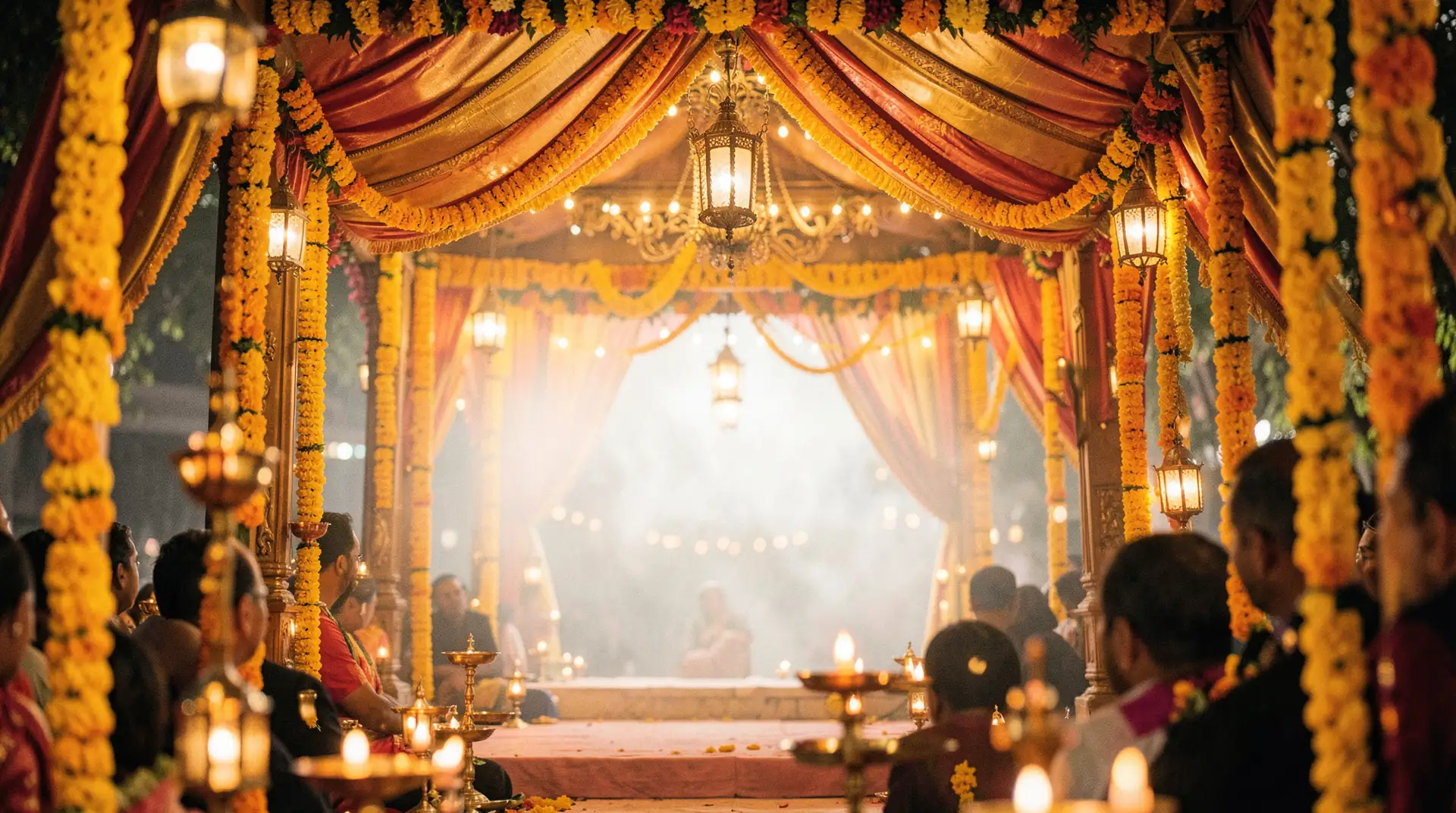
A simple habit: ask the host which function has a hard start and treat only that one as a fixed appointment. For everything else, showing up within the first hour is enough. Walking in too early to a function that is still being set up creates awkward work for the family.
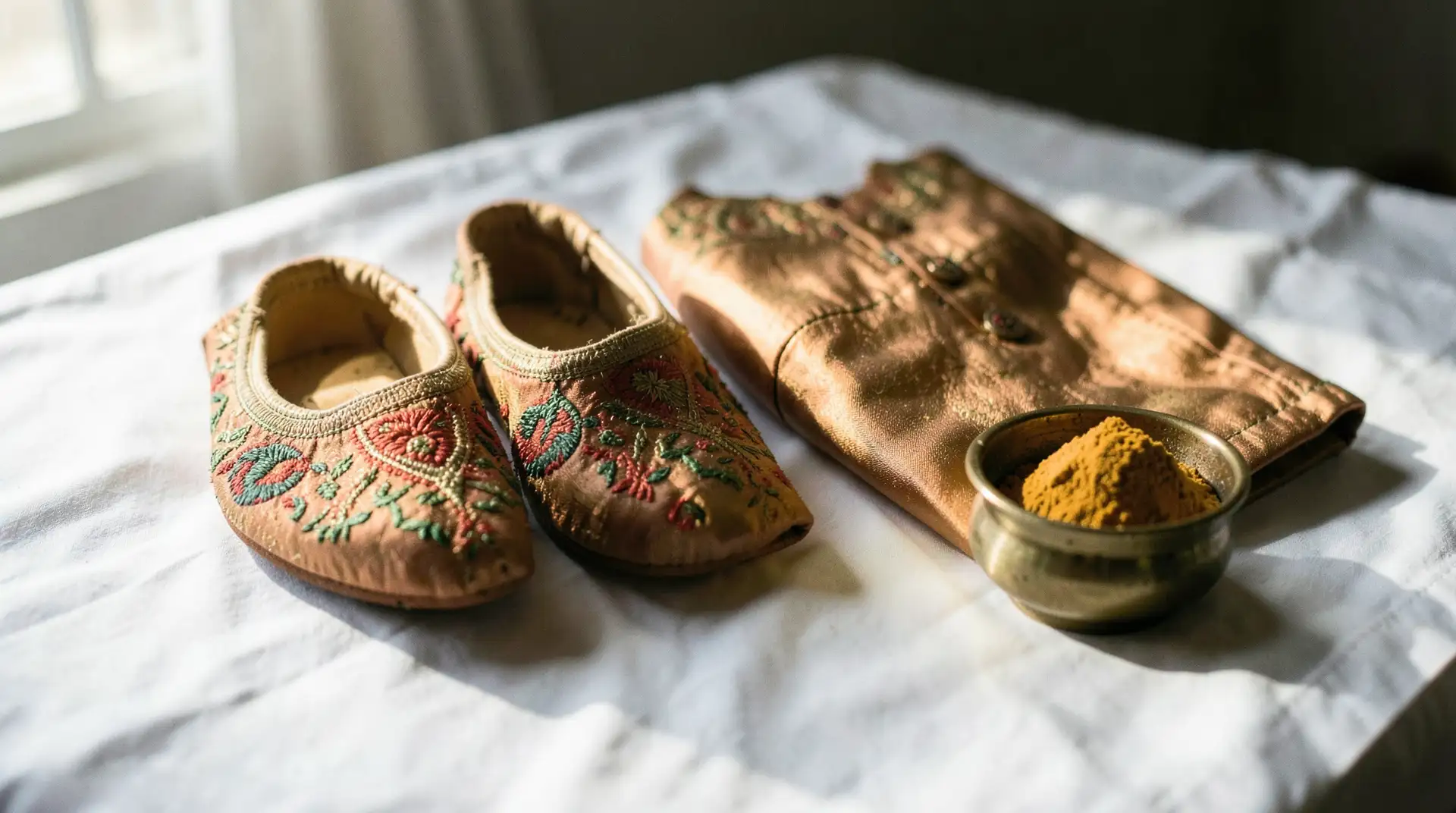
Wearing your most elaborate outfit to the haldi and then having nothing left for the wedding is a common mistake. Wearing white to the ceremony in communities where white is worn by the family in mourning is a sharper one. When in doubt about colour, ask someone from the family a week before. They will always appreciate that you asked.
A general principle that holds across most Indian weddings: match the energy of the function. Overdressing at a casual pre-function makes the hosts feel their event was not enough. Underdressing at the ceremony signals that you did not take it seriously.
The amount inside an envelope is a private matter. There is no correct number that works across regions, communities, or relationships. What matters is that the gift reflects your relationship with the family, not what you think others are giving. Asking a mutual friend what is typical for this family's circle is a reasonable thing to do and no one will think less of you for it.
Hand the envelope to the couple or to a family member who is clearly managing gifts. Do not leave it on a table and walk away.
The line between being helpful and inserting yourself into the family's management is real. Do not rearrange seating, do not give instructions to the caterer, and do not start coordinating logistics unless someone in the family has explicitly asked you to. The family has a plan, even when it looks like they do not.
One of the quietest ways to be a good guest is to keep the mood up in your corner of the room. Not every guest can be near the mandap. The ones who make the distant tables feel warm and included are remembered.
A practical rule: keep your phone down during any ritual that has a clear focal point. Photograph the food, the decor, the candid moments at the table. For the ceremony itself, trust the professionals.
Before posting anything publicly, especially photos of the couple or of children at the wedding, ask. Some families are private. Some couples want to share their own photos first. A quick message costs nothing and avoids a situation that is genuinely hard to walk back.
The thread that runs through all of it is this: the family has spent months building something that lasts one night. A good guest shows up having thought about it for more than five minutes. That alone puts you in a small and appreciated category.
Arrive With the Right Timing for Each Function
The haldi is casual and runs on its own clock. The mehendi is relaxed but has a loose start. The baraat waits for no one. The pheras have a sequence that cannot be interrupted. Arriving thirty minutes late to a reception is fine. Arriving thirty minutes late to the wedding ceremony itself means walking in during the pheras, which pulls attention at the worst possible moment.A simple habit: ask the host which function has a hard start and treat only that one as a fixed appointment. For everything else, showing up within the first hour is enough. Walking in too early to a function that is still being set up creates awkward work for the family.
Dress for the Function, Not Just the Wedding
Indian weddings have a dress hierarchy that most guests ignore. The haldi calls for yellow or white, often cotton, because turmeric stains everything. The mehendi is festive but not formal. The wedding ceremony itself is where guests dress at their most formal. The reception is slightly more relaxed than the ceremony but still elevated.Wearing your most elaborate outfit to the haldi and then having nothing left for the wedding is a common mistake. Wearing white to the ceremony in communities where white is worn by the family in mourning is a sharper one. When in doubt about colour, ask someone from the family a week before. They will always appreciate that you asked.
A general principle that holds across most Indian weddings: match the energy of the function. Overdressing at a casual pre-function makes the hosts feel their event was not enough. Underdressing at the ceremony signals that you did not take it seriously.
Understand the Gift Before You Give It
The envelope with cash is the most practical gift at an Indian wedding, and in most communities it is the preferred one. The family is managing a hundred logistics; a toaster they did not choose adds to the pile. If you want to give something personal, coordinate with someone close to the couple to avoid duplicates.The amount inside an envelope is a private matter. There is no correct number that works across regions, communities, or relationships. What matters is that the gift reflects your relationship with the family, not what you think others are giving. Asking a mutual friend what is typical for this family's circle is a reasonable thing to do and no one will think less of you for it.
Hand the envelope to the couple or to a family member who is clearly managing gifts. Do not leave it on a table and walk away.
You may also like
- 'Held him in my arms when he died': How Justine Wilson, Elon Musk's ex-wife and Canadian author, coped with their son Nevada Alexander's death
- Study Identifies New Clues Behind More Aggressive Colon Cancer in Younger Adults
- Diwali 2026: Why Is the Festival Celebrated on Amavasya? Know the Religious Significance of the New Moon Night
- Heart Murmurs in Small Dogs: What the Grade Means and When to Act
- Cancer in Dogs: Which Lumps Need a Needle Aspirate and Why Waiting Fails
Be Useful Without Taking Over
A good guest at an Indian wedding is not a passive spectator. If you are close to the family, there will be moments where an extra pair of hands is genuinely needed: helping a grandparent to a seat, guiding an out-of-town guest to the right function, holding something for thirty seconds while someone adjusts a dupatta.The line between being helpful and inserting yourself into the family's management is real. Do not rearrange seating, do not give instructions to the caterer, and do not start coordinating logistics unless someone in the family has explicitly asked you to. The family has a plan, even when it looks like they do not.
One of the quietest ways to be a good guest is to keep the mood up in your corner of the room. Not every guest can be near the mandap. The ones who make the distant tables feel warm and included are remembered.
Photograph Thoughtfully and Ask Before You Post
Every Indian wedding now has a professional photographer and a videographer. They have a shot list, a timeline, and a couple who has paid for specific moments to be captured in a specific way. Walking into the frame during the pheras, holding up your phone during the varmala, or standing in the aisle to get your own shot of the bride's entry, all of these cost the couple a moment they cannot get back.A practical rule: keep your phone down during any ritual that has a clear focal point. Photograph the food, the decor, the candid moments at the table. For the ceremony itself, trust the professionals.
Before posting anything publicly, especially photos of the couple or of children at the wedding, ask. Some families are private. Some couples want to share their own photos first. A quick message costs nothing and avoids a situation that is genuinely hard to walk back.
The thread that runs through all of it is this: the family has spent months building something that lasts one night. A good guest shows up having thought about it for more than five minutes. That alone puts you in a small and appreciated category.






Loving Newspoint? Download the app now
