
How to Organise a Small Indian Kitchen So Masalas Stay Fresh

Every Indian kitchen runs on masalas, and every small Indian kitchen runs out of counter space before it runs out of spices. The result is a familiar arrangement: jars lined up next to the stove, within arm's reach of the flame, directly under a window, or stacked inside a cabinet that traps steam from the pressure cooker below. Each of those spots is exactly where a spice loses its flavour fastest.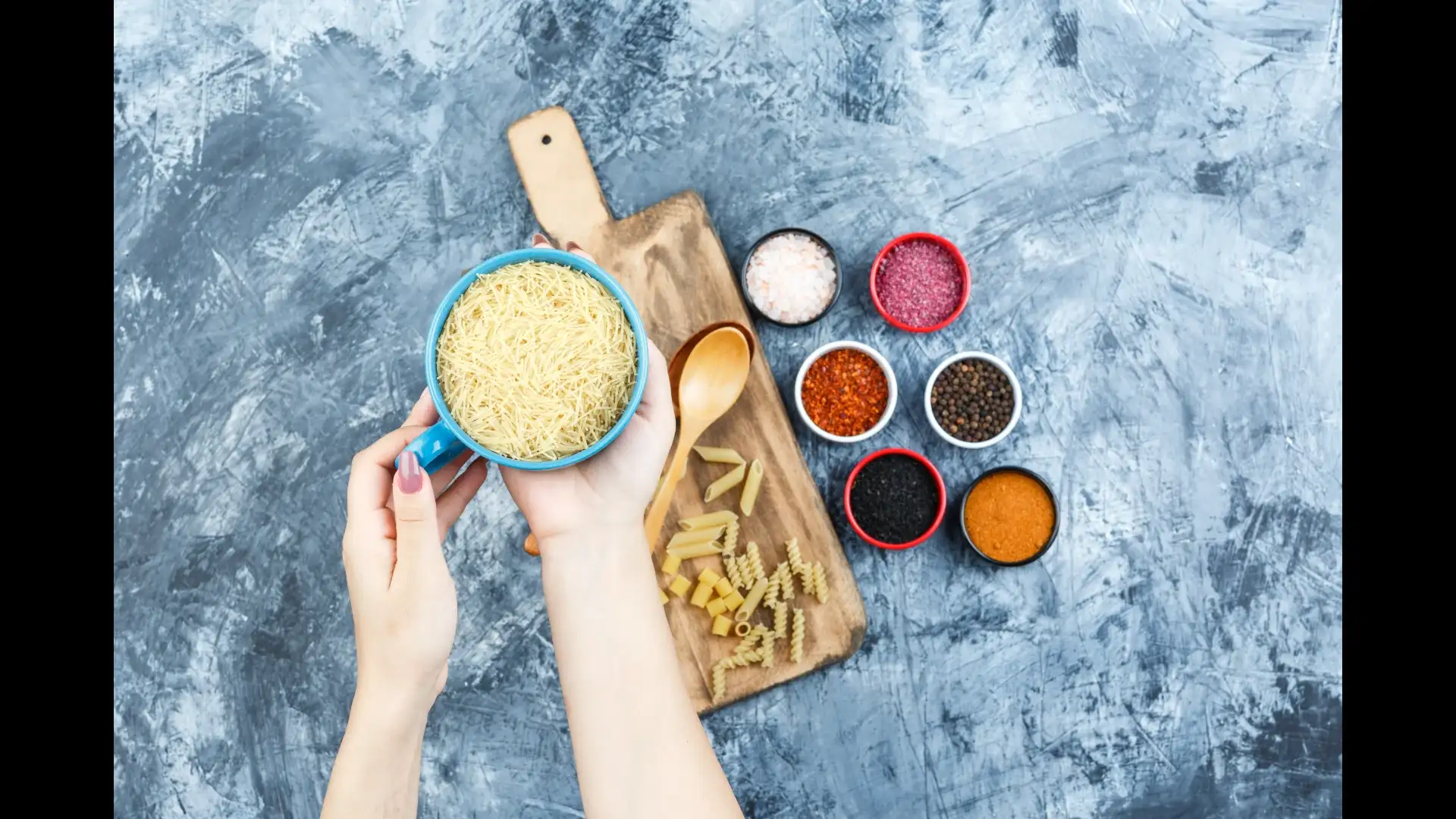
A small kitchen organised around where spices actually keep well, closed, cool, away from the stove, changes what the spices do in food. The storage is not the glamorous part of cooking, but it is the part that determines whether the masala in the pan smells like the spice it came from or like the ghost of it.
Why Masalas Go Flat Before the Jar Is Empty
The flavour in a spice sits in its volatile oils, compounds that evaporate when exposed to heat, light, or moisture. A jar of jeera sitting beside a gas burner is gently baking every time the stove is on. A jar on a windowsill gets a few hours of direct sunlight every day. A jar stored above a vessel that releases steam gets a small dose of moisture with every meal. None of these exposures is dramatic on its own. Together, over weeks, they hollow out the smell and the taste. The spice still looks the same. It just does nothing in the pan.The One Rule That Fixes Most of the Problem
Move the masalas away from the stove. This single change does more than any organiser or rack. The ideal spot is cool, dark, and dry: a closed cabinet on the wall opposite the cooking area, a drawer, or a shelf inside a pantry cupboard. If the kitchen is small enough that every surface is near the stove, a closed tin or a wooden box on the counter is better than an open rack next to the flame, because it blocks both heat and light. The cabinet above the refrigerator, a common storage spot, is warm because the compressor radiates heat upward. Avoid it for spices.Containers That Actually Preserve Flavour
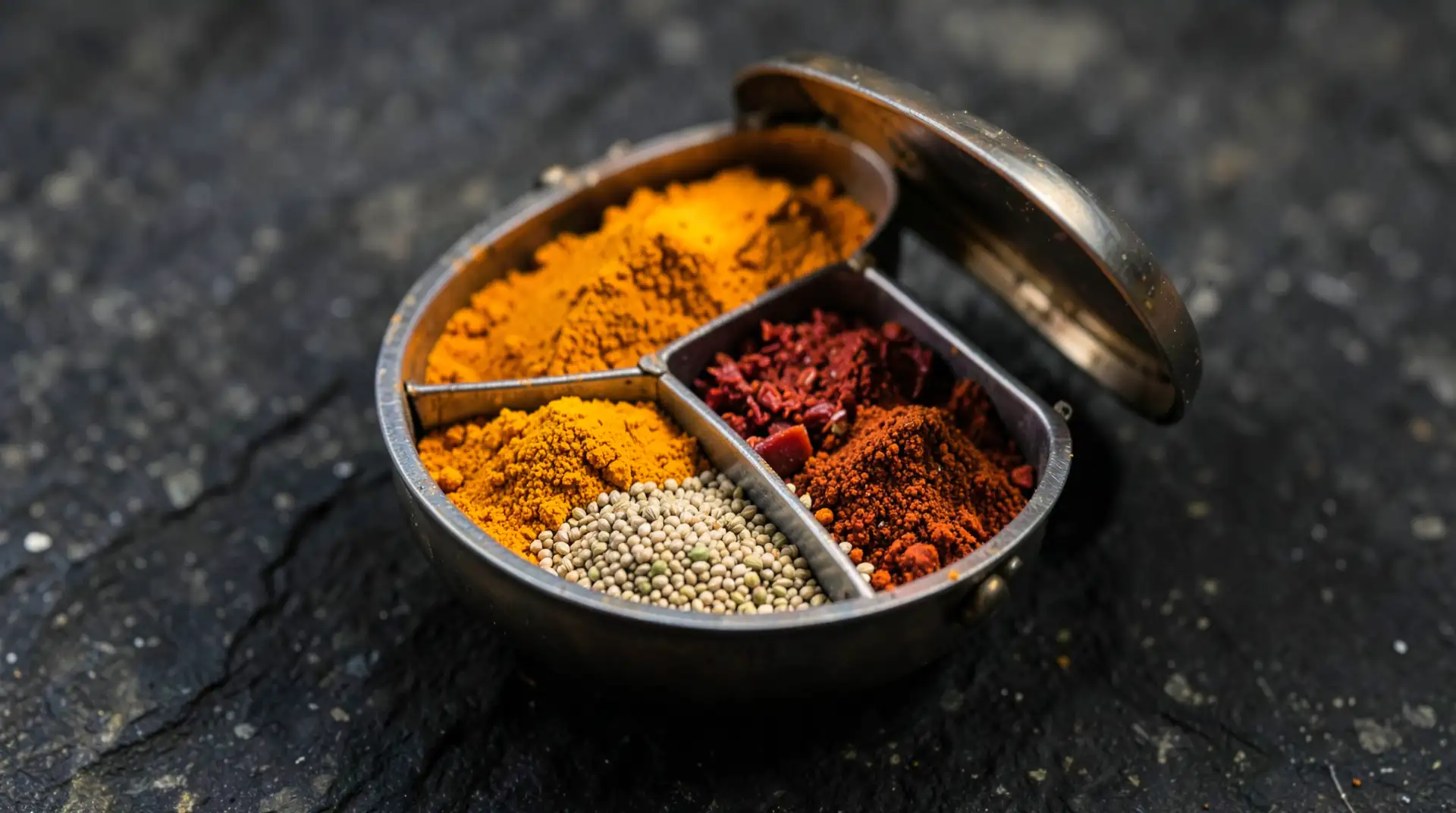
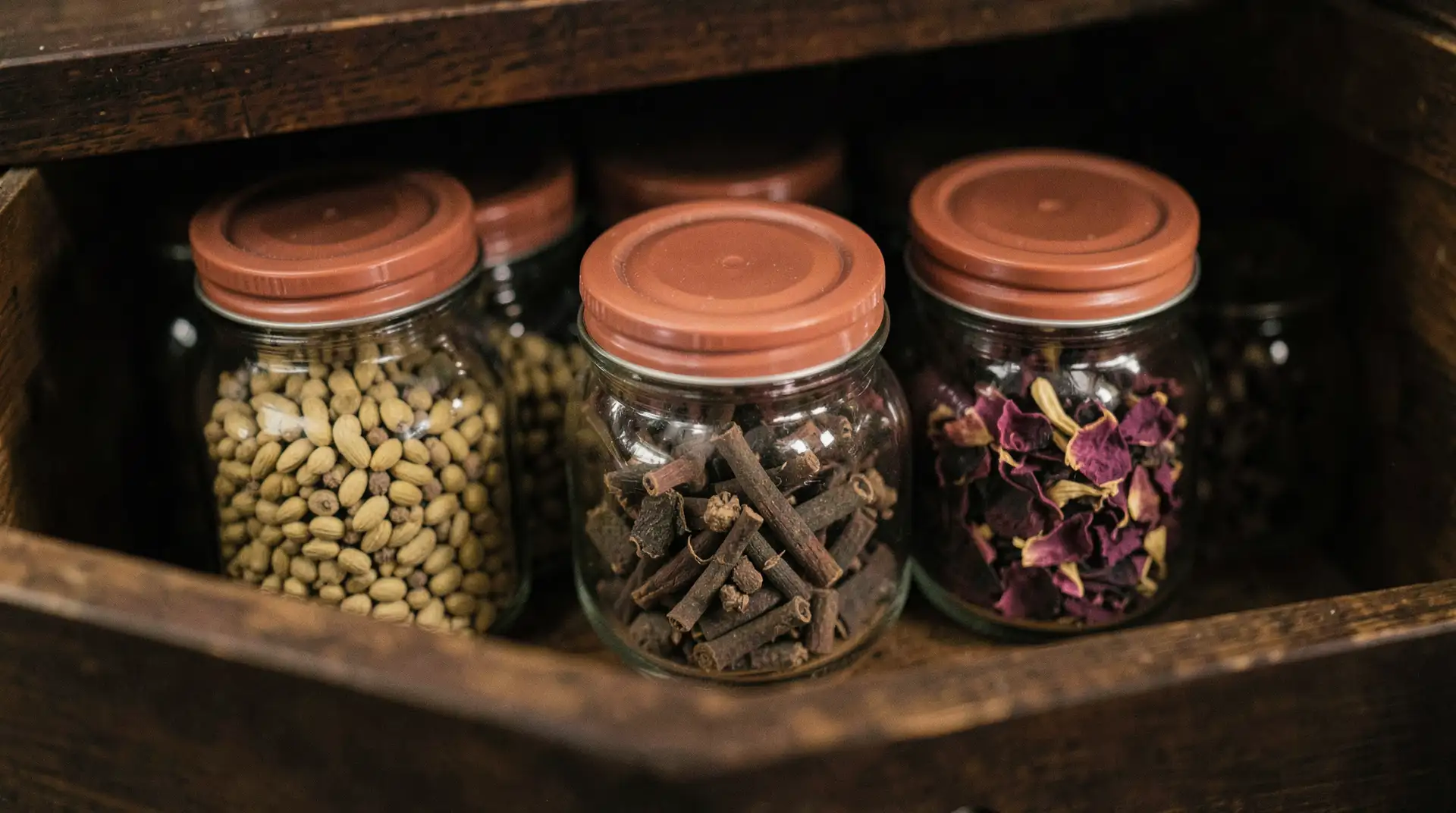
The steel masala dabba that sits in almost every Indian kitchen is well designed for daily-use spices: it seals reasonably well, blocks light, and the steel does not absorb odour. For the spices used less often, whole garam masala, kalpasi, stone flower, dried rose petals, an airtight glass jar with a rubber-gasket lid holds flavour longer than a loose-fitting steel container. Glass lets you see what is inside without opening it, which means the jar stays closed more often. Whatever the container, the rule is the same: keep the lid on when not cooking. A spice left open on the counter for twenty minutes loses more volatile oil than a week of proper storage gives back.A Simple System for a Small Space
Divide spices into two groups by how often they are used. The first group, the ones that go into nearly every meal, like haldi, jeera, rai, red chilli, and dhania powder, belong in the masala dabba or in a small cluster of jars in one closed cabinet shelf, easy to reach. The second group, whole spices, specialty masalas, and blends used once a week or less, can sit further back in the same cabinet or in a drawer. Label the lids rather than the sides of the jars, so you can read them looking down into a drawer or shelf without pulling every container out. Buy smaller quantities of the second group more often rather than stocking large jars that sit for months. A small, fresh jar of garam masala will outperform a large, old one every time.The Moisture Problem in an Indian Kitchen
Steam is the hardest thing to manage in a small kitchen. Pressure cookers, boiling dal, and a wok releasing steam all push moisture into the air, and that moisture finds its way into containers that are not properly sealed. The practical fix is to never open a spice jar directly over a cooking vessel. Shake or spoon the masala into your palm or a small katori first, then add it to the pan. This keeps the jar's interior dry. For powdered spices especially, amchur, hing, and powdered ginger all clump badly, a dry spoon matters. A wet spoon introduces moisture at the point of contact and starts a slow process of caking that ends with the powder turning into a solid block.A small kitchen organised around where spices actually keep well, closed, cool, away from the stove, changes what the spices do in food. The storage is not the glamorous part of cooking, but it is the part that determines whether the masala in the pan smells like the spice it came from or like the ghost of it.
Next Story