
Monsoon Diet: 5 Foods to Boost Immunity and Improve Digestion

When the scorching summer sun has been sucking the energy out of you all day, the arrival of the monsoon sure seems like much-awaited relief from the heat. When the skies turn cloudy and the rain arrives, umbrellas and raincoats aren’t the only things that come out. Along with a tempting urge to binge on snacks with your tea, the monsoon also brings a new set of challenges for your health. Seasonal infections, upset stomachs, flu, and a general lack of energy are common during the rainy months.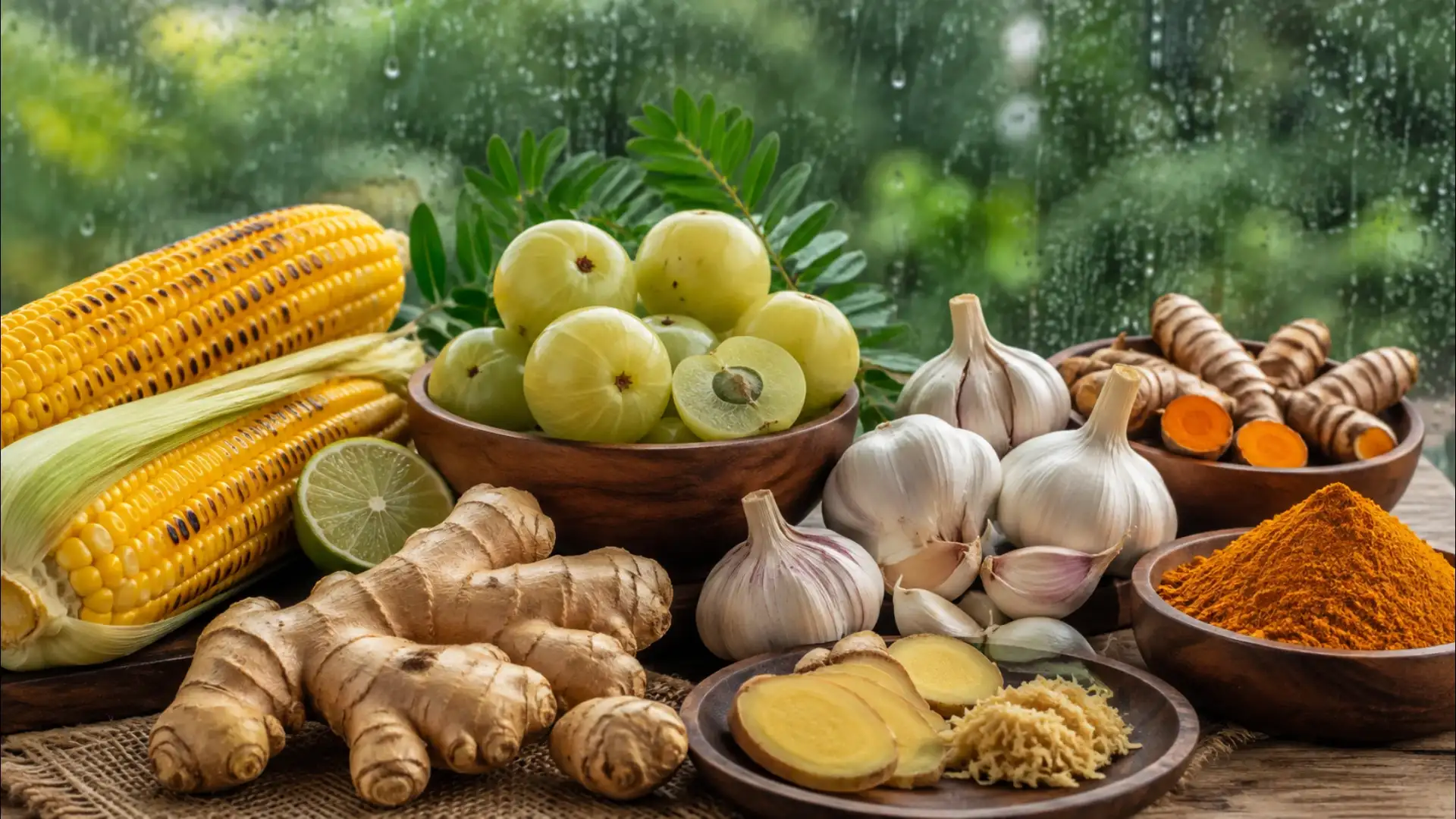
Your body is not just dealing with a change in weather; it is also dealing with shifts in immunity, slower digestion, and greater exposure to bacteria and viruses. That’s when your diet becomes important. By making a few smart dietary tweaks, you can keep your digestion running smoothly and your energy levels stable. Let us explore some seasonal foods that experts recommend adding to your daily meals to help keep those rainy-season woes away.
At the same time, digestive complaints such as bloating, indigestion, and stomach infections tend to become more common. A balanced diet provides the vitamins, minerals, protein, and antioxidants your immune system relies on to function normally. Think of the list ahead as a practical guide to eating in a way that matches what your body is going through.
Your body is not just dealing with a change in weather; it is also dealing with shifts in immunity, slower digestion, and greater exposure to bacteria and viruses. That’s when your diet becomes important. By making a few smart dietary tweaks, you can keep your digestion running smoothly and your energy levels stable. Let us explore some seasonal foods that experts recommend adding to your daily meals to help keep those rainy-season woes away.
Why Your Food Choices Matter More During the Monsoon
Your body does not experience the monsoon the same way you do. There is a reason nutritionists often encourage eating with the seasons. As the weather changes, so do the challenges your body has to deal with. During the monsoon, increased humidity and fluctuating temperatures can create favourable conditions for the growth of bacteria and other microorganisms, making food and water more likely to become contaminated if they are not handled properly.You may also like
- “I carried diapers and food for him while he trained in cold”: At 5, Fateh Singh Gill is a world martial arts champion, his mother shares the journey; why supporting a child's natural talent is important
- Man notices 'Made in India' manhole lids in New York, calls it 'shameful'; internet disagrees, asks, 'What's your point?'
- Tara Sutaria goes full glam in figure-hugging leopard gown at Toxic trailer launch
- You cannot book tickets online without an IRCTC account; here is how to create one.
- Less Crowding in General Coaches: Every Train to Now Have at Least 4 General Coaches
At the same time, digestive complaints such as bloating, indigestion, and stomach infections tend to become more common. A balanced diet provides the vitamins, minerals, protein, and antioxidants your immune system relies on to function normally. Think of the list ahead as a practical guide to eating in a way that matches what your body is going through.
Top Foods for Monsoon According to Experts
Corn (Bhutta)
Bhutta and the monsoon are practically inseparable in India, and it turns out the pairing makes nutritional sense. Corn is a good source of vitamin C, B vitamins, and antioxidants such as zeaxanthin and lutein, which help protect cells from oxidative damage. Its fibre content also supports gut health, which is important during a season when digestive issues are common. Roasted with a squeeze of lime and a pinch of salt, it is one of the more enjoyable healthy foods the season has to offer.Amla
Amla is one of the richest natural sources of vitamin C available, containing significantly more of the nutrient per gram than an orange. During the monsoon, when the risk of infections may increase, vitamin C can play an important role in supporting normal immune function. Vitamin C supports the normal functioning of white blood cells, which play an important role in the body's defence against infections. Amla also has strong antioxidant properties that help protect cells from oxidative damage.Garlic
Garlic is often valued for its potential antibacterial and antioxidant properties. Crushing or chopping raw garlic releases allicin, a sulfur-containing compound that has been studied for its antimicrobial properties. Incorporating fresh garlic into soups, curries, and other meals can add both flavour and potentially beneficial compounds to your diet, while supporting a balanced and nutritious eating pattern during the rainy season.Turmeric
You simply cannot discuss immunity without mentioning turmeric. Much of the interest in turmeric comes from curcumin, its active compound, which is known for its anti-inflammatory and antioxidant properties. Including turmeric in your diet can complement an overall healthy eating pattern. To improve the absorption of curcumin, pair turmeric with a small amount of black pepper.Ginger
A staple in Indian kitchens, ginger can be particularly comforting during the rainy months. It contains gingerol, an active compound with antioxidant and anti-inflammatory properties. Sipping warm ginger water or adding ginger to your meals may help soothe an upset stomach and support digestion. Moreover, ginger may also help stimulate digestive function, which can be useful during a season when digestive discomfort is more common.





Loving Newspoint? Download the app now
