
Monsoon Diet Guide: Best Foods to Eat and Avoid During the Rainy Season

With the monsoon clouds gathering over India, a wave of relief from the sweltering summer heat washes over everyone. However, as you rejoice in the rain, don't forget that the monsoon also brings its own set of health concerns. Increased humidity during the rainy season makes your body more vulnerable to various infections and diseases.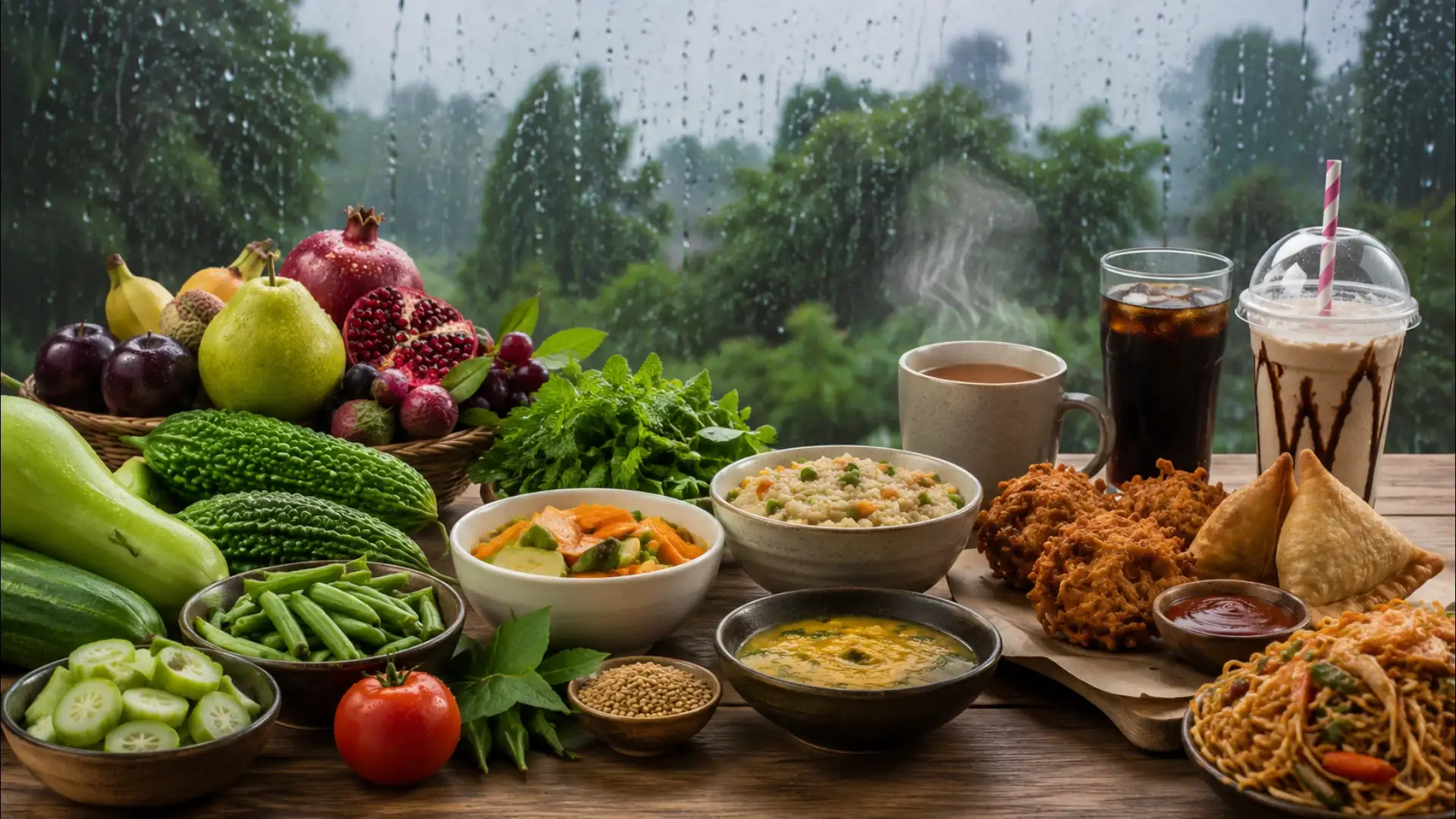
You might crave street food or delicious snacks while it's raining, but this joy could be cut short by gut-related infections. The widespread presence of bacteria and viruses during the rainy months can cause several gastrointestinal problems, such as stomach cramps, vomiting, diarrhoea, nausea, constipation, and watery stools. Therefore, to avoid these health issues, you must pay close attention to your rainy season diet.
This article will guide you on what should and should not go on your plate during the rainy season.
Moreover, many of these fruits have a protective outer peel, which reduces the risk of contamination when washed and peeled properly. They also help improve digestion, support the immune system, and maintain healthy gut flora. Just make sure you consume freshly cut, hygienically prepared fruits.
You can also include herbs and spices such as turmeric, neem, and fenugreek seeds to help strengthen your immune system and reduce the risk of monsoon-related infections.
You might crave street food or delicious snacks while it's raining, but this joy could be cut short by gut-related infections. The widespread presence of bacteria and viruses during the rainy months can cause several gastrointestinal problems, such as stomach cramps, vomiting, diarrhoea, nausea, constipation, and watery stools. Therefore, to avoid these health issues, you must pay close attention to your rainy season diet.
This article will guide you on what should and should not go on your plate during the rainy season.
Foods to Include in Your Rainy Season Diet
Your monsoon diet shouldn't only satisfy your taste buds but also strengthen your immune system to fight monsoon-related infections and illnesses. Some of the best foods to eat during the rainy season to stay fit and healthy include:Seasonal Fruits
Do you want to boost your immunity this rainy season? If so, your diet should be rich in vitamins and minerals. Seasonal fruits such as apples, pears, jamun, plums, papaya, pomegranates, cherries, lychees, and bananas can effectively meet your body's increased nutritional needs by providing vitamins, minerals, fibre, and antioxidants.You may also like
- “I told my son to sit and watch the sunset but he could't”: Jaaved Jaaferi on why today's children are losing patience; and what parents can do about screen time
- Monsoon gadget care: 6 practical ways to protect Wi-Fi routers and electronics from moisture
- Why Does My Tailbone Hurt After Childbirth? Causes and Treatment
- My Violin, Amar Akbar Anthony and the Music of India's Unity
- Who is Zarna Garg? The Indian-born comedian whose emotional Instagram post about mothers, dreams and second chances is touching millions
Moreover, many of these fruits have a protective outer peel, which reduces the risk of contamination when washed and peeled properly. They also help improve digestion, support the immune system, and maintain healthy gut flora. Just make sure you consume freshly cut, hygienically prepared fruits.
Vegetables
Monsoon is the season when vegetable markets are filled with gourds such as bitter gourd, bottle gourd, ridge gourd, and ash gourd, along with vegetables like beans, okra, tomatoes, and cucumbers. Incorporating these fresh vegetables into your rainy season diet can help promote optimal gut health.You can also include herbs and spices such as turmeric, neem, and fenugreek seeds to help strengthen your immune system and reduce the risk of monsoon-related infections.
Foods to Avoid During the Monsoon Season
Here are some foods you should avoid, as they can compromise your health during the monsoon:Street Food and Fried Foods
While street food and fried foods may be tempting during cool, rainy weather, they can negatively affect your digestive system. Their high fat content can slow digestion, leading to bloating, indigestion, food poisoning, and general digestive discomfort.Unhygienic Food
Avoid unhygienically prepared or partially cooked food from outside. You should also avoid fruit juice, milkshakes, and cold beverages sold by street vendors, as they may be contaminated with harmful microorganisms and increase the risk of waterborne illnesses.Spicy Food
Eating spicy foods can irritate your digestive system and worsen digestive issues, leading to acidity, indigestion, and stomach discomfort.





Loving Newspoint? Download the app now
