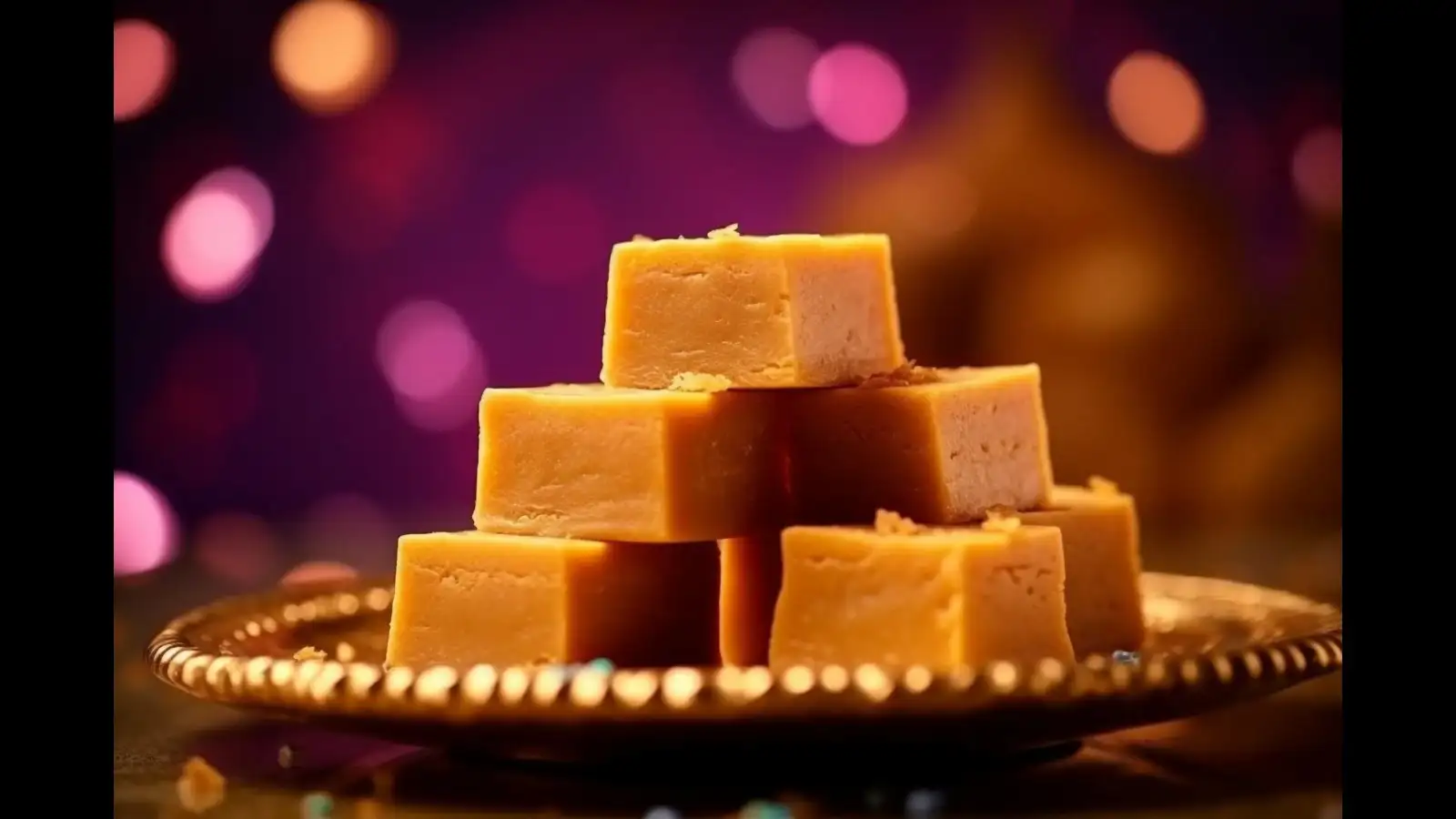
The story of Mysore Pak begins in the early 20th century at Mysore Palace. During the reign of Maharaja Krishnaraja Wadiyar IV, the palace kitchen was known for elaborate preparations and culinary experimentation.Kakasura Madappa, a palace cook, is traditionally credited with creating Mysore Pak. The story goes that he was asked to prepare something different and turned to three basic ingredients: gram flour, sugar and ghee.One version of the tale suggests that the sugar syrup was cooked for longer than planned. Once the ingredients were combined with ghee and gram flour, the mixture developed a golden colour and a distinctive texture. The resulting sweet was rich, slightly grainy and soft enough to almost dissolve in the mouth.Whether it was an intentional creation or a fortunate kitchen accident remains uncertain, but the story has become an enduring part of Mysore Pak history.So, Why Is It Called "Mysore Pak"?The explanation behind the name is much simpler than the story of its creation.According to popular accounts, when Maharaja Krishnaraja Wadiyar IV asked Madappa what the new sweet was called, the cook reportedly had no name prepared. He is said to have called it "Mysuru paka"."Mysuru" refers to the city of Mysore, while "pak" or "paka" is linked to sweetness and the preparation of sweets in Kannada culinary terminology.The name was therefore a straightforward description of the creation: a sweet associated with Mysore. What may have started as an impromptu name eventually became the identity of one of India's best-known traditional sweets.Also Read: Chocolate Chip Cookie History: The Incredible Story Behind the World's Favorite Treat and the Baker Who Created ItFrom Palace Kitchens To Sweet ShopsMysore Pak soon became associated with Mysore beyond the palace. According to a long-standing family tradition linked to Guru Sweets, Madappa later established a sweet shop outside the palace, taking the royal creation to the wider public.Although this part of the Mysore Pak origin story is largely preserved through oral history rather than extensive written documentation, it has remained an important part of the sweet's popular legacy.Over time, Mysore Pak travelled across Karnataka and neighbouring southern states, including Tamil Nadu, Andhra Pradesh and Telangana. It eventually became a popular choice for weddings, festivals and other celebrations across India.Traditional Mysore Pak Vs Modern VersionsThere is no single texture that defines every Mysore Pak. Traditional versions tend to be dense, soft and slightly crumbly, while some sweet shops are known for a much richer, ghee-heavy preparation.The popular "melt-in-the-mouth" style has become particularly sought after, with its softer texture and intense richness. Modern versions have also appeared, including chocolate-flavoured variations, although these are more contemporary interpretations than traditional Mysore Pak.A Story Blending History And LegendThe Mysore Pak origin story should be viewed with some caution. There is limited palace documentation or scholarly evidence confirming every detail, and different retellings vary on aspects of the story.Much of what is known comes from oral traditions, family accounts and the stories passed down through sweet shops. That makes Mysore Pak's history a fascinating blend of culinary heritage and legend.Still, the story explains why this humble combination of gram flour, sugar and ghee carries such a strong connection to Mysore. The next time you enjoy a piece of Mysore Pak, you are tasting more than a traditional sweet. You are also enjoying a culinary story that has travelled from a royal kitchen to generations of sweet lovers.