
Nature’s Twisters: 10 Fascinating Facts About Tornadoes You Didn’t Know

Tornadoes are among nature’s most violent and awe-inspiring phenomena. Often forming suddenly and with devastating speed, they can tear through cities and countrysides alike, leaving destruction in their wake. While tornadoes are commonly associated with North America, they occur in various parts of the world, including India. But beyond the swirling winds and dramatic visuals, tornadoes have a fascinating science behind them. Here are ten surprising facts that shed new light on these powerful storms.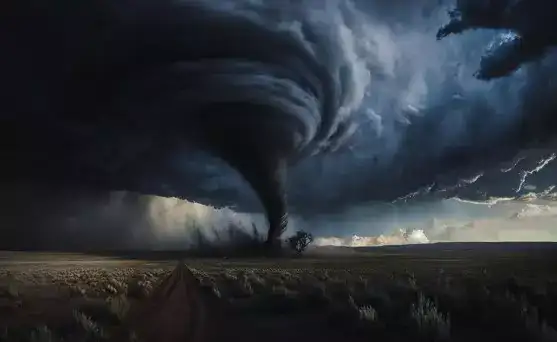
1. Tornadoes Can Occur in India Too
Though they’re most famously seen in the United States, particularly in "Tornado Alley", tornadoes have been recorded in parts of eastern India, especially in West Bengal, Odisha, and Assam. These are often associated with nor'westers or pre-monsoon thunderstorms, and while not as intense as American ones, they can still cause significant damage.
2. They’re Not Always Visible
Not all tornadoes are easy to spot. Some are wrapped in heavy rain or dust, making them appear nearly invisible. This is especially dangerous as it can delay warnings and evacuation. Night-time tornadoes are particularly deadly because they're hard to see and people are usually asleep.
3. The Winds Inside Can Be Faster Than a Jet Plane
Tornado wind speeds can exceed 480 km/h (300 mph) in extreme cases. That’s faster than the cruising speed of a commercial airliner. The strongest tornadoes are classified as EF5 on the Enhanced Fujita scale and can destroy nearly everything in their path.
4. Tornadoes Have Occurred on Every Continent Except Antarctica
Yes, you read that right. Tornadoes are a global phenomenon. While the frequency and intensity vary, they’ve been reported on every continent except Antarctica. Even places with cold climates like Canada and Russia have experienced tornadoes.
5. They Can Be Surprisingly Short-Lived — or Last for Hours
Some tornadoes touch down and lift off in under a minute, causing minimal damage. Others, like the Tri-State Tornado in the U.S. in 1925, can stay on the ground for hours and travel over hundreds of kilometres. That particular tornado lasted more than 3 hours and travelled around 350 km.
6. A Tornado’s Path Can Be Extremely Narrow
Contrary to popular belief, most tornadoes aren’t mile-wide monsters. Many have a path just a few dozen metres wide, though stronger ones can exceed 1.5 kilometres in width. Even small, narrow tornadoes can uproot trees and overturn vehicles.
7. Tornadoes Can Hurl Objects Miles Away
There are documented cases of tornadoes lifting cars, animals, and even entire homes off the ground. Lightweight objects like paper, clothing, and roof tiles have been found more than 80 kilometres from where they were picked up. The force within a tornado’s vortex is powerful and chaotic.
8. Water Tornadoes Are Real — They’re Called Waterspouts
Tornadoes that form over water bodies are known as waterspouts. These are generally weaker than land tornadoes but can still be dangerous to boats and coastal areas. Waterspouts are fairly common in tropical regions, including the Arabian Sea and Bay of Bengal.
9. The Deadliest Tornado in History Was Not in the U.S.
The deadliest tornado on record struck Bangladesh in 1989, killing approximately 1,300 people and injuring thousands more. This highlights that densely populated areas with limited early warning systems are especially vulnerable to such natural disasters.
10. Animals Can Sense Tornadoes Before Humans
Some animals, such as dogs, birds, and elephants, appear to sense changes in air pressure, vibrations, and sounds that precede a tornado. There are anecdotal accounts of animals acting strangely — pacing, hiding, or fleeing — shortly before tornadoes hit.
1. Tornadoes Can Occur in India Too
Though they’re most famously seen in the United States, particularly in "Tornado Alley", tornadoes have been recorded in parts of eastern India, especially in West Bengal, Odisha, and Assam. These are often associated with nor'westers or pre-monsoon thunderstorms, and while not as intense as American ones, they can still cause significant damage.
2. They’re Not Always Visible
Not all tornadoes are easy to spot. Some are wrapped in heavy rain or dust, making them appear nearly invisible. This is especially dangerous as it can delay warnings and evacuation. Night-time tornadoes are particularly deadly because they're hard to see and people are usually asleep.
3. The Winds Inside Can Be Faster Than a Jet Plane
Tornado wind speeds can exceed 480 km/h (300 mph) in extreme cases. That’s faster than the cruising speed of a commercial airliner. The strongest tornadoes are classified as EF5 on the Enhanced Fujita scale and can destroy nearly everything in their path.
4. Tornadoes Have Occurred on Every Continent Except Antarctica
Yes, you read that right. Tornadoes are a global phenomenon. While the frequency and intensity vary, they’ve been reported on every continent except Antarctica. Even places with cold climates like Canada and Russia have experienced tornadoes.
You may also like
- 5 Expert Face Serum Tips for Glowing Skin
- Love red lipstick? Psychology says there's a reason it makes you feel so good
- Fruits for Summer Season: For those who don't love mangoes, these seasonal fruits are the best option.
- Chinese Women Fashion Trend: Why are Chinese women wearing clothes made for men? What is the reason behind it?
- How to Gain Weight Fast: Beat the police recruitment weights? Gain weight on the spot like this.
5. They Can Be Surprisingly Short-Lived — or Last for Hours
Some tornadoes touch down and lift off in under a minute, causing minimal damage. Others, like the Tri-State Tornado in the U.S. in 1925, can stay on the ground for hours and travel over hundreds of kilometres. That particular tornado lasted more than 3 hours and travelled around 350 km.
6. A Tornado’s Path Can Be Extremely Narrow
Contrary to popular belief, most tornadoes aren’t mile-wide monsters. Many have a path just a few dozen metres wide, though stronger ones can exceed 1.5 kilometres in width. Even small, narrow tornadoes can uproot trees and overturn vehicles.
7. Tornadoes Can Hurl Objects Miles Away
There are documented cases of tornadoes lifting cars, animals, and even entire homes off the ground. Lightweight objects like paper, clothing, and roof tiles have been found more than 80 kilometres from where they were picked up. The force within a tornado’s vortex is powerful and chaotic.
8. Water Tornadoes Are Real — They’re Called Waterspouts
Tornadoes that form over water bodies are known as waterspouts. These are generally weaker than land tornadoes but can still be dangerous to boats and coastal areas. Waterspouts are fairly common in tropical regions, including the Arabian Sea and Bay of Bengal.
9. The Deadliest Tornado in History Was Not in the U.S.
The deadliest tornado on record struck Bangladesh in 1989, killing approximately 1,300 people and injuring thousands more. This highlights that densely populated areas with limited early warning systems are especially vulnerable to such natural disasters.
10. Animals Can Sense Tornadoes Before Humans
Some animals, such as dogs, birds, and elephants, appear to sense changes in air pressure, vibrations, and sounds that precede a tornado. There are anecdotal accounts of animals acting strangely — pacing, hiding, or fleeing — shortly before tornadoes hit.






More from our partners


Loving Newspoint? Download the app now
