
Nature’s Twisters: 10 Fascinating Facts About Tornadoes You Didn’t Know

Tornadoes are among nature’s most violent and awe-inspiring phenomena. Often forming suddenly and with devastating speed, they can tear through cities and countrysides alike, leaving destruction in their wake. While tornadoes are commonly associated with North America, they occur in various parts of the world, including India. But beyond the swirling winds and dramatic visuals, tornadoes have a fascinating science behind them. Here are ten surprising facts that shed new light on these powerful storms.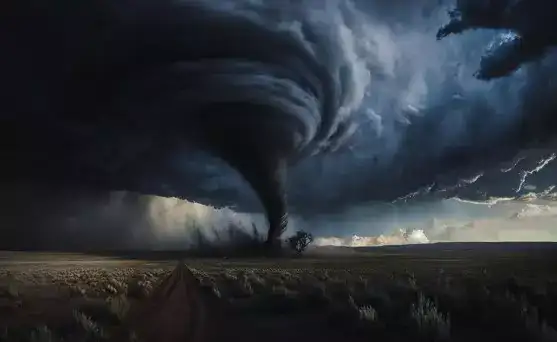
1. Tornadoes Can Occur in India Too
Though they’re most famously seen in the United States, particularly in "Tornado Alley", tornadoes have been recorded in parts of eastern India, especially in West Bengal, Odisha, and Assam. These are often associated with nor'westers or pre-monsoon thunderstorms, and while not as intense as American ones, they can still cause significant damage.
2. They’re Not Always Visible
Not all tornadoes are easy to spot. Some are wrapped in heavy rain or dust, making them appear nearly invisible. This is especially dangerous as it can delay warnings and evacuation. Night-time tornadoes are particularly deadly because they're hard to see and people are usually asleep.
3. The Winds Inside Can Be Faster Than a Jet Plane
Tornado wind speeds can exceed 480 km/h (300 mph) in extreme cases. That’s faster than the cruising speed of a commercial airliner. The strongest tornadoes are classified as EF5 on the Enhanced Fujita scale and can destroy nearly everything in their path.
4. Tornadoes Have Occurred on Every Continent Except Antarctica
Yes, you read that right. Tornadoes are a global phenomenon. While the frequency and intensity vary, they’ve been reported on every continent except Antarctica. Even places with cold climates like Canada and Russia have experienced tornadoes.
1. Tornadoes Can Occur in India Too
Though they’re most famously seen in the United States, particularly in "Tornado Alley", tornadoes have been recorded in parts of eastern India, especially in West Bengal, Odisha, and Assam. These are often associated with nor'westers or pre-monsoon thunderstorms, and while not as intense as American ones, they can still cause significant damage.
2. They’re Not Always Visible
Not all tornadoes are easy to spot. Some are wrapped in heavy rain or dust, making them appear nearly invisible. This is especially dangerous as it can delay warnings and evacuation. Night-time tornadoes are particularly deadly because they're hard to see and people are usually asleep.
3. The Winds Inside Can Be Faster Than a Jet Plane
Tornado wind speeds can exceed 480 km/h (300 mph) in extreme cases. That’s faster than the cruising speed of a commercial airliner. The strongest tornadoes are classified as EF5 on the Enhanced Fujita scale and can destroy nearly everything in their path.
4. Tornadoes Have Occurred on Every Continent Except Antarctica
Yes, you read that right. Tornadoes are a global phenomenon. While the frequency and intensity vary, they’ve been reported on every continent except Antarctica. Even places with cold climates like Canada and Russia have experienced tornadoes.
Next Story