
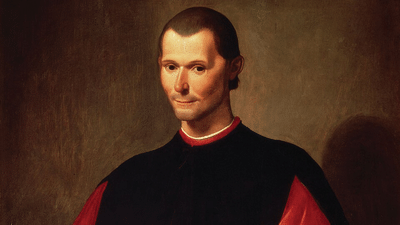
Niccolò Machiavelli quote of the day: “Never was anything great achieved without danger:” A powerful lesson on taking risks to achieve greatness


Every person admires success, but very few appreciate the uncertainty that usually comes before it. New ideas are questioned, difficult decisions invite criticism, and important dreams often carry the possibility of failure. Centuries ago, Italian philosopher and writer Niccolò Machiavelli captured this truth in a simple but powerful sentence: “Never was anything great achieved without danger.”
The quote does not encourage people to be careless. Rather, it highlights a reality that history repeatedly proves. Whether in careers, businesses, science, or art, progress has always required people who were willing to face discomfort and accept risks. Great achievements rarely emerge from complete safety.
Here is what this quote teaches and how its wisdom can be applied in everyday life.
Greatness rarely grows inside comfort zones
Comfort creates security, but it can also create limits. Most life-changing decisions begin with uncertainty. Applying for a new role, changing careers, starting a business, speaking up with an original idea, or learning a new skill often involves fear.
Many people wait for perfect certainty before making a move. But certainty rarely arrives. Growth usually starts when people decide that the possibility of progress is more important than the fear of failure.
The quote reminds people that discomfort is not always a sign of danger. Sometimes, it is evidence that something meaningful is about to begin.
Risk does not mean recklessness
One of the biggest misunderstandings about taking risks is the belief that bold people simply jump without thinking. In reality, most successful people calculate their risks carefully.
A professional who switches industries after learning new skills, or an entrepreneur who studies the market before launching a venture, is not gambling. They are making informed choices.
Machiavelli's words are less about chasing danger and more about accepting that uncertainty cannot be eliminated completely. Waiting for a guarantee often means waiting forever.
The aim is not to avoid failure at all costs, but to prepare well and move forward despite the possibility of setbacks.
Fear deserves respect, not obedience
Fear has a purpose. It warns people and keeps them cautious. But fear becomes harmful when it begins making every decision.
Many opportunities are lost not because people lack talent, but because they become prisoners of "what if". What if things go wrong? What if others judge them? What if they fail?
A more useful question is often, "What if things work out?"
Looking back, many people regret the opportunities they never pursued more than the mistakes they made. Fear should be listened to, but it should not be allowed to decide everything.
Small acts of courage create extraordinary results
Great achievements are rarely the result of one dramatic leap. They are often built through small decisions that require courage.
The quote does not encourage people to be careless. Rather, it highlights a reality that history repeatedly proves. Whether in careers, businesses, science, or art, progress has always required people who were willing to face discomfort and accept risks. Great achievements rarely emerge from complete safety.
Here is what this quote teaches and how its wisdom can be applied in everyday life.
Greatness rarely grows inside comfort zones
Comfort creates security, but it can also create limits. Most life-changing decisions begin with uncertainty. Applying for a new role, changing careers, starting a business, speaking up with an original idea, or learning a new skill often involves fear.
Many people wait for perfect certainty before making a move. But certainty rarely arrives. Growth usually starts when people decide that the possibility of progress is more important than the fear of failure.
The quote reminds people that discomfort is not always a sign of danger. Sometimes, it is evidence that something meaningful is about to begin.
Risk does not mean recklessness
One of the biggest misunderstandings about taking risks is the belief that bold people simply jump without thinking. In reality, most successful people calculate their risks carefully.
A professional who switches industries after learning new skills, or an entrepreneur who studies the market before launching a venture, is not gambling. They are making informed choices.
Machiavelli's words are less about chasing danger and more about accepting that uncertainty cannot be eliminated completely. Waiting for a guarantee often means waiting forever.
The aim is not to avoid failure at all costs, but to prepare well and move forward despite the possibility of setbacks.
Fear deserves respect, not obedience
Fear has a purpose. It warns people and keeps them cautious. But fear becomes harmful when it begins making every decision.
Many opportunities are lost not because people lack talent, but because they become prisoners of "what if". What if things go wrong? What if others judge them? What if they fail?
A more useful question is often, "What if things work out?"
Looking back, many people regret the opportunities they never pursued more than the mistakes they made. Fear should be listened to, but it should not be allowed to decide everything.
Small acts of courage create extraordinary results
Great achievements are rarely the result of one dramatic leap. They are often built through small decisions that require courage.
Next Story