
Vastu Shastra Tips on Where to Hang a Wall Clock at Home

A wall clock sits in almost every Indian home, usually hung at eye level on whatever wall has the space. Most people never think twice about it. Vastu shastra, the ancient Indian system of spatial arrangement, treats the clock as a small but deliberate object, one whose placement, direction, and condition are each said to carry significance for the household's wellbeing. The tradition does not demand renovation. It asks for attention to a few specific details.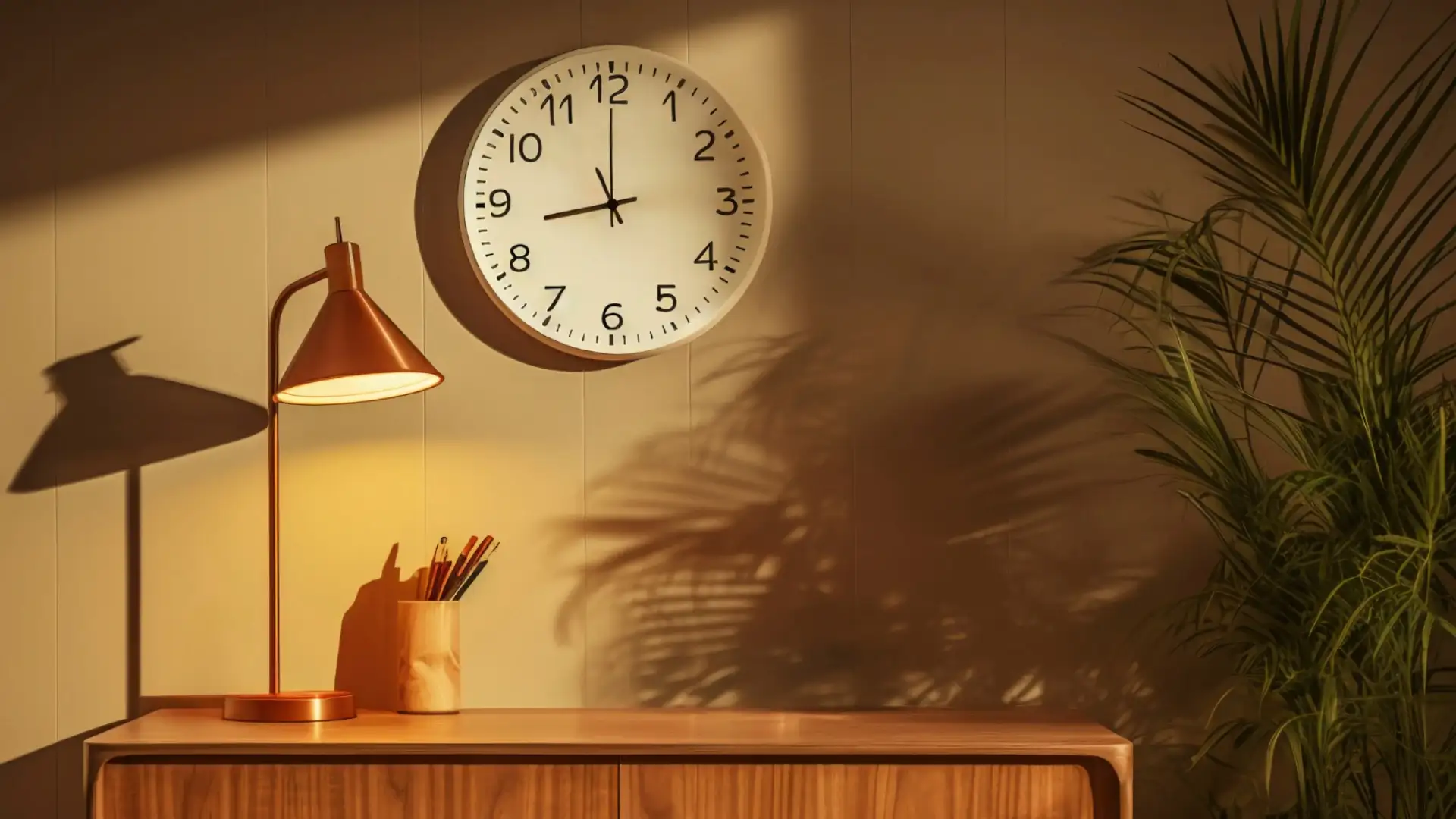
The North and East Walls Are Considered Favourable
Vastu shastra holds that the north direction is governed by Kuber, associated in the tradition with prosperity, and that the east is the direction of the rising sun, linked to new beginnings and vitality. Hanging a clock on the north or east wall is therefore considered auspicious, the idea being that time, which moves forward, aligns well with directions the tradition associates with growth and positive energy. The north-east corner, where the two meet, is regarded as especially significant in vastu and is generally kept light and uncluttered. A clock placed here is seen as particularly well-positioned.The South Wall Is Typically Avoided
Vastu shastra advises against hanging a clock on the south wall. The south is associated with Yama, the deity of death in Hindu tradition, and is generally treated in vastu as a direction requiring careful management rather than active use. Objects that draw attention, and a clock, by its nature, is looked at repeatedly, are said to direct the household's focus toward an inauspicious quarter. The south-west corner is similarly avoided, as vastu associates it with stability and rest rather than the forward movement a clock represents.You may also like
- Why keeping a rubber plant can attract positivity in the house
- Stray dog reportedly bites off child's ear: Safety precautions parents should take to protect children from dog attacks while playing outdoors and moving around residential areas
- She struggled to find a job despite a postgraduate degree and faced rejection as a transgender woman; now 36-year-old Riyana Suree helps others find sponsors, education and a place to stay in Tamil Nadu
- Why Is Diwali Celebrated for 5 Days? The Hidden Stories
- 'Held him in my arms when he died': How Justine Wilson, Elon Musk's ex-wife and Canadian author, coped with their son Nevada Alexander's death
Shape and Colour Are Also Part of the Tradition
Vastu shastra extends its guidance beyond direction. Round and oval clocks are considered more harmonious than angular or irregular shapes, because smooth curves are associated in the tradition with continuous, unobstructed flow. For colour, lighter tones, white, cream, light blue, and pale green, are generally preferred on north and east walls, while warmer tones like red and dark brown are typically associated with the south and south-west, where clocks are already discouraged. These are not strict rules so much as traditional preferences that practitioners of vastu cite when advising on a home.The Condition of the Clock Matters as Much as Its Position
Across vastu shastra and many related Indian folk beliefs, a stopped or broken clock in the home is considered inauspicious. The reasoning is straightforward within the tradition: a clock that no longer moves is seen as symbolising stagnation, time standing still in a space where life should be moving forward. Vastu practitioners consistently advise repairing or replacing a clock that has stopped working rather than leaving it on the wall. A clock that runs consistently and keeps accurate time is seen as aligned with the idea of smooth, uninterrupted progress.The Entrance and the Bedroom
Vastu shastra treats the main entrance of a home as a threshold where energy enters, and a clock near the front door, particularly on the wall directly facing it, is generally considered acceptable if the wall falls in the north or east. The bedroom is a more nuanced case. Some vastu practitioners suggest avoiding a clock directly above the bed, as repeatedly looking at the time in a space meant for rest is said to create mental restlessness. A clock on the north or east wall of the bedroom, positioned so it is visible without being directly overhead, is the more commonly recommended arrangement. These are traditional guidelines held within vastu shastra, not prescriptions backed by clinical or scientific evidence. Whether a household chooses to follow them is entirely a matter of personal belief and practice.





Loving Newspoint? Download the app now
