
The Habit of Overthinking Conversations After They’re Already Over

The human brain is not built for perfect closure. It is built for survival. So when something feels even slightly uncertain, like how we sounded, how we were perceived, or whether we said the “right thing," the brain flags it as unfinished business.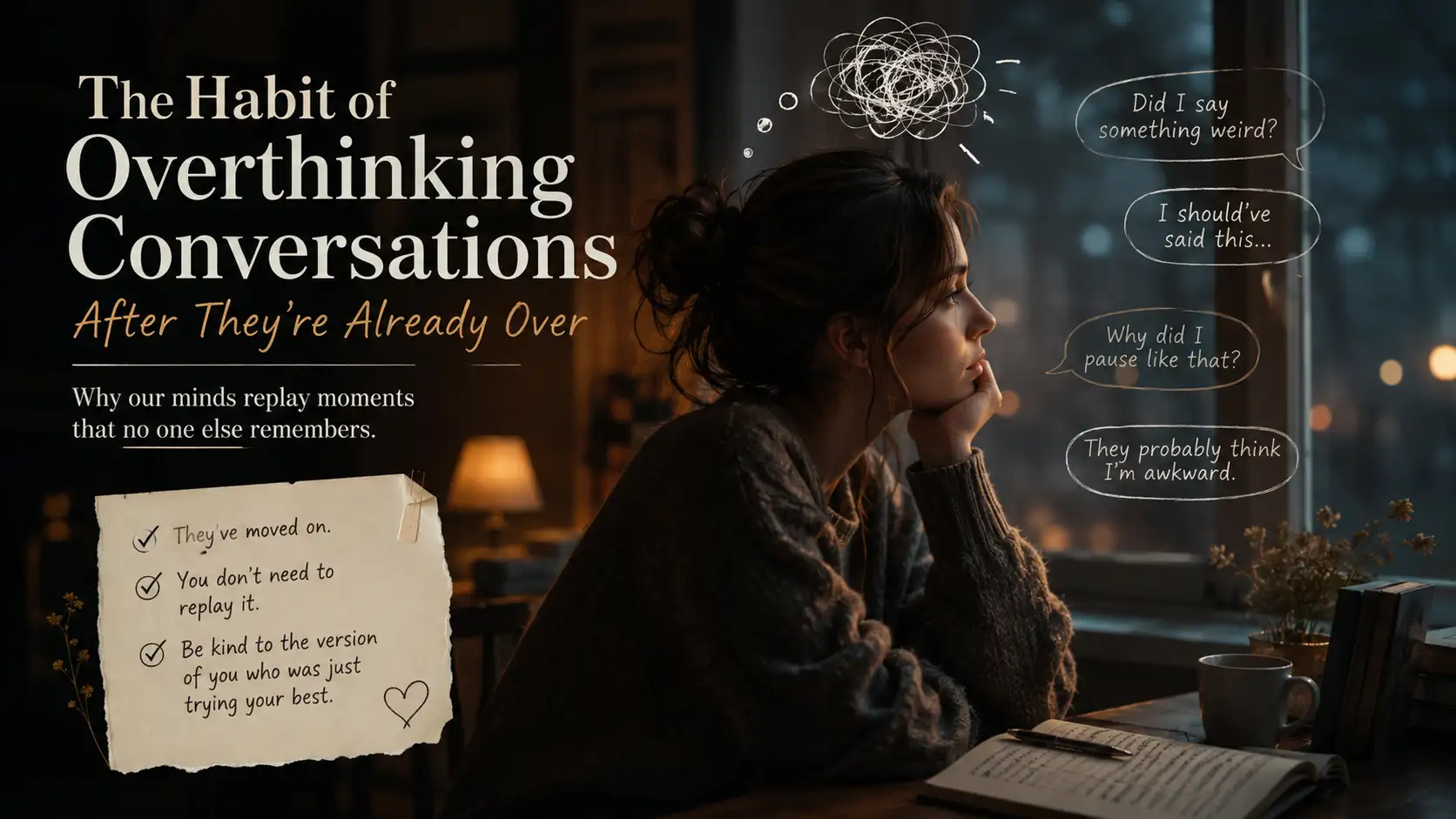
That’s why after a normal conversation, your mind suddenly replays it like a director editing scenes that no one else is watching.
It’s not that something went wrong. It’s just that your brain doesn’t like unanswered emotional question marks.
In reality, most people are too busy thinking about themselves: their next task, their own insecurity, their own conversations. But in our heads, we become the main character of a film we think everyone else is also watching. They’re not.
What was once a normal interaction slowly turns into a “what if” simulation.
So when even a tiny doubt enters, “Did I sound weird?” or “Did I say too much?" our mind tries to fix it after the fact, even though nothing can be changed.
That’s why after a normal conversation, your mind suddenly replays it like a director editing scenes that no one else is watching.
It’s not that something went wrong. It’s just that your brain doesn’t like unanswered emotional question marks.
We don’t remember the moment; we remember how we felt in it
Most overthinking doesn’t come from what was actually said. It comes from how we felt in that moment. Maybe you felt a little nervous. Maybe you were trying too hard to sound normal. Maybe you laughed and then immediately wondered if it was too loud. So later, your mind doesn’t replay reality; it replays emotion with added imagination. And imagination is always more dramatic than truth.The illusion that everyone is watching us closely
One of the biggest reasons we overthink conversations is something called the “spotlight effect," the belief that people notice us far more than they actually do.You may also like
- Mumbai rains update: IMD issues orange alert, flights and train services hit; here's what travellers should expect
- Psychology says adults who keep checking tracking updates for a package aren't impatient; uncertainty can be more psychologically uncomfortable than waiting
- Psychology says adults who remember everyone's favorite snack or drink aren't gifted with details; small acts of remembering help relationships feel secure
- Psychology says people who follow morning routines aren't creatures of habit; predictability can create a sense of safety before the day becomes uncertain
- Millions Are Switching to Period Panties Here's Why Pads Are Losing Ground
In reality, most people are too busy thinking about themselves: their next task, their own insecurity, their own conversations. But in our heads, we become the main character of a film we think everyone else is also watching. They’re not.
Silence becomes a magnifying glass
Overthinking rarely happens during the conversation. It happens after it. In silence, the brain gets space. And in that space, it starts filling gaps, replaying pauses, tone shifts, facial expressions, and words that didn’t even matter in the moment.What was once a normal interaction slowly turns into a “what if” simulation.
The need to be perceived “correctly”
At the root of it, overthinking conversations is often about one thing: wanting to be understood properly. We don’t just want to speak; we want to be seen as intelligent, funny, kind, or normal.So when even a tiny doubt enters, “Did I sound weird?” or “Did I say too much?" our mind tries to fix it after the fact, even though nothing can be changed.
The truth we rarely accept
Most conversations are not remembered by others the way they are remembered by us. What feels like a “cringe moment” in your head is usually invisible in someone else’s memory. They don’t replay it. They don’t analyze it. They don’t assign meaning to it. They simply move on.Learning to let the mind stop editing the past
Overthinking doesn’t disappear overnight. But it softens when we realize one simple truth: not everything needs review. Some conversations are just moments, nothing more, nothing less. They don’t need fixing. They don’t need rewriting. They don’t even need to be remembered. Just lived. And then left where they belong: in the past.





More from our partners


Loving Newspoint? Download the app now
