
How to Make Movie-Style Popcorn at Home That Actually Tastes Right

Cinema popcorn has a particular character, large, evenly puffed kernels with a thin shell, a faint butterscotch colour, and a saltiness that coats without overwhelming. Most home attempts fall short not because of missing equipment but because of a few specific choices made before the first kernel hits the pan.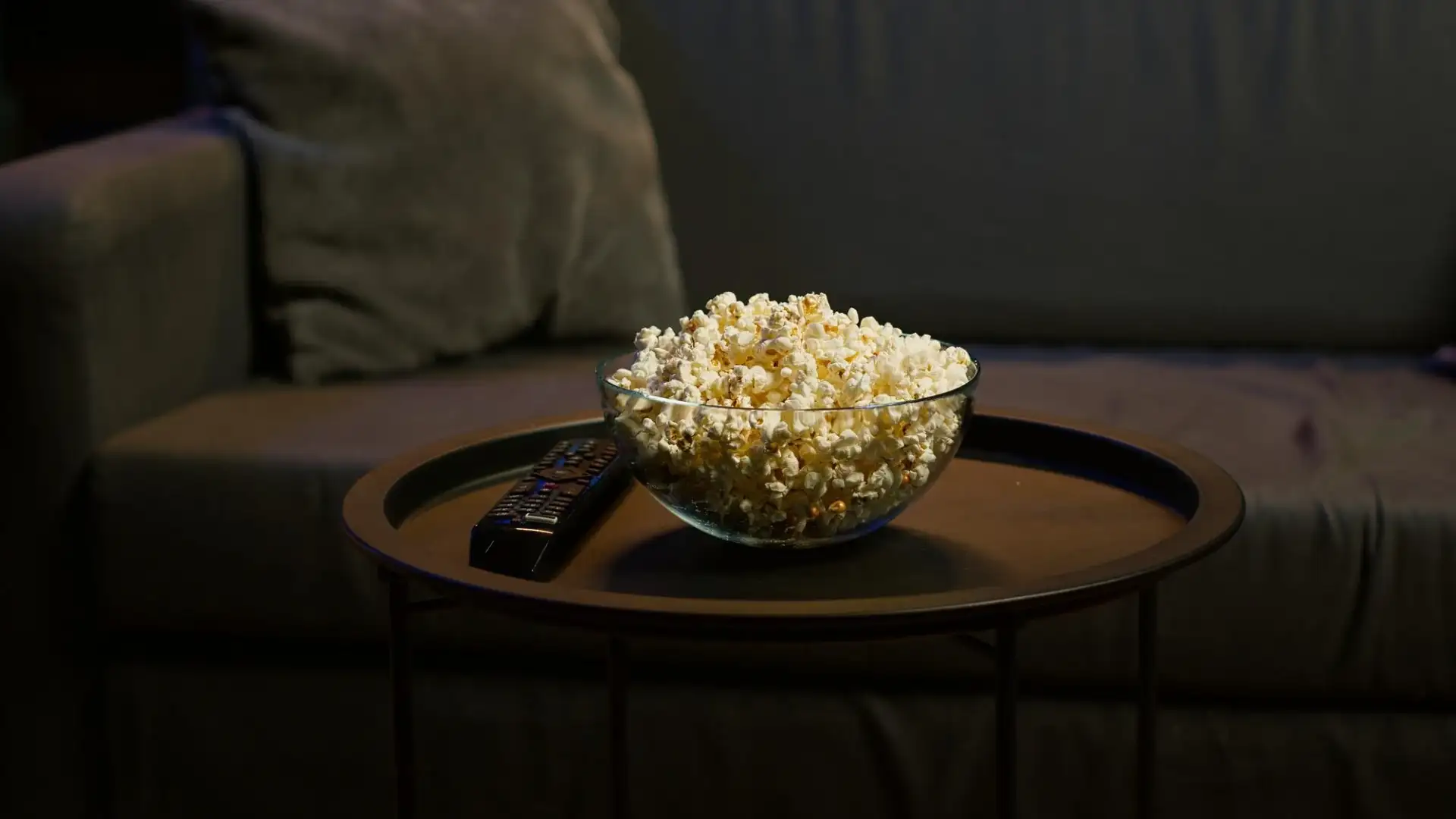
For movie-style popcorn, buy butterfly kernels. They are sold loose at most kirana stores and in small packets at supermarkets. The difference in the final bowl is immediate and obvious.
The right amount of fat matters as much as the type. For every cup of dry kernels, one and a half tablespoons of oil is enough to coat the bottom of a heavy-bottomed pan without drowning the kernels. Too little and kernels scorch on one side before popping. Too much and the finished popcorn feels greasy.
The gap in the lid is not optional. Trapped steam softens the shell and produces chewy, dense popcorn. The gap lets moisture out and keeps the kernels dry and crisp. Once popping begins in earnest, shake the pan gently every fifteen seconds or so to move unpopped kernels to the bottom. When the pops slow to roughly two seconds apart, take the pan off the heat immediately. Kernels left on heat after this point burn.
For the specific cinema flavour, a pinch of powdered sugar added with the salt makes a real difference. It does not make the popcorn sweet, it rounds out the saltiness in the same way that cinema seasoning blends do. A light dusting of fine sugar, half the quantity of the salt, is enough. Taste and adjust before adding more of either.
The method itself stays the same across all of these. The kernel, the fat, and the heat management are the foundation. Everything else is seasoning applied at the end.
Cinema popcorn is not a recipe secret, it is a set of small decisions, each one straightforward, that happen to compound. Get the kernel type right, use a fat with a high smoke point, manage the steam, and season while hot. Every one of those choices has a physical reason behind it, and understanding the reason makes the method stick better than following steps alone.
Start With the Right Kernel
Two types of popcorn kernel are widely sold: butterfly and mushroom. Butterfly kernels pop into irregular, wing-shaped pieces with a light, airy crunch, this is what cinemas use. Mushroom kernels pop into dense, round balls better suited to caramel coating because they don't break.For movie-style popcorn, buy butterfly kernels. They are sold loose at most kirana stores and in small packets at supermarkets. The difference in the final bowl is immediate and obvious.
The Fat Makes the Flavour
Cinemas traditionally use coconut oil or a refined palm-based oil, both of which have a high smoke point and a mild, slightly sweet undertone that reads as buttery even before any butter is added. At home, refined coconut oil is the closest match and is easy to find. Ghee works well and adds its own richness, though the flavour shifts slightly. Avoid cold-pressed or extra-virgin oils, their lower smoke points cause the kernels to taste scorched rather than toasted.The right amount of fat matters as much as the type. For every cup of dry kernels, one and a half tablespoons of oil is enough to coat the bottom of a heavy-bottomed pan without drowning the kernels. Too little and kernels scorch on one side before popping. Too much and the finished popcorn feels greasy.
Heat, Lid, and Timing
Use a heavy-bottomed pan with a lid, a kadai with a flat-bottomed lid or a deep stockpot both work. Place the pan on medium heat, add the oil, and test it with two or three kernels. When those test kernels pop, the oil is ready. Add the rest of the kernels in a single layer, put the lid on leaving a small gap for steam to escape, and keep the heat at medium.The gap in the lid is not optional. Trapped steam softens the shell and produces chewy, dense popcorn. The gap lets moisture out and keeps the kernels dry and crisp. Once popping begins in earnest, shake the pan gently every fifteen seconds or so to move unpopped kernels to the bottom. When the pops slow to roughly two seconds apart, take the pan off the heat immediately. Kernels left on heat after this point burn.
Seasoning Like a Cinema Does
Cinemas salt popcorn while it is still hot and in motion, so the salt sticks to every surface. Fine-grain salt, table salt or powdered rock salt, does this better than coarse flakes, which slide off. Transfer the popped corn to a large bowl immediately, drizzle with a small amount of melted ghee or butter, toss, then season with fine salt and toss again.For the specific cinema flavour, a pinch of powdered sugar added with the salt makes a real difference. It does not make the popcorn sweet, it rounds out the saltiness in the same way that cinema seasoning blends do. A light dusting of fine sugar, half the quantity of the salt, is enough. Taste and adjust before adding more of either.
Variations Worth Trying
Once the base method is reliable, the same technique handles other flavours cleanly. Chaat masala stirred in at the seasoning stage gives a tangy, slightly sour result that works well with the butterfly kernel's thin crunch. A mix of black pepper and a small amount of dried chilli flakes produces something close to a spiced theatre popcorn. For a caramel version, mushroom kernels are the better choice, pop them using the same method, then coat in a simple jaggery caramel made separately and tossed through while warm.The method itself stays the same across all of these. The kernel, the fat, and the heat management are the foundation. Everything else is seasoning applied at the end.
Cinema popcorn is not a recipe secret, it is a set of small decisions, each one straightforward, that happen to compound. Get the kernel type right, use a fat with a high smoke point, manage the steam, and season while hot. Every one of those choices has a physical reason behind it, and understanding the reason makes the method stick better than following steps alone.