
10 Places in India Where You Can Explore Ancient Rock-Cut Architecture and Hidden History

India's ancient rock-cut monuments reveal how skilled artisans transformed solid rock into temples, monasteries, prayer halls and elaborate sculptures. Created over centuries, these structures reflect the religious beliefs, artistic traditions and engineering knowledge of different historical periods. Some feature enormous carved pillars and intricate sculptures, while others contain quiet chambers where monks once studied and meditated. From the Buddhist caves of Maharashtra to the monumental temples of Tamil Nadu, these sites offer a fascinating glimpse into India's architectural heritage. For travellers interested in history, archaeology and ancient craftsmanship, exploring rock-cut architecture provides an opportunity to discover extraordinary structures shaped directly from natural stone.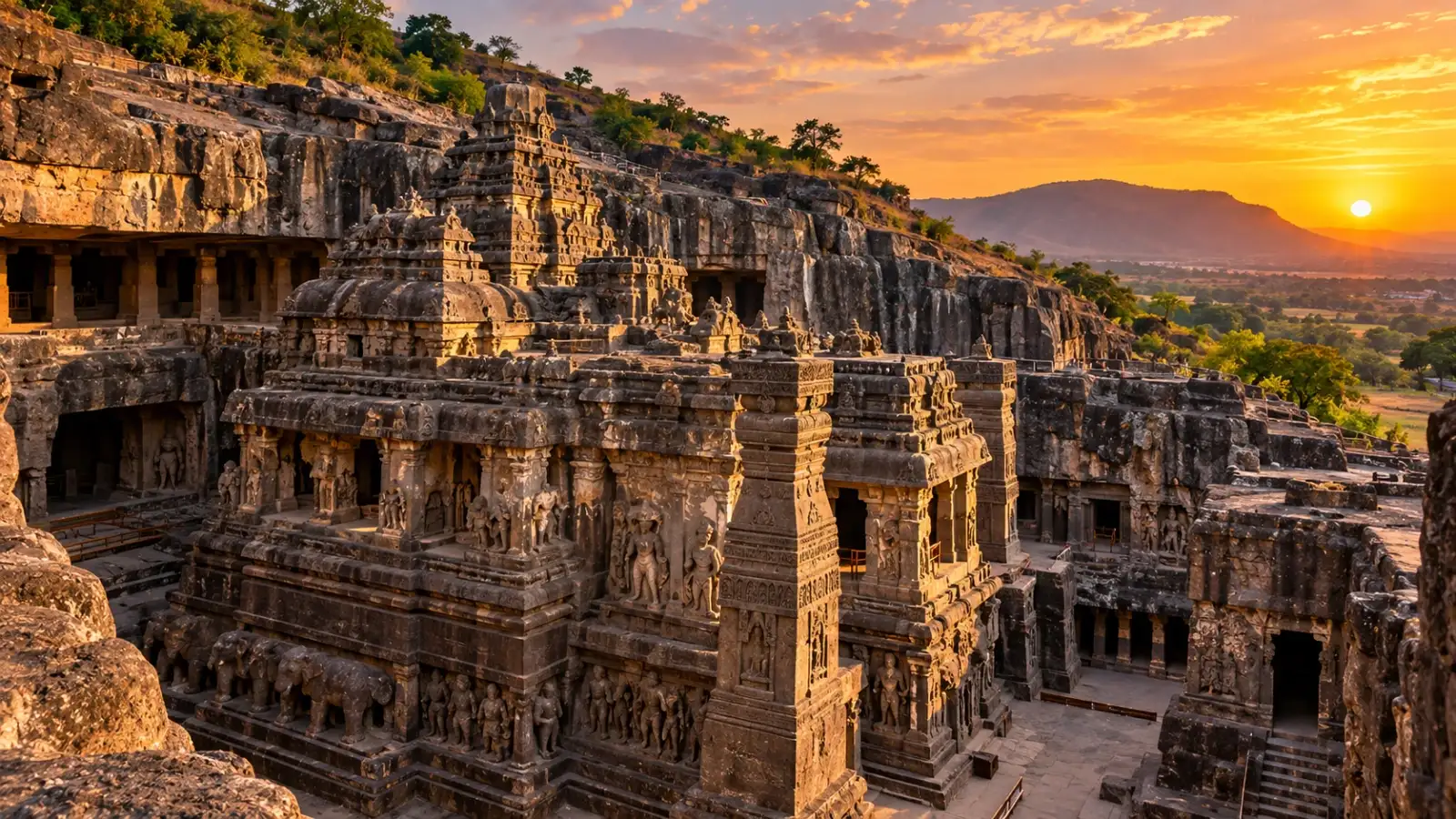
The caves were created in different phases, beginning around the second century BCE, with major additions made several centuries later. Their paintings depict Buddhist stories, royal life and everyday activities, offering valuable insight into the art and society of the period.
Visitors can explore carved pillars, religious sculptures and mural paintings that have survived for centuries. The site's combination of architecture and painting makes it an important destination for understanding ancient Indian artistic traditions.
The site's most famous monument is the Kailasa Temple, dedicated to Lord Shiva. Rather than assembling it from separate blocks, artisans carved the enormous structure out of a single mass of rock, removing stone from the surrounding hillside to reveal its courtyards, pillars, sculptures and shrine.
Ellora demonstrates the extraordinary planning and labour required for large-scale rock excavation. Its monuments also reflect a period when different religious traditions developed important artistic centres in the same region.
The main cave contains impressive columns, shrines and carved panels illustrating different aspects of Shiva. One of the best-known sculptures is the three-faced Maheshmurti, which presents a powerful interpretation of the deity.
The caves are generally dated to the mid-first millennium CE, although their precise chronology remains debated. Reaching the island requires a ferry journey from Mumbai, making the visit a combination of heritage exploration and a short trip across the harbour.
The complex contains Hindu and Jain religious monuments, including sculptures of Shiva, Vishnu and other important figures. Their carved pillars, ceilings and wall panels reveal a distinctive combination of religious imagery and architectural experimentation.
Badami is also known for its surrounding red sandstone landscape and historic fortifications. Visitors can combine the cave temples with nearby heritage sites to understand the wider architectural achievements of the Chalukya rulers.
Unlike monumental temples with elaborate sanctuaries, several caves were designed as modest dwellings and spaces for ascetics. Some feature inscriptions, carved entrances and decorative motifs that reveal details about ancient religious life.
The caves are particularly valuable for understanding early Jain communities and the development of rock-cut architecture in eastern India.
The site includes rock-cut cave temples, sculpted reliefs and the famous Pancha Rathas, a group of monolithic monuments carved from individual rock formations. The Shore Temple, although constructed from assembled stone rather than carved entirely from living rock, forms part of the town's wider architectural heritage.
Mahabalipuram demonstrates how Pallava artisans experimented with different architectural forms, from cave sanctuaries to free-standing temples.
The main chaitya features a high vaulted ceiling, rows of pillars and a stupa at the far end. Its architectural design creates a spacious interior suited to communal worship.
Carved details near the entrance include elaborate decorative elements and sculptural figures. The site also reflects the support provided by merchants, traders and other donors who contributed to Buddhist religious centres along historic trade routes.
The caves include meditation cells, monasteries, water cisterns and larger prayer halls. Their location near historic trade routes helped connect the monastic community with the wider region.
Kanheri is particularly interesting because it shows how a large religious settlement functioned over time. Its water-management features also demonstrate how ancient communities adapted buildings to the local landscape.
The complex consists of temples carved from sandstone, with towers and sculptural features inspired by northern Indian temple design. The exact date of construction remains uncertain, although the monuments are generally associated with the early medieval period.
Their setting among hills and valleys gives the site a distinctive atmosphere. Masrur also illustrates how rock-cut architecture developed beyond the better-known Buddhist and Jain centres of western and eastern India.
One of its most notable features is a large reclining figure of Vishnu carved within the rock. The caves also reflect the changing religious influences and architectural traditions of the region.
Their location overlooking the Krishna River adds to the site's appeal. Visitors interested in ancient architecture can examine how artisans used the natural rock formation to create multiple levels and interconnected spaces.
India's ancient rock-cut monuments demonstrate the extraordinary skills of artisans who carved entire architectural spaces directly into stone. From the paintings of Ajanta and the Kailasa Temple at Ellora to the Buddhist prayer halls of Karla and the monastic caves of Kanheri, each destination reveals different aspects of the country's artistic and religious history. Exploring these sites offers more than a sightseeing experience; it provides an opportunity to understand how ancient communities built places for worship, learning and meditation. Respecting the monuments and following conservation guidelines helps preserve this remarkable heritage for future generations.
1. Ajanta Caves , Maharashtra
The Ajanta Caves are among India's most celebrated examples of ancient Buddhist rock-cut architecture. Located in a horseshoe-shaped gorge near the Waghur River, this group of caves contains monasteries, prayer halls, sculptures and remarkable wall paintings.The caves were created in different phases, beginning around the second century BCE, with major additions made several centuries later. Their paintings depict Buddhist stories, royal life and everyday activities, offering valuable insight into the art and society of the period.
Visitors can explore carved pillars, religious sculptures and mural paintings that have survived for centuries. The site's combination of architecture and painting makes it an important destination for understanding ancient Indian artistic traditions.
2. Ellora Caves , Maharashtra
Ellora is one of India's most impressive rock-cut architectural complexes, featuring Buddhist, Hindu and Jain monuments. The caves were created over several centuries, broadly between the sixth and tenth centuries CE.The site's most famous monument is the Kailasa Temple, dedicated to Lord Shiva. Rather than assembling it from separate blocks, artisans carved the enormous structure out of a single mass of rock, removing stone from the surrounding hillside to reveal its courtyards, pillars, sculptures and shrine.
Ellora demonstrates the extraordinary planning and labour required for large-scale rock excavation. Its monuments also reflect a period when different religious traditions developed important artistic centres in the same region.
3. Elephanta Caves , Maharashtra
Situated on Elephanta Island near Mumbai, the Elephanta Caves are known for their monumental sculptures associated primarily with Lord Shiva.The main cave contains impressive columns, shrines and carved panels illustrating different aspects of Shiva. One of the best-known sculptures is the three-faced Maheshmurti, which presents a powerful interpretation of the deity.
The caves are generally dated to the mid-first millennium CE, although their precise chronology remains debated. Reaching the island requires a ferry journey from Mumbai, making the visit a combination of heritage exploration and a short trip across the harbour.
4. Badami Cave Temples , Karnataka
The Badami Cave Temples are carved into sandstone cliffs overlooking Agastya Lake in northern Karnataka. Dating mainly to the sixth and seventh centuries CE, the caves are associated with the early Chalukya period.The complex contains Hindu and Jain religious monuments, including sculptures of Shiva, Vishnu and other important figures. Their carved pillars, ceilings and wall panels reveal a distinctive combination of religious imagery and architectural experimentation.
Badami is also known for its surrounding red sandstone landscape and historic fortifications. Visitors can combine the cave temples with nearby heritage sites to understand the wider architectural achievements of the Chalukya rulers.
5. Udayagiri and Khandagiri Caves, Odisha
Located near Bhubaneswar, the Udayagiri and Khandagiri Caves are important examples of ancient Jain rock-cut architecture. Many of the caves date to around the second and first centuries BCE and are associated with the reign of King Kharavela and the wider history of the Kalinga region.Unlike monumental temples with elaborate sanctuaries, several caves were designed as modest dwellings and spaces for ascetics. Some feature inscriptions, carved entrances and decorative motifs that reveal details about ancient religious life.
The caves are particularly valuable for understanding early Jain communities and the development of rock-cut architecture in eastern India.
6. Mahabalipuram, Tamil Nadu
Mahabalipuram, also known as Mamallapuram, is a historic coastal town famous for its rock-cut monuments and stone-carving traditions. Many of its important structures date to the seventh and eighth centuries CE, during the Pallava period.The site includes rock-cut cave temples, sculpted reliefs and the famous Pancha Rathas, a group of monolithic monuments carved from individual rock formations. The Shore Temple, although constructed from assembled stone rather than carved entirely from living rock, forms part of the town's wider architectural heritage.
Mahabalipuram demonstrates how Pallava artisans experimented with different architectural forms, from cave sanctuaries to free-standing temples.
7. Karla Caves, Maharashtra
The Karla Caves, located near Lonavala, are particularly important for their large Buddhist prayer hall, known as a chaitya. The complex developed over several centuries, with significant work dating to the early centuries CE.The main chaitya features a high vaulted ceiling, rows of pillars and a stupa at the far end. Its architectural design creates a spacious interior suited to communal worship.
Carved details near the entrance include elaborate decorative elements and sculptural figures. The site also reflects the support provided by merchants, traders and other donors who contributed to Buddhist religious centres along historic trade routes.
8. Kanheri Caves, Maharashtra
The Kanheri Caves lie within Sanjay Gandhi National Park in Mumbai. This extensive complex contains more than a hundred rock-cut caves associated with Buddhist monastic life, developed over a long period beginning around the first century BCE.The caves include meditation cells, monasteries, water cisterns and larger prayer halls. Their location near historic trade routes helped connect the monastic community with the wider region.
You may also like
- Karwa Chauth 2026: Take your wife out after she breaks her fast—romantic spots in 5 cities, including Delhi and Mumbai.
- Shah Rukh Khan's 'King' Reportedly Plans a Special Song Inspired by 'Deewangi Deewangi'
- Nearly 300 young men from rural Karnataka joined a month-long free military recruitment camp at a village mutt, where lodging, meals and training from retired service personnel were provided at no cost
- “These people are going to deceive you…”: Govinda reveals her mother's final request 15 days before her death; “Promise me, Govind…”
- The Shield That Protects Another's Faith
Kanheri is particularly interesting because it shows how a large religious settlement functioned over time. Its water-management features also demonstrate how ancient communities adapted buildings to the local landscape.
9. Masrur Rock-Cut Temples, Himachal Pradesh
The Masrur Rock-Cut Temples stand in the Kangra region of Himachal Pradesh and are an unusual example of rock-cut Hindu architecture in northern India.The complex consists of temples carved from sandstone, with towers and sculptural features inspired by northern Indian temple design. The exact date of construction remains uncertain, although the monuments are generally associated with the early medieval period.
Their setting among hills and valleys gives the site a distinctive atmosphere. Masrur also illustrates how rock-cut architecture developed beyond the better-known Buddhist and Jain centres of western and eastern India.
10. Undavalli Caves, Andhra Pradesh
The Undavalli Caves near Vijayawada are an important example of multi-level rock-cut architecture in eastern India. The complex is generally dated to the early medieval period and contains halls, pillars, sculptures and religious spaces.One of its most notable features is a large reclining figure of Vishnu carved within the rock. The caves also reflect the changing religious influences and architectural traditions of the region.
Their location overlooking the Krishna River adds to the site's appeal. Visitors interested in ancient architecture can examine how artisans used the natural rock formation to create multiple levels and interconnected spaces.
India's ancient rock-cut monuments demonstrate the extraordinary skills of artisans who carved entire architectural spaces directly into stone. From the paintings of Ajanta and the Kailasa Temple at Ellora to the Buddhist prayer halls of Karla and the monastic caves of Kanheri, each destination reveals different aspects of the country's artistic and religious history. Exploring these sites offers more than a sightseeing experience; it provides an opportunity to understand how ancient communities built places for worship, learning and meditation. Respecting the monuments and following conservation guidelines helps preserve this remarkable heritage for future generations.






Loving Newspoint? Download the app now
