
10 Places in India Where Traditional Pottery, Metalwork and Woodcraft Still Thrive

India’s traditional crafts tell stories of local culture, family traditions and skills passed down through generations. In towns and villages across the country, artisans continue to turn clay, wood and metal into objects that are both beautiful and useful. From pottery decorated in vibrant colours to finely engraved brassware and wooden toys shaped by hand, every craft reflects the character of its region. For travellers who enjoy discovering local culture beyond famous monuments, these destinations offer an opportunity to explore workshops, understand traditional techniques and find distinctive handmade souvenirs while supporting the people who keep these art forms alive.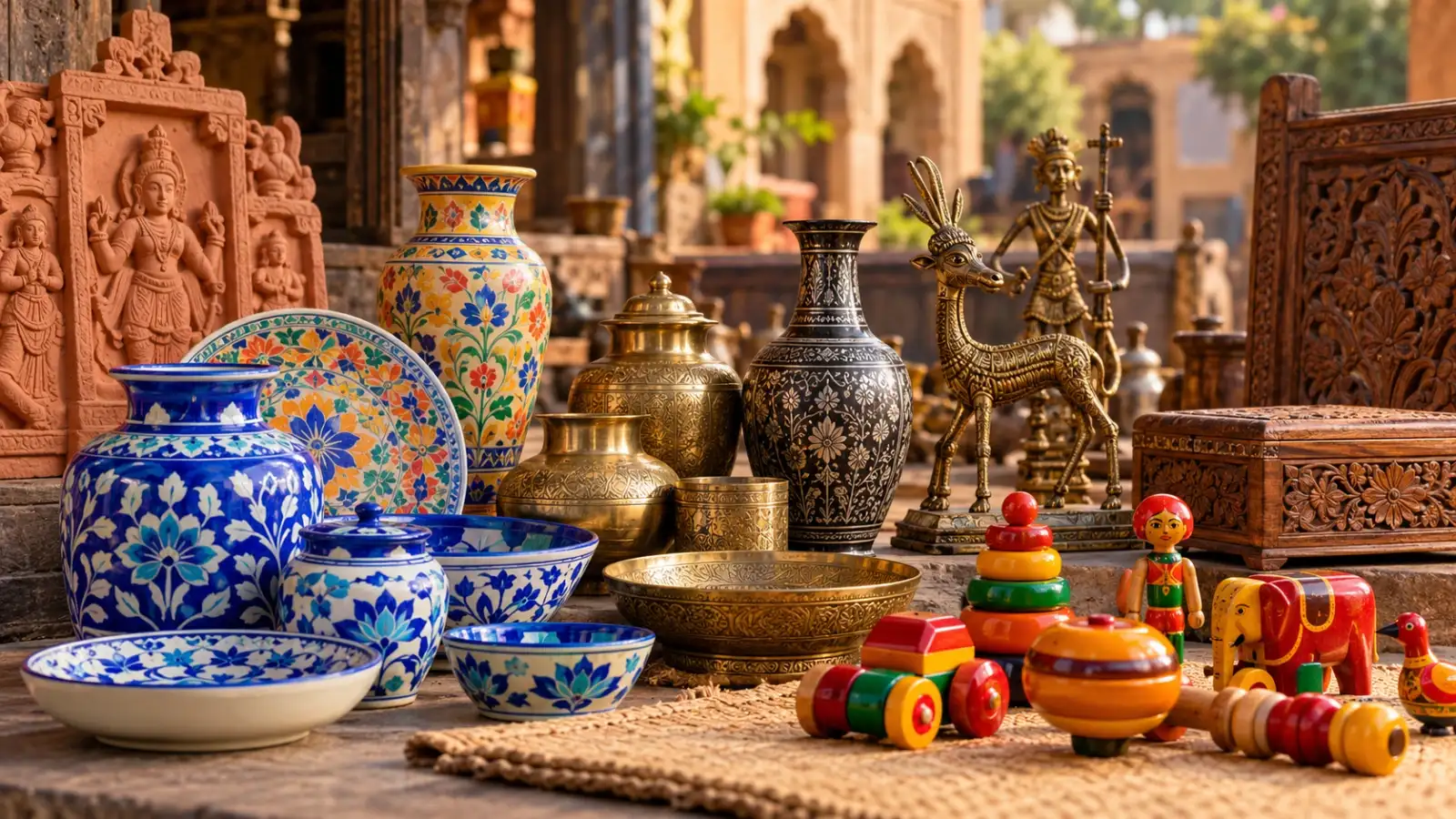
Visitors interested in pottery can explore local shops and workshops to understand how clay is shaped, glazed, painted and fired. The town is particularly appealing to anyone looking for practical handmade ceramics that combine traditional designs with everyday use.
Visitors can look for bowls, tiles, plates, vases and other decorative objects in craft stores and artisan workshops. Jaipur is a good destination for travellers who want to combine heritage sightseeing with an introduction to traditional craftsmanship.
These works differ from conventional pottery because many are designed as flat decorative panels rather than vessels. A visit offers insight into how clay becomes a medium for storytelling, religious expression and regional identity.
Artisans transform clay into bowls, pots, plates and decorative pieces through specialised shaping and firing techniques. Visitors can explore the craft through local sellers and workshops, while asking about the production process and the authenticity of the designs.
The town is especially interesting for travellers who want to see how metal surfaces are shaped, polished and decorated. Smaller artisan-led workshops may provide a closer look at traditional techniques.
The process involves several specialised stages, from shaping the metal to engraving designs and applying the contrasting inlay. Visitors can explore the craft through local workshops and sellers, learning why the careful detailing makes Bidriware different from ordinary metal souvenirs.
The finished pieces often have an earthy, textured appearance rather than a highly polished surface. For travellers interested in regional art, Bastar offers a chance to discover how metalwork can preserve community stories and cultural symbolism.
The craft is particularly appealing to families and visitors looking for lightweight souvenirs. Local craft outlets and workshops can help travellers understand how simple pieces of wood are transformed into smooth, colourful objects.
The craft requires patience and precision, with designs cut into wood using specialised tools. Visitors can browse local furniture and handicraft markets to appreciate the range of styles, from smaller souvenirs to elaborate household pieces.
The craft combines practical woodworking with decorative skill. Visitors can look for locally made pieces and learn about the traditional methods used to achieve their distinctive finish.
Buy directly from artisans or trusted local outlets when possible. Ask how an item is made, which materials are used and whether it is handmade locally. Prices can vary according to the time, skill and materials involved, so compare products thoughtfully rather than treating every handmade object as a mass-produced souvenir.
If you plan to buy pottery, request suitable protective packaging. For metal and wooden items, check the finish, weight and any care instructions before travelling home.
India’s pottery towns, metalworking centres and woodcraft destinations offer more than shopping opportunities. They introduce travellers to the people, techniques and traditions behind everyday objects. Whether you explore Khurja’s ceramics, Bidar’s metal inlay or Channapatna’s colourful wooden toys, visiting these places can make a journey more meaningful while helping traditional craftsmanship remain part of contemporary life.
1. Khurja, Uttar Pradesh: A Destination for Colourful Pottery
Khurja is one of India’s best-known pottery centres, recognised for its glazed ceramics, decorative crockery and colourful tableware. Artisans produce plates, bowls, cups, vases and decorative pieces in a variety of patterns.Visitors interested in pottery can explore local shops and workshops to understand how clay is shaped, glazed, painted and fired. The town is particularly appealing to anyone looking for practical handmade ceramics that combine traditional designs with everyday use.
2. Jaipur, Rajasthan: Discover the Beauty of Blue Pottery
Jaipur is famous for its distinctive blue pottery, which features decorative patterns inspired by floral designs and traditional motifs. Unlike ordinary clay pottery, this craft uses a quartz-based mixture, giving the finished products their characteristic appearance.Visitors can look for bowls, tiles, plates, vases and other decorative objects in craft stores and artisan workshops. Jaipur is a good destination for travellers who want to combine heritage sightseeing with an introduction to traditional craftsmanship.
3. Molela, Rajasthan: Terracotta Art with a Story
Molela, in Rajasthan’s Rajsamand district, is known for its terracotta plaques and relief panels. Artisans shape clay into detailed depictions of deities, folk traditions, animals and scenes from everyday life.These works differ from conventional pottery because many are designed as flat decorative panels rather than vessels. A visit offers insight into how clay becomes a medium for storytelling, religious expression and regional identity.
4. Nizamabad, Uttar Pradesh: Explore Distinctive Black Pottery
Nizamabad, near Azamgarh, is known for its striking black pottery. The craft is recognised for its dark finish, often decorated with delicate silver-coloured patterns.Artisans transform clay into bowls, pots, plates and decorative pieces through specialised shaping and firing techniques. Visitors can explore the craft through local sellers and workshops, while asking about the production process and the authenticity of the designs.
5. Moradabad, Uttar Pradesh: A Hub for Traditional Metalwork
Moradabad is widely associated with brassware and other metal handicrafts. Its workshops and markets offer an extensive range of decorative and functional objects, including trays, bowls, lamps, vases and engraved ornaments.The town is especially interesting for travellers who want to see how metal surfaces are shaped, polished and decorated. Smaller artisan-led workshops may provide a closer look at traditional techniques.
6. Bidar, Karnataka: Discover the Art of Bidriware
Bidar is the home of Bidriware, a distinctive metal craft known for its dark surface and contrasting silver inlay. Artisans create decorative patterns on metal objects, including boxes, plates, vases and jewellery pieces.The process involves several specialised stages, from shaping the metal to engraving designs and applying the contrasting inlay. Visitors can explore the craft through local workshops and sellers, learning why the careful detailing makes Bidriware different from ordinary metal souvenirs.
7. Bastar, Chhattisgarh: Traditional Dhokra Metal Craft
Bastar is known for its tribal art traditions, including Dhokra metal casting. Artisans use a traditional lost-wax technique to create figures of animals, musicians, deities and other subjects inspired by local life.The finished pieces often have an earthy, textured appearance rather than a highly polished surface. For travellers interested in regional art, Bastar offers a chance to discover how metalwork can preserve community stories and cultural symbolism.
8. Channapatna, Karnataka: Wooden Toys with Bright Colours
Channapatna is popularly associated with lacquered wooden toys. Artisans shape wood on a lathe and finish it with colourful coatings to create toys, small figures, kitchen accessories and decorative objects.The craft is particularly appealing to families and visitors looking for lightweight souvenirs. Local craft outlets and workshops can help travellers understand how simple pieces of wood are transformed into smooth, colourful objects.
9. Saharanpur, Uttar Pradesh: Intricate Wood Carving
Saharanpur has a long-standing reputation for carved wooden furniture and decorative handicrafts. Local artisans produce panels, boxes, tables, screens and other objects featuring floral patterns and detailed ornamental work.The craft requires patience and precision, with designs cut into wood using specialised tools. Visitors can browse local furniture and handicraft markets to appreciate the range of styles, from smaller souvenirs to elaborate household pieces.
You may also like
- Why Is Sharad Purnima Kheer Left Under Moonlight?
- IUI for Endometriosis: When Does It Work Best?
- India's AI wonder kid: Meet 16-year-old Raul John Aju; the teenager from Kerala, still in school, who runs an AI startup, trains 5 lakh learners, and pays his father ₹2 lakh a month
- New Research Explores How Body-Clock Disruptions May Be Linked to Depression
- Gold Price Today: Gold became cheaper by ₹3600 in three days, silver fell by ₹15000 in 10 days..
10. Etikoppaka, Andhra Pradesh: Traditional Lacquered Woodcraft
Etikoppaka is known for its colourful lacquered wooden toys and decorative objects. Artisans shape wood into simple forms and apply smooth, vibrant finishes to create toys, containers and small household items.The craft combines practical woodworking with decorative skill. Visitors can look for locally made pieces and learn about the traditional methods used to achieve their distinctive finish.
How to Make the Most of a Craft-Focused Trip
Before visiting, check whether local workshops welcome visitors and whether demonstrations need to be arranged in advance. Craft production is often part of everyday work, so ask permission before taking photographs or entering private spaces.Buy directly from artisans or trusted local outlets when possible. Ask how an item is made, which materials are used and whether it is handmade locally. Prices can vary according to the time, skill and materials involved, so compare products thoughtfully rather than treating every handmade object as a mass-produced souvenir.
If you plan to buy pottery, request suitable protective packaging. For metal and wooden items, check the finish, weight and any care instructions before travelling home.
India’s pottery towns, metalworking centres and woodcraft destinations offer more than shopping opportunities. They introduce travellers to the people, techniques and traditions behind everyday objects. Whether you explore Khurja’s ceramics, Bidar’s metal inlay or Channapatna’s colourful wooden toys, visiting these places can make a journey more meaningful while helping traditional craftsmanship remain part of contemporary life.






Loving Newspoint? Download the app now
