
5 Everyday Habits That Help Protect You from Pollution-Related Health Issues

Pollution does not announce itself the way an injury does. It works gradually, settling into the lungs, irritating the airways, and loading the body with particles it was never built to handle. The good news is that the body is not passive. Several everyday habits can meaningfully reduce how much of that burden it carries.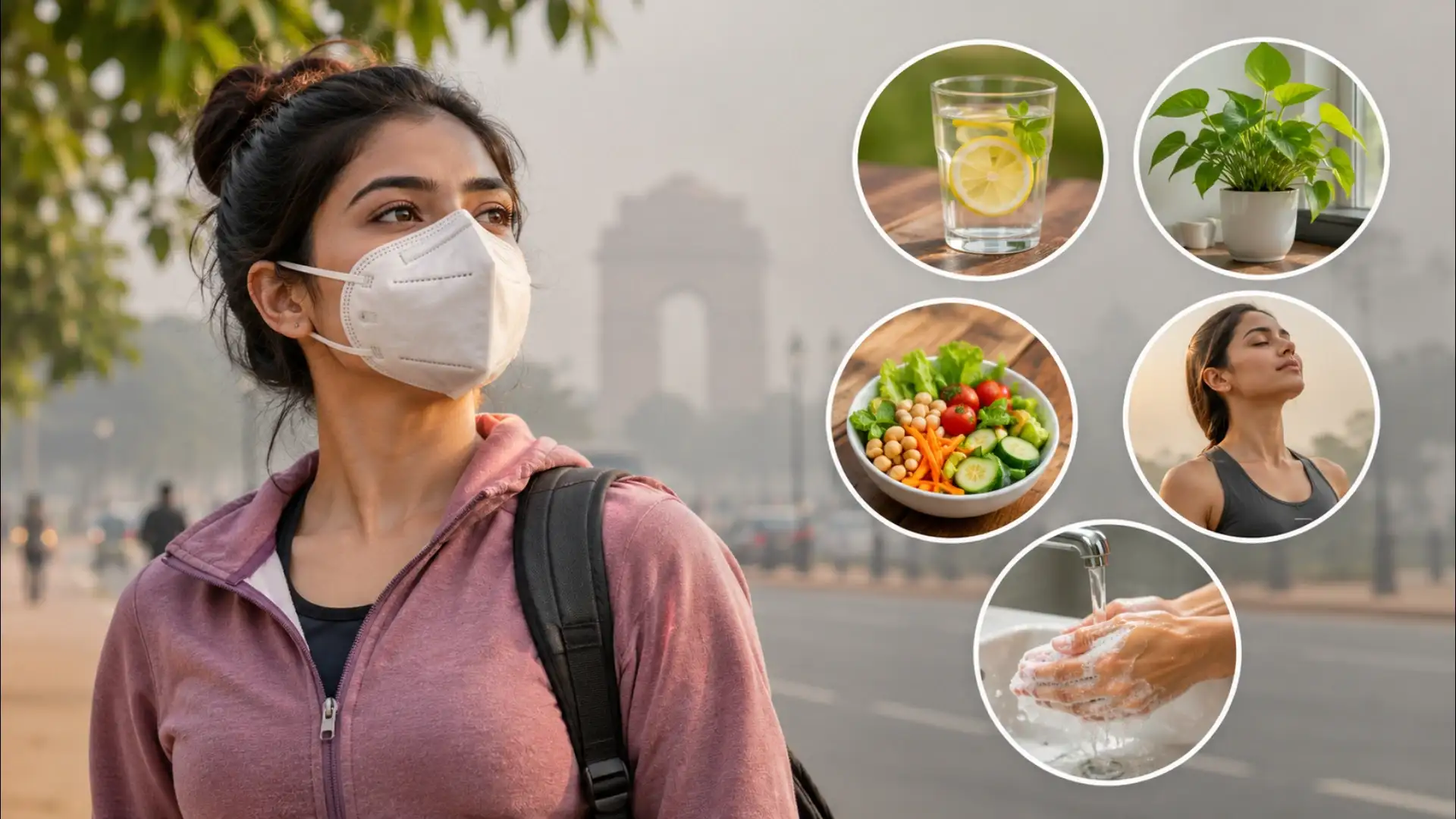
Rinse Your Face and Hands the Moment You Come Home
Particulate matter, the fine dust and soot that makes up a large part of urban air pollution, settles on exposed skin and in the fine hairs of the nose. Washing your face and rinsing your nostrils with clean water as soon as you walk in removes a significant portion of what you have collected outside before it has time to be absorbed or inhaled further. This is not a cosmetic habit. The nasal passages are the first filter the respiratory system has, and keeping them clear helps them do their job. A simple saline rinse, available at any pharmacy, can help clear particulates from the nasal cavity after heavy exposure outdoors.Build Your Meals Around Foods That Support Lung Function
The lining of the airways and the cells of the lung are constantly exposed to oxidative stress when pollution levels are high. Certain nutrients help the body manage this. Vitamin C, found in amla, guava, and citrus, supports the repair of tissue exposed to pollutants. Turmeric contains curcumin, which has anti-inflammatory properties well established in nutritional science. Leafy greens such as methi and palak provide folate and antioxidants that support cellular repair. None of these are cures, and no single food reverses pollution damage. What they do is give the body's repair systems the raw material they need to keep working. Eating a varied, plant-forward diet is the consistent thread across the research on respiratory health and diet.Time Your Outdoor Activity Carefully
Pollution is not constant through the day. In most Indian cities, particulate levels tend to be highest in the early morning before the sun warms the air and disperses ground-level pollutants, and again in the evening as traffic peaks and temperature drops. Midday, when the air mixes more freely, is typically cleaner. If you exercise outdoors, walk, or spend time in open spaces, shifting that window to mid-morning or early afternoon reduces the volume of polluted air you breathe during physical exertion, the time when your lungs are pulling in the most air. This is a simple scheduling adjustment that costs nothing.Keep Indoor Air as Clean as Reasonably Possible
Most people spend the majority of their day indoors, and indoor air quality is often worse than outdoor air because pollutants accumulate in enclosed spaces. A few habits make a real difference. Ventilate the kitchen properly when cooking on gas, since combustion produces nitrogen dioxide and fine particles. Avoid burning incense or mosquito coils in poorly ventilated rooms for long periods. If you use a room air purifier, keep the filter maintained, a clogged filter stops working. Certain houseplants such as spider plants and peace lilies have been shown in controlled settings to absorb some airborne compounds, though their effect in a typical room is modest. The single most effective indoor habit is simply not adding to the pollution load: no smoking indoors, no synthetic air fresheners sprayed into closed rooms.Protect Your Airways When You Go Outside
A well-fitted mask rated N95 or equivalent filters out a large proportion of fine particulate matter. Surgical masks and cloth masks offer much less protection against the smallest particles, which are the ones that reach deepest into the lungs. Wearing a proper mask on high-pollution days, during commutes on congested roads, or near construction sites is one of the most direct interventions available. It does not need to be every day, the days when air quality is visibly poor, when haze sits low, or when you will be outdoors for an extended stretch are the ones where it earns its place. Keep one accessible rather than hunting for it when you need it.Next Story