
Ranveer Singh may decide where Bollywood is headed next


When the first glimpse of
arrived some time last November, the conversation predictably revolved around Ranveer Singh ’s physical transformation. The long hair, the thick beard, the piercing stare and the simmering menace marked yet another dramatic departure for an actor, who has never seemed content with familiarity. Every new role arrives like a challenge to whatever image audiences have built of him previously. And just when people—from fans to producers to investors and directors—appear convinced they have figured him out, he moves in a completely new direction. Bollywood is historically known to reward consistency over risk. Yet Ranveer has made reinvention his greatest strength.
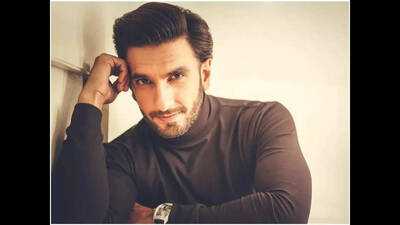
Today, the actor turns 40. A major milestone in any actor’s career. Okay, lead male stars have a longer curve, especially in Bollywood. Especially in our times, when age is a negligible number for producers if the actor is a superstar. From
on, where his career takes him is the burning question his fans are waiting to see. But for the moment, let’s find out how he got here.
In 2010, after
became a hit, Ranveer knew he had something rare in an industry that has on an average about 150 to almost 250 films per year, with very few standing out and becoming a commercial success. Especially with newcomers as lead. But what’s more important is to build from that momentum, and be consistent with it. And this is where most battles are lost. The ones who succeed, like Ranveer have, often called it a combination of luck and hard work. For Ranveer though, it’s been his energy and the ability to change like a chameleon – in his choice of film roles or on the cover of magazines. He simply refuses to be defined.
The word “energy” often conjures up images of a vivacious person. Even dramatic. But energy isn’t always over-the-top. It’s also restraint. Like in
. Sometimes, silence. Like
and
Where was the silence in
, one might ask. Well, in the first half hour of the film. When we meet Jaskirat Singh Rangi in the first 15 minutes before the first act of revenge begins in the form of an action sequence that stays with you even if you aren’t an action movie fan. It was not just the fight choreography, was it? It was how fast Jaskirat went from restraint to rage. And then back to restraint and a completely broken man at the end of the scene. By this time Ranveer had spent a decade and a half in the industry after bursting with fame in 2010.
Comfortably uncomfortableRanveer’s journey to superstardom didn’t start with that uber confidence. He struggled to control what his public image was going to be… till he understood, he didn't need to fret over it. He could just keep playing with the various parts of his personality depending on the day. Long before fashion magazines began routinely discussing gender-fluid dressing and celebrity wardrobes became extensions of personal manifestos, Ranveer wore embroidered jackets with track pants, oversized florals with chunky sneakers, pearls with tuxedos, skirts on magazine covers, neon suits, exaggerated prints and enough logos to make maximalism fashionable again. The clothes inevitably generated memes and divided opinion, but that almost seemed beside the point. Ranveer was never dressing to blend in. He was dressing to expand the boundaries of what a Bollywood leading man could look like. “I was known for my outrageous fashion (in school). I was the first to sport baggy jeans and show off the top of my briefs as a fashion statement, the first to wear sports jerseys, use styling gel, wear chunky silver jewellery. It’s how I have always been. People in my school WhatsApp group are hardly surprised; they say it's good to know I haven't changed,” Ranveer said in an interview to Vogue almost a decade ago.
Long before reinvention became an expectation from stars. Ranveer wasn’t the first though to experiment with looks in Bollywood. That was Aamir Khan. His looks changed from films to films – and his tonsorial choices had filled many newspaper and magazine changes. What Ranveer did was to take that idea—of movie roles, sartorial and tonsorial choices—not just forward but shoot it out of the park. Whether as an actor or a fashion icon, he refused to be trapped by the conventional trajectory of the Hindi film hero. He resisted being boxed into romantic leads after an explosive debut, embraced morally complex characters when most leading men still guarded their likability, experimented with fashion before conversations around gender-fluid dressing entered the mainstream, and built a public persona that celebrated vulnerability and emotional openness at a time when Bollywood masculinity was still largely defined by stoicism.
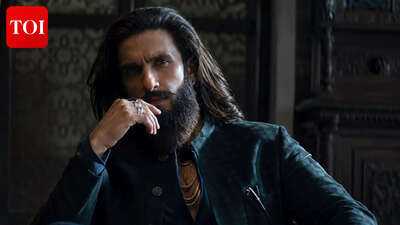
Maybe that explains why every few years the industry seems to “rediscover” Ranveer. Bittoo Sharma from
was loud, impulsive, occasionally insensitive and unmistakably rooted in middle-class Delhi. There was swagger but also vulnerability, arrogance softened by awkwardness. The performance was so effortless that many assumed he was simply playing an exaggerated version of himself. That assumption would not survive for long. Instead of consolidating his success by repeating the formula, he began dismantling expectations almost immediately. In
, he played a charming conman with effortless ease before disappearing into the quiet melancholy of
. As Varun Shrivastav, he abandoned the restless energy that had defined Bittoo Sharma and delivered one of Hindi cinema's most restrained performances of the decade.
The film itself found greater appreciation over time, but many critics recognised that Ranveer possessed an unusual willingness to slow down, underplay and allow silence to become part of his performance. That instinct has continued to define his choices. He has never seemed interested in repeating whatever worked last. Said the actor once, “I don't think I have any set image, and I don't want one. If I think I'm getting a particular image, I try and break it. I find it very important to keep the audience guessing and keep them on their toes.”
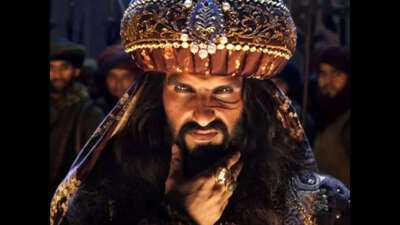
Then came his collaboration with Sanjay Leela Bhansali, which transformed him into one of Bollywood's most visually commanding leading men.
and
established him as a larger-than-life historical hero, yet at the same time, each of these films demanded something entirely different. Ram was playful and reckless, Bajirao carried the burden of history with simmering intensity, while Alauddin Khilji was perhaps the boldest decision of all. Hindi cinema has rarely seen an actor at the height of his commercial appeal willingly embrace a character so divisive. There was no attempt to soften him or justify his brutality. Ranveer leaned fully into the darkness. His preparation for the role became almost as famous as the performance itself. He has spoken about how emotionally exhausting it was to inhabit Khilji's psyche and how difficult it became to leave that aggression behind after filming. "I had to seek help," he admitted in interviews after the film's release.
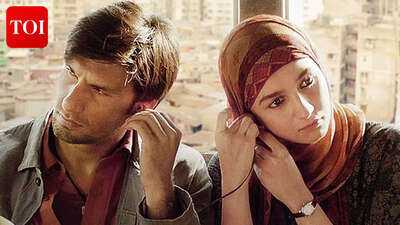
That willingness to embrace complexity surfaced again in
, although the transformation could not have been more different. Murad was quiet and introverted. Much of the performance depended on hesitation, lowered eyes and carefully contained emotion. Ranveer reportedly spent months studying Mumbai's underground hip-hop culture, working closely with rappers, observing speech patterns and internalising the rhythms of Dharavi before stepping in front of the camera. The result was one of his best performances.
There is a common thread running through these performances. Ranveer rarely approaches characters from the outside in. Costumes and physical transformations may attract headlines, but they are usually the final layer rather than the starting point. He appears determined to understand how each character thinks before deciding how he should look.
His style has always been deeply connected to his personality rather than carefully engineered for effect. In interviews, he has often described fashion as a celebration rather than a performance, saying he dresses according to how he feels rather than according to expectations. "I wear what I feel like wearing," he has repeatedly maintained, refusing to apologise for choices that defied Bollywood's unwritten dress code.
Over the years, he challenged not only how male stars dressed but how they behaved. His energy became a personality trait in itself. Whether dancing with fans outside a theatre, embracing technicians on a film set, cheering for colleagues at award functions or enthusiastically promoting another actor's work, Ranveer seemed determined to replace carefully cultivated mystery with accessibility. In an era when celebrity branding often depends on measured appearances and controlled interactions, he projected spontaneity. Hard to do in the age of PR dictatorship.
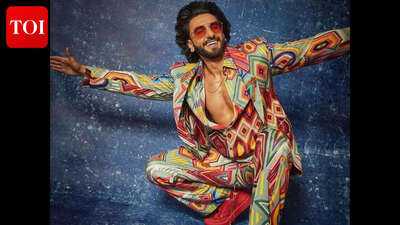
That openness occasionally led to criticism. There were moments when audiences wondered whether the exuberance was performative, whether the larger-than-life public persona overshadowed the actor beneath it. Some even tried to pull him down by calling him a male item number. But Ranveer doubled down. He wore the “male item number” tag with pride. Whether it is "Tattad Tattad", "Malhari", "Nashe Si Chadh Gayi", "What Jhumka?" or "Aankh Marey", the choreography succeeds because he commits completely to the emotion of the moment. He dances with abandon, unconcerned about looking composed. That uninhibited quality has made his “item numbers” cultural events in themselves – wedding playlists, college festivals and social media dance challenges continue to recycle his numbers.
arrived some time last November, the conversation predictably revolved around Ranveer Singh ’s physical transformation. The long hair, the thick beard, the piercing stare and the simmering menace marked yet another dramatic departure for an actor, who has never seemed content with familiarity. Every new role arrives like a challenge to whatever image audiences have built of him previously. And just when people—from fans to producers to investors and directors—appear convinced they have figured him out, he moves in a completely new direction. Bollywood is historically known to reward consistency over risk. Yet Ranveer has made reinvention his greatest strength.
Today, the actor turns 40. A major milestone in any actor’s career. Okay, lead male stars have a longer curve, especially in Bollywood. Especially in our times, when age is a negligible number for producers if the actor is a superstar. From
on, where his career takes him is the burning question his fans are waiting to see. But for the moment, let’s find out how he got here.
In 2010, after
became a hit, Ranveer knew he had something rare in an industry that has on an average about 150 to almost 250 films per year, with very few standing out and becoming a commercial success. Especially with newcomers as lead. But what’s more important is to build from that momentum, and be consistent with it. And this is where most battles are lost. The ones who succeed, like Ranveer have, often called it a combination of luck and hard work. For Ranveer though, it’s been his energy and the ability to change like a chameleon – in his choice of film roles or on the cover of magazines. He simply refuses to be defined.
The word “energy” often conjures up images of a vivacious person. Even dramatic. But energy isn’t always over-the-top. It’s also restraint. Like in
. Sometimes, silence. Like
and
Where was the silence in
, one might ask. Well, in the first half hour of the film. When we meet Jaskirat Singh Rangi in the first 15 minutes before the first act of revenge begins in the form of an action sequence that stays with you even if you aren’t an action movie fan. It was not just the fight choreography, was it? It was how fast Jaskirat went from restraint to rage. And then back to restraint and a completely broken man at the end of the scene. By this time Ranveer had spent a decade and a half in the industry after bursting with fame in 2010.
Comfortably uncomfortableRanveer’s journey to superstardom didn’t start with that uber confidence. He struggled to control what his public image was going to be… till he understood, he didn't need to fret over it. He could just keep playing with the various parts of his personality depending on the day. Long before fashion magazines began routinely discussing gender-fluid dressing and celebrity wardrobes became extensions of personal manifestos, Ranveer wore embroidered jackets with track pants, oversized florals with chunky sneakers, pearls with tuxedos, skirts on magazine covers, neon suits, exaggerated prints and enough logos to make maximalism fashionable again. The clothes inevitably generated memes and divided opinion, but that almost seemed beside the point. Ranveer was never dressing to blend in. He was dressing to expand the boundaries of what a Bollywood leading man could look like. “I was known for my outrageous fashion (in school). I was the first to sport baggy jeans and show off the top of my briefs as a fashion statement, the first to wear sports jerseys, use styling gel, wear chunky silver jewellery. It’s how I have always been. People in my school WhatsApp group are hardly surprised; they say it's good to know I haven't changed,” Ranveer said in an interview to Vogue almost a decade ago.
Long before reinvention became an expectation from stars. Ranveer wasn’t the first though to experiment with looks in Bollywood. That was Aamir Khan. His looks changed from films to films – and his tonsorial choices had filled many newspaper and magazine changes. What Ranveer did was to take that idea—of movie roles, sartorial and tonsorial choices—not just forward but shoot it out of the park. Whether as an actor or a fashion icon, he refused to be trapped by the conventional trajectory of the Hindi film hero. He resisted being boxed into romantic leads after an explosive debut, embraced morally complex characters when most leading men still guarded their likability, experimented with fashion before conversations around gender-fluid dressing entered the mainstream, and built a public persona that celebrated vulnerability and emotional openness at a time when Bollywood masculinity was still largely defined by stoicism.
Maybe that explains why every few years the industry seems to “rediscover” Ranveer. Bittoo Sharma from
was loud, impulsive, occasionally insensitive and unmistakably rooted in middle-class Delhi. There was swagger but also vulnerability, arrogance softened by awkwardness. The performance was so effortless that many assumed he was simply playing an exaggerated version of himself. That assumption would not survive for long. Instead of consolidating his success by repeating the formula, he began dismantling expectations almost immediately. In
, he played a charming conman with effortless ease before disappearing into the quiet melancholy of
. As Varun Shrivastav, he abandoned the restless energy that had defined Bittoo Sharma and delivered one of Hindi cinema's most restrained performances of the decade.
The film itself found greater appreciation over time, but many critics recognised that Ranveer possessed an unusual willingness to slow down, underplay and allow silence to become part of his performance. That instinct has continued to define his choices. He has never seemed interested in repeating whatever worked last. Said the actor once, “I don't think I have any set image, and I don't want one. If I think I'm getting a particular image, I try and break it. I find it very important to keep the audience guessing and keep them on their toes.”
Then came his collaboration with Sanjay Leela Bhansali, which transformed him into one of Bollywood's most visually commanding leading men.
and
established him as a larger-than-life historical hero, yet at the same time, each of these films demanded something entirely different. Ram was playful and reckless, Bajirao carried the burden of history with simmering intensity, while Alauddin Khilji was perhaps the boldest decision of all. Hindi cinema has rarely seen an actor at the height of his commercial appeal willingly embrace a character so divisive. There was no attempt to soften him or justify his brutality. Ranveer leaned fully into the darkness. His preparation for the role became almost as famous as the performance itself. He has spoken about how emotionally exhausting it was to inhabit Khilji's psyche and how difficult it became to leave that aggression behind after filming. "I had to seek help," he admitted in interviews after the film's release.
That willingness to embrace complexity surfaced again in
, although the transformation could not have been more different. Murad was quiet and introverted. Much of the performance depended on hesitation, lowered eyes and carefully contained emotion. Ranveer reportedly spent months studying Mumbai's underground hip-hop culture, working closely with rappers, observing speech patterns and internalising the rhythms of Dharavi before stepping in front of the camera. The result was one of his best performances.
There is a common thread running through these performances. Ranveer rarely approaches characters from the outside in. Costumes and physical transformations may attract headlines, but they are usually the final layer rather than the starting point. He appears determined to understand how each character thinks before deciding how he should look.
His style has always been deeply connected to his personality rather than carefully engineered for effect. In interviews, he has often described fashion as a celebration rather than a performance, saying he dresses according to how he feels rather than according to expectations. "I wear what I feel like wearing," he has repeatedly maintained, refusing to apologise for choices that defied Bollywood's unwritten dress code.
Over the years, he challenged not only how male stars dressed but how they behaved. His energy became a personality trait in itself. Whether dancing with fans outside a theatre, embracing technicians on a film set, cheering for colleagues at award functions or enthusiastically promoting another actor's work, Ranveer seemed determined to replace carefully cultivated mystery with accessibility. In an era when celebrity branding often depends on measured appearances and controlled interactions, he projected spontaneity. Hard to do in the age of PR dictatorship.
That openness occasionally led to criticism. There were moments when audiences wondered whether the exuberance was performative, whether the larger-than-life public persona overshadowed the actor beneath it. Some even tried to pull him down by calling him a male item number. But Ranveer doubled down. He wore the “male item number” tag with pride. Whether it is "Tattad Tattad", "Malhari", "Nashe Si Chadh Gayi", "What Jhumka?" or "Aankh Marey", the choreography succeeds because he commits completely to the emotion of the moment. He dances with abandon, unconcerned about looking composed. That uninhibited quality has made his “item numbers” cultural events in themselves – wedding playlists, college festivals and social media dance challenges continue to recycle his numbers.
Next Story