
Real-life clone? This sheep, named after a famous singer, was the world's first successful living replica


Imagine this: a mad scientist, a secret lab, and a perfect copy of a person walking out the door, a body double.
We often watch such scenarios in movies and anticipate them in reality.
While it might seem to be true only in the movies, cloning is actually possible in real life too, but it is not as filmy as this, instead a lot messier.
Even though for decades, cloning had existed mostly in the realm of science fiction, it stopped being fiction altogether, and it was set around a fairly ordinary animal- the first clone.
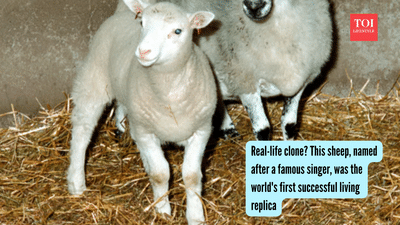
Meet Dolly, the first cloned mammal
Dolly the sheep was born on July 5, 1996, at the Roslin Institute in Scotland, becoming the first mammal successfully cloned from an adult cell. Originally referred to by the code name "6LL3," she was later named Dolly, reportedly after singer Dolly Parton, once a stockman learned she had been cloned from a mammary gland cell. The donor cell came from a six-year-old ewe.
How Dolly's birth was met with controversy
When Dolly's existence was publicly announced in February 1997, it triggered debate across the globe. Supporters believed the technology could unlock major medical advances, including organ-donor animals and therapeutic cloning for diseases like Alzheimer's and Parkinson's. What centered the debate was mostly that the technology was unsafe and unethical, particularly given fears it could eventually pave the way toward human cloning.
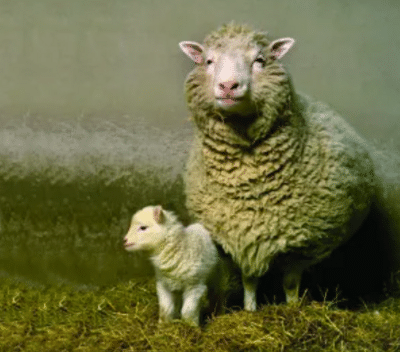
How did Dolly’s life span turn out?
Dolly went on to mate with a male sheep and gave birth to four lambs over her lifetime. In January 2002, she was diagnosed with arthritis in her hind legs, raising early questions about whether cloning may cause genetic abnormalities. She was eventually put down on February 14, 2003, after developing a progressive lung disease, at just six years old.
We often watch such scenarios in movies and anticipate them in reality.
While it might seem to be true only in the movies, cloning is actually possible in real life too, but it is not as filmy as this, instead a lot messier.
Even though for decades, cloning had existed mostly in the realm of science fiction, it stopped being fiction altogether, and it was set around a fairly ordinary animal- the first clone.
Meet Dolly, the first cloned mammal
Dolly the sheep was born on July 5, 1996, at the Roslin Institute in Scotland, becoming the first mammal successfully cloned from an adult cell. Originally referred to by the code name "6LL3," she was later named Dolly, reportedly after singer Dolly Parton, once a stockman learned she had been cloned from a mammary gland cell. The donor cell came from a six-year-old ewe.
How Dolly's birth was met with controversy
When Dolly's existence was publicly announced in February 1997, it triggered debate across the globe. Supporters believed the technology could unlock major medical advances, including organ-donor animals and therapeutic cloning for diseases like Alzheimer's and Parkinson's. What centered the debate was mostly that the technology was unsafe and unethical, particularly given fears it could eventually pave the way toward human cloning.
How did Dolly’s life span turn out?
Dolly went on to mate with a male sheep and gave birth to four lambs over her lifetime. In January 2002, she was diagnosed with arthritis in her hind legs, raising early questions about whether cloning may cause genetic abnormalities. She was eventually put down on February 14, 2003, after developing a progressive lung disease, at just six years old.
Next Story