
Red Amaranth vs Green Amaranth: Which Saag Is Healthier?

Red amaranth vs green amaranth is an interesting nutritional comparison because both varieties are popular leafy greens, yet their colours hint at differences in their plant compounds. Red amaranth gets its striking colour from pigments linked with antioxidant activity, while green amaranth offers fibre, protein, minerals and several other beneficial plant compounds. So, which one is healthier? The answer depends largely on what you want from your diet.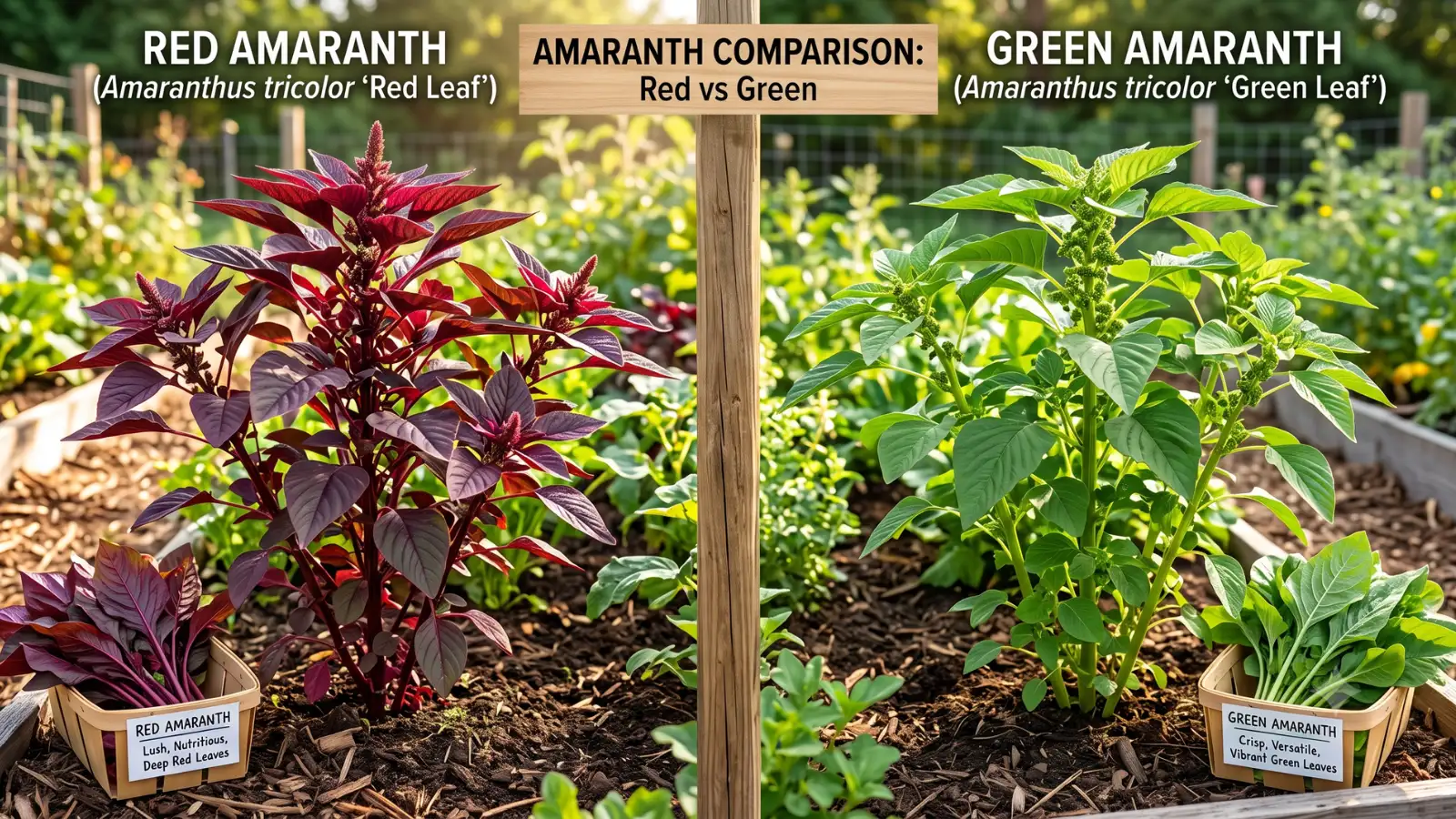
Red and purple varieties can contain pigments such as betalains, including betacyanins and betaxanthins. They may also contain carotenoids, vitamin C, phenolic compounds and flavonoids. Several of these substances are associated with antioxidant activity.
Research comparing different amaranth varieties has found that some red types can contain higher concentrations of certain antioxidant-related compounds than selected green varieties.
However, it is important to understand what this research actually means. Higher antioxidant activity measured in a laboratory does not automatically prove that eating the vegetable will prevent a particular disease or provide a specific health benefit in humans.
Researchers have identified compounds such as quercetin, catechin, myricetin and apigenin in red amaranth varieties, along with vitamin C, phenolic compounds, flavonoids and antioxidant pigments.
Research examining multiple red amaranth genotypes has also reported dietary fibre, protein, minerals, carotenoids, betalains, phenolics, flavonoids, vitamin C and beta-carotene.
But there is an important point to remember: not every red amaranth plant will have exactly the same nutritional profile. The amount of individual nutrients and phytochemicals can vary between varieties.
Studies examining green amaranth have found fibre, protein and several essential minerals, including potassium, calcium, magnesium, iron, manganese, copper and zinc. Green leaves can also provide vitamin C, carotenoids, phenolic compounds, flavonoids, chlorophylls and betalains.
The familiar green colour is largely associated with chlorophyll, but that does not mean the leaves lack other valuable plant compounds.
In fact, green amaranth can be a highly nutritious addition to an everyday Indian diet, particularly when eaten as part of a varied meal pattern.
This comparison also shows why calling one variety universally "better" can be misleading.
But if your goal is simply to include a nutritious leafy vegetable in your meals, green amaranth remains an excellent option. It provides fibre, protein, minerals, vitamins and a range of plant compounds.
Therefore, there is no need to think of red amaranth as the "healthy" version and green amaranth as an inferior alternative.
Soil, environmental conditions, genotype and other factors can affect the concentration of pigments, vitamins, phenolic compounds and antioxidant-related substances.
That means a red leaf is not automatically more nutritious than every green amaranth leaf.
You can cook amaranth leaves as saag, combine them with dal, add them to mixed vegetable preparations or use them alongside other leafy greens.
Instead of worrying about which colour is the ultimate winner, consider eating different varieties when they are available. Red amaranth can add a different mix of pigments and phytochemicals to your diet, while green amaranth offers its own combination of nutrients and plant compounds.
The more useful takeaway is to avoid judging vegetables only by colour. Red and green amaranth are closely related leafy greens with overlapping nutritional qualities, but their individual plant compounds can vary.
So, if both are available at your local market, there is no need to choose just one. Rotate between red and green amaranth and enjoy the nutritional variety they bring to your plate.
Why Is Red Amaranth Red?
The bright red, purple or reddish shades of amaranth leaves are more than just a visual difference. They come from naturally occurring pigments and phytochemicals found in the plant.Red and purple varieties can contain pigments such as betalains, including betacyanins and betaxanthins. They may also contain carotenoids, vitamin C, phenolic compounds and flavonoids. Several of these substances are associated with antioxidant activity.
Research comparing different amaranth varieties has found that some red types can contain higher concentrations of certain antioxidant-related compounds than selected green varieties.
However, it is important to understand what this research actually means. Higher antioxidant activity measured in a laboratory does not automatically prove that eating the vegetable will prevent a particular disease or provide a specific health benefit in humans.
Red Amaranth May Have More Antioxidant Compounds
If antioxidant-rich plant compounds are your main priority, red amaranth appears to have an advantage in some studies.Researchers have identified compounds such as quercetin, catechin, myricetin and apigenin in red amaranth varieties, along with vitamin C, phenolic compounds, flavonoids and antioxidant pigments.
Research examining multiple red amaranth genotypes has also reported dietary fibre, protein, minerals, carotenoids, betalains, phenolics, flavonoids, vitamin C and beta-carotene.
But there is an important point to remember: not every red amaranth plant will have exactly the same nutritional profile. The amount of individual nutrients and phytochemicals can vary between varieties.
Green Amaranth Is Also Packed With Nutrients
Green amaranth should not be dismissed simply because it lacks the dramatic red colour.Studies examining green amaranth have found fibre, protein and several essential minerals, including potassium, calcium, magnesium, iron, manganese, copper and zinc. Green leaves can also provide vitamin C, carotenoids, phenolic compounds, flavonoids, chlorophylls and betalains.
The familiar green colour is largely associated with chlorophyll, but that does not mean the leaves lack other valuable plant compounds.
In fact, green amaranth can be a highly nutritious addition to an everyday Indian diet, particularly when eaten as part of a varied meal pattern.
Red Amaranth vs Green Amaranth: Key Nutritional Difference
The biggest difference between the two is not that one is healthy and the other is unhealthy. Instead, their concentrations of particular pigments and phytochemicals can differ.| Nutritional Aspect | Red Amaranth | Green Amaranth |
|---|---|---|
| Colour pigments | Rich in betalains and other pigments | Rich in chlorophyll and other plant compounds |
| Antioxidant compounds | Some varieties may contain higher levels | Also contains antioxidant-related compounds |
| Fibre | Provides fibre | Provides fibre |
| Protein | Provides plant protein | Provides plant protein |
| Minerals | Contains several minerals | Contains several minerals |
| Vitamin C | Present in studied varieties | Present in studied varieties |
| Phytochemicals | Phenolics, flavonoids, carotenoids and betalains | Phenolics, flavonoids, carotenoids, chlorophylls and other compounds |
Which Amaranth Is Healthier?
If you are specifically looking for antioxidant pigments and certain phytochemicals, red amaranth may have an edge based on research conducted on selected varieties.But if your goal is simply to include a nutritious leafy vegetable in your meals, green amaranth remains an excellent option. It provides fibre, protein, minerals, vitamins and a range of plant compounds.
Therefore, there is no need to think of red amaranth as the "healthy" version and green amaranth as an inferior alternative.
Why Colour Alone Cannot Decide Nutrition
One important factor is variety. Researchers have found differences even among individual amaranth genotypes. Growing conditions can also influence the plant's nutritional composition.Soil, environmental conditions, genotype and other factors can affect the concentration of pigments, vitamins, phenolic compounds and antioxidant-related substances.
That means a red leaf is not automatically more nutritious than every green amaranth leaf.
How To Add Amaranth To Your Indian Diet
Both varieties are easy to incorporate into everyday Indian meals.You can cook amaranth leaves as saag, combine them with dal, add them to mixed vegetable preparations or use them alongside other leafy greens.
Instead of worrying about which colour is the ultimate winner, consider eating different varieties when they are available. Red amaranth can add a different mix of pigments and phytochemicals to your diet, while green amaranth offers its own combination of nutrients and plant compounds.
Red or Green Amaranth: The Simple Verdict
Red amaranth may have an advantage when it comes to certain antioxidant pigments and phytochemicals, but that does not make green amaranth unhealthy. Both are nutrient-rich leafy vegetables and can have a place in a balanced diet.The more useful takeaway is to avoid judging vegetables only by colour. Red and green amaranth are closely related leafy greens with overlapping nutritional qualities, but their individual plant compounds can vary.
So, if both are available at your local market, there is no need to choose just one. Rotate between red and green amaranth and enjoy the nutritional variety they bring to your plate.
Next Story