
Forgotten Indian Summer Hacks From Our Grandparents That Modern Homes Need

Before air conditioners and modern cooling systems became common, Indian households had their own clever ways to handle scorching summers. These traditional Indian summer hacks were developed through generations of experience, using natural materials, seasonal foods and smart lifestyle habits to stay comfortable during extreme heat. From storing water in clay pots to using cooling plants around homes, these methods were closely connected with India’s climate and local traditions. Today, as electricity costs rise and environmental concerns increase, many of these forgotten practices are finding their way back into modern homes. Ancient wisdom is proving that staying cool does not always require high-energy solutions.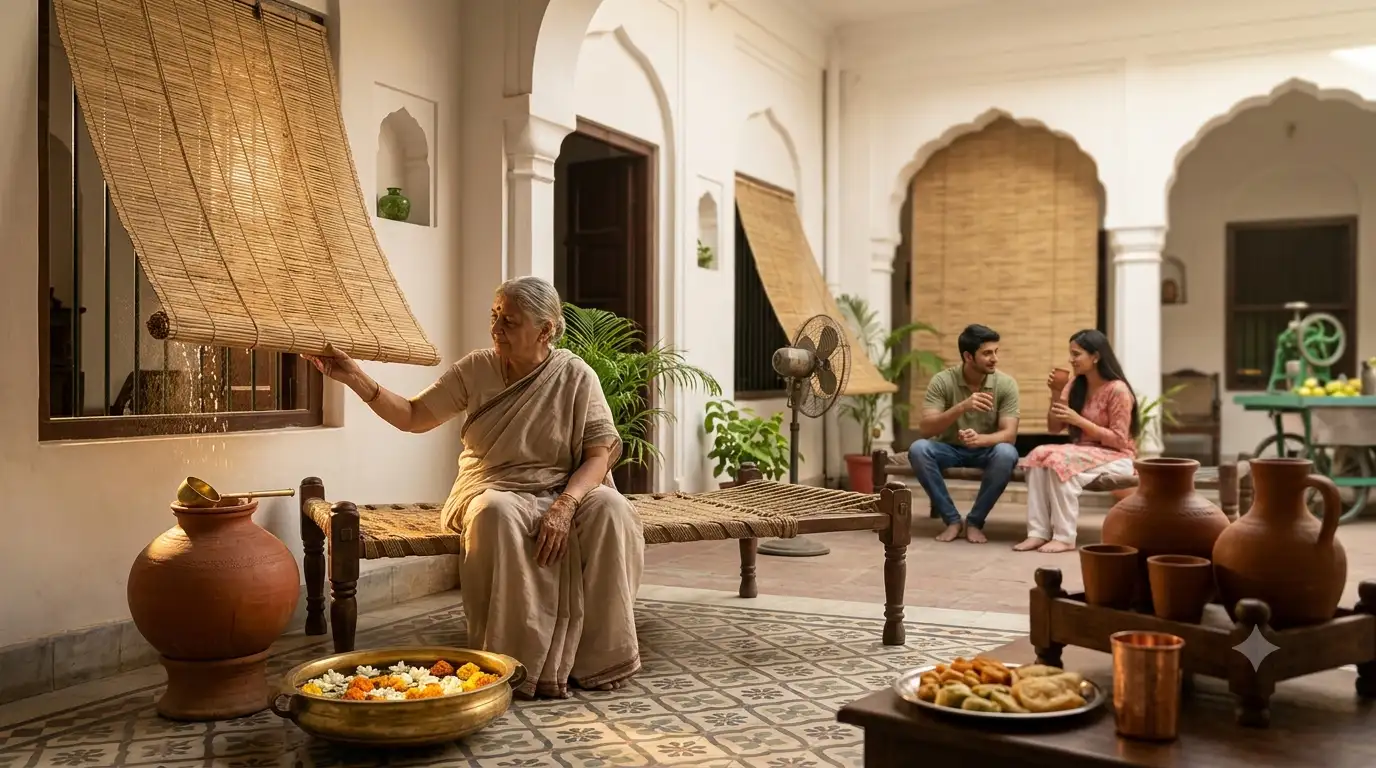
For centuries, Indian families have relied on earthen pots because they naturally cool water through evaporation. The tiny pores in the clay allow small amounts of water to escape, reducing the temperature inside the pot.
Unlike refrigerators that require electricity, matkas provide a natural cooling method while also adding minerals from the clay. Many rural households continue this practice because it is affordable, sustainable and effective.
When water was sprinkled on them, air passing through the wet roots became naturally cooler before entering the room. This simple technique helped reduce indoor temperatures before modern air conditioners became widely available.
The use of khus also added a pleasant natural fragrance, creating a more comfortable indoor environment.
White-painted roofs reflect sunlight instead of absorbing it, helping keep indoor spaces cooler. This idea is now gaining popularity in modern urban areas where buildings experience intense heat absorption.
Earthen Pots: The Natural Refrigerator of Indian Homes
One of the most iconic traditional Indian summer hacks is using a clay pot, commonly known as a matka, for storing drinking water.For centuries, Indian families have relied on earthen pots because they naturally cool water through evaporation. The tiny pores in the clay allow small amounts of water to escape, reducing the temperature inside the pot.
Unlike refrigerators that require electricity, matkas provide a natural cooling method while also adding minerals from the clay. Many rural households continue this practice because it is affordable, sustainable and effective.
Khus Curtains and Natural Cooling Techniques
In many parts of North India, traditional homes used khus curtains during summer. Made from the roots of vetiver grass, these curtains were placed near windows and doors.When water was sprinkled on them, air passing through the wet roots became naturally cooler before entering the room. This simple technique helped reduce indoor temperatures before modern air conditioners became widely available.
The use of khus also added a pleasant natural fragrance, creating a more comfortable indoor environment.
White Roofs and Reflective Surfaces
Traditional architecture across India often considered climate while designing homes. Many houses used light-coloured surfaces, courtyards and ventilation systems to reduce heat.White-painted roofs reflect sunlight instead of absorbing it, helping keep indoor spaces cooler. This idea is now gaining popularity in modern urban areas where buildings experience intense heat absorption.
Next Story