
Meet the Octopuses That Carry Coconut Shells for Protection

When people think of animals using tools, chimpanzees, crows or even dolphins usually come to mind. Octopuses rarely make that list, yet these remarkable marine creatures have repeatedly demonstrated astonishing intelligence. One of the most fascinating examples is the veined octopus , which has been observed collecting discarded coconut shells from the seabed and carrying them for future use as portable shelters. Rather than simply hiding under rocks, these octopuses plan ahead, transport heavy objects and assemble them into protective homes whenever danger approaches. Their behaviour has amazed marine biologists and challenged long-held assumptions about intelligence in animals without backbones.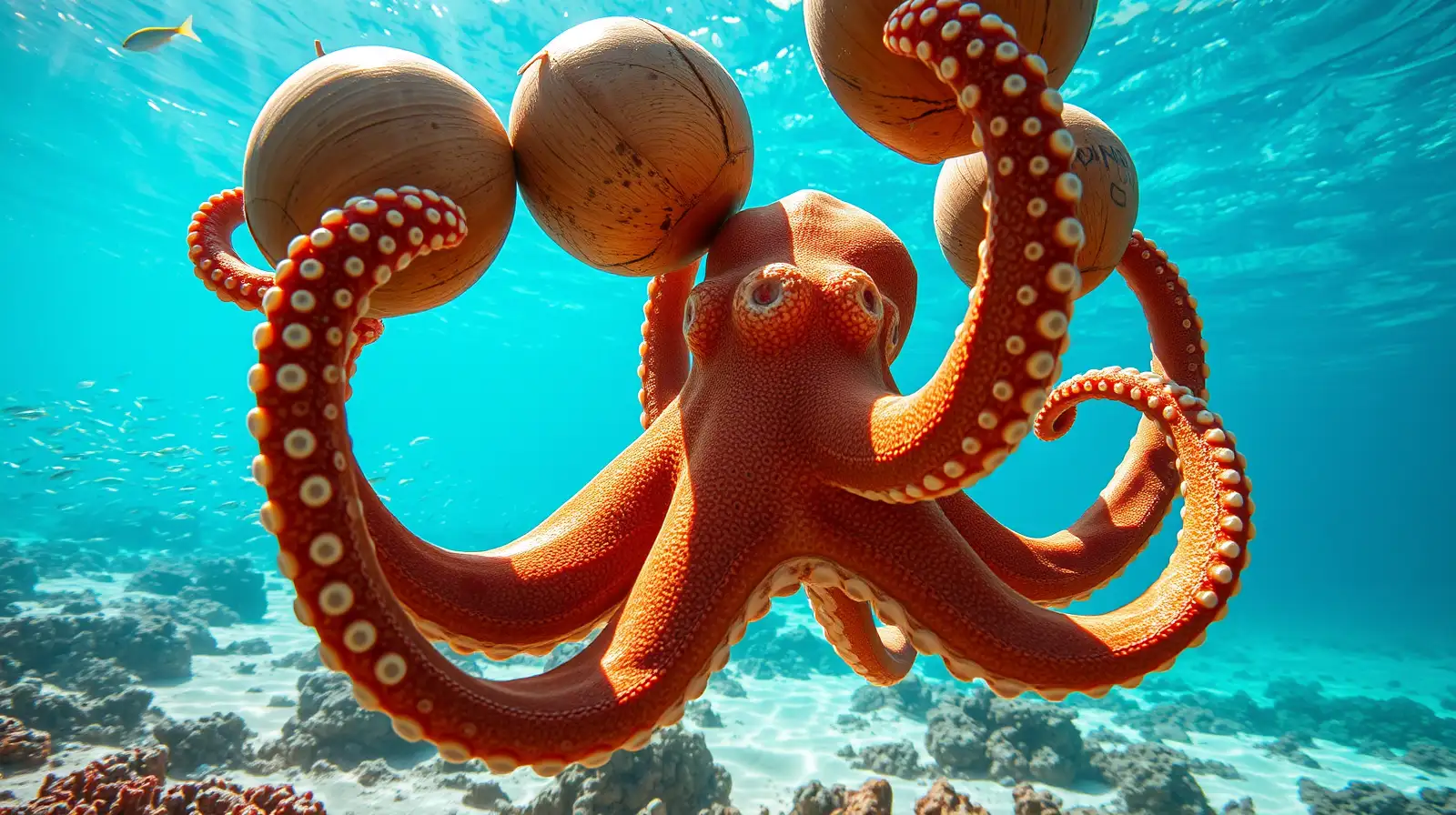
Unlike many marine animals that rely on permanent shelters, this octopus often lives in open areas with limited places to hide. To overcome this challenge, it searches the seabed for empty coconut shell halves or large clam shells that can later be used as portable refuges.
This behaviour requires planning, effort and an understanding that the objects will be useful in the future.
Although carrying the shells slows them down and leaves them temporarily exposed to predators, they continue transporting them until reaching a suitable location.
When threatened, the octopus quickly assembles two shell halves into a protective enclosure, creating an instant shelter.
This is considered one of the clearest examples of tool use in an invertebrate.
Unlike rocks or coral, they can be moved whenever necessary. This gives the octopus a portable defence system that can be carried across sandy areas where natural cover is scarce.
Some octopuses also use large clam shells in a similar way, demonstrating flexibility in choosing whatever materials are available.
Their ability to adapt to different environments highlights their impressive problem-solving skills.
The coconut-carrying behaviour stands out because it involves future planning rather than immediate reward. The octopus invests energy transporting an object that may not become useful until much later.
For many scientists, this level of foresight represents a sophisticated form of cognition rarely seen outside birds and mammals.
Unlike mammals, octopuses possess a completely different nervous system, with many of their neurons located in their arms rather than their brain. Yet they have evolved remarkably advanced behaviours.
These discoveries are influencing research into robotics, artificial intelligence and animal cognition while also strengthening the case for protecting marine habitats that support such extraordinary species.
Octopuses That Collect Coconut Shells as Homes
A Master of Underwater Problem-Solving
The veined octopus (Amphioctopus marginatus), found in the tropical waters of the Indo-Pacific, is renowned for its remarkable ability to solve problems.Unlike many marine animals that rely on permanent shelters, this octopus often lives in open areas with limited places to hide. To overcome this challenge, it searches the seabed for empty coconut shell halves or large clam shells that can later be used as portable refuges.
This behaviour requires planning, effort and an understanding that the objects will be useful in the future.
Carrying a Home Across the Seabed
Researchers first documented this extraordinary behaviour in Indonesia, where veined octopuses were filmed lifting coconut shell halves beneath their bodies and "walking" across the seabed on their arms.Although carrying the shells slows them down and leaves them temporarily exposed to predators, they continue transporting them until reaching a suitable location.
When threatened, the octopus quickly assembles two shell halves into a protective enclosure, creating an instant shelter.
This is considered one of the clearest examples of tool use in an invertebrate.
Why Coconut Shells Make Perfect Shelters
Coconut shells are lightweight, durable and naturally curved, making them ideal hiding places.You may also like
- Zendaya Sparks Debate with Ancient Gold Earrings at The Odyssey Photocall
- Lauren Sánchez and Jeff Bezos pledge ₹327 crore to reinvent future of fashion
- Plastic Note: How will plastic notes differ from paper currency? Notes of ₹10 and ₹20 denominations will be introduced first..
- EV Subsidy: 50% subsidy on EV purchases announced by the government; bring home a bike at half the price.
- Make sure to check these 3 hidden clauses before signing a rent agreement, or else you might regret it later..
Unlike rocks or coral, they can be moved whenever necessary. This gives the octopus a portable defence system that can be carried across sandy areas where natural cover is scarce.
Some octopuses also use large clam shells in a similar way, demonstrating flexibility in choosing whatever materials are available.
Their ability to adapt to different environments highlights their impressive problem-solving skills.
Intelligence Beyond Expectations
Octopuses are already recognised as some of the most intelligent invertebrates on Earth. They have been shown to solve puzzles, escape from secure tanks, recognise individual people and learn through observation.The coconut-carrying behaviour stands out because it involves future planning rather than immediate reward. The octopus invests energy transporting an object that may not become useful until much later.
For many scientists, this level of foresight represents a sophisticated form of cognition rarely seen outside birds and mammals.
Why This Matters Today
Studying octopus intelligence helps researchers better understand how complex thinking evolved independently in different branches of the animal kingdom.Unlike mammals, octopuses possess a completely different nervous system, with many of their neurons located in their arms rather than their brain. Yet they have evolved remarkably advanced behaviours.
These discoveries are influencing research into robotics, artificial intelligence and animal cognition while also strengthening the case for protecting marine habitats that support such extraordinary species.






Loving Newspoint? Download the app now
