
Fish That Can Recognise Themselves in Mirrors: The Surprising Science of Self-Awareness

For decades, scientists believed that recognising oneself in a mirror was a rare ability limited to highly intelligent animals such as great apes, dolphins and elephants. Fish were rarely considered capable of such complex thinking. That assumption changed when researchers observed an unexpected behaviour in a small tropical species known as the cleaner wrasse. Faced with a mirror, these fish appeared to inspect marks placed on their own bodies, suggesting they recognised the reflection as themselves rather than another fish. The findings sparked intense scientific debate, challenging long-held ideas about animal intelligence and raising fascinating questions about how different species perceive the world around them.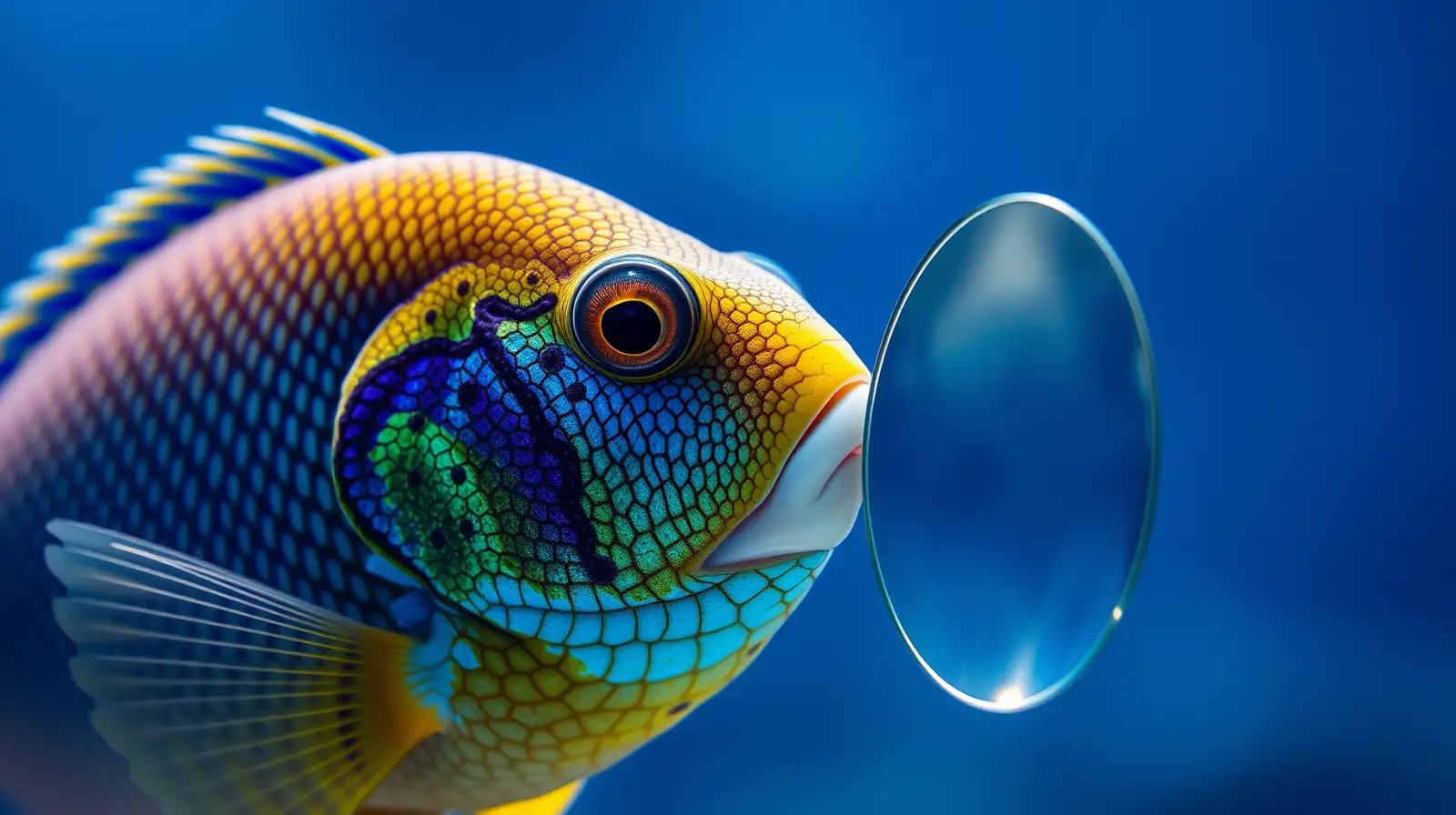
In the test, researchers place a small, harmless mark on an animal in a spot it cannot normally see. If the animal notices the mark in the mirror and tries to remove or inspect it, scientists consider this evidence of self-recognition.
For many years, only a handful of mammals and birds consistently passed the test. Fish were not expected to come close.
In a landmark study, cleaner wrasse initially reacted aggressively to their reflections, treating them as rivals. After repeated exposure, their behaviour changed. When researchers placed a coloured mark on their bodies, the fish repeatedly examined themselves in the mirror before attempting to scrape the mark off against rocks or the seabed.
This behaviour resembled the responses seen in animals that had previously passed the mirror test.
Some scientists argue the fish may simply associate the reflection with information about their own body without actually understanding that it is themselves. Others believe the mirror test may not measure intelligence equally across different species.
The debate has encouraged researchers to rethink whether traditional tests are suitable for animals with vastly different brains and lifestyles.
Rather than dismissing fish intelligence, many experts now argue that new methods may be needed to study cognition across the animal kingdom.
Cleaner wrasse themselves demonstrate remarkable social intelligence. They remember regular clients, adjust their behaviour depending on whether they are being watched and cooperate with other fish in ways that were once thought impossible for such small brains.
These discoveries continue to reshape our understanding of underwater life.
The research also reminds us that intelligence evolves in many different forms. Animals do not need large brains or close relationships to humans to develop sophisticated behaviours.
Every new discovery encourages scientists to ask better questions about consciousness, learning and the diversity of life on Earth.
Fish That Can Recognise Themselves in Mirrors
What Is the Mirror Test ?
The mirror test was first developed in 1970 by psychologist Gordon Gallup Jr. It is designed to assess whether an animal can recognise its own reflection.In the test, researchers place a small, harmless mark on an animal in a spot it cannot normally see. If the animal notices the mark in the mirror and tries to remove or inspect it, scientists consider this evidence of self-recognition.
For many years, only a handful of mammals and birds consistently passed the test. Fish were not expected to come close.
The Cleaner Wrasse That Surprised Scientists
The cleaner wrasse, a brightly coloured reef fish found in the Indo-Pacific, changed that perception. These fish are well known for removing parasites from larger fish, giving them an exceptional ability to notice tiny details on skin and scales.In a landmark study, cleaner wrasse initially reacted aggressively to their reflections, treating them as rivals. After repeated exposure, their behaviour changed. When researchers placed a coloured mark on their bodies, the fish repeatedly examined themselves in the mirror before attempting to scrape the mark off against rocks or the seabed.
This behaviour resembled the responses seen in animals that had previously passed the mirror test.
Why the Discovery Is Still Debated
Although the cleaner wrasse's behaviour impressed many researchers, not everyone agrees that it proves true self-awareness.Some scientists argue the fish may simply associate the reflection with information about their own body without actually understanding that it is themselves. Others believe the mirror test may not measure intelligence equally across different species.
You may also like
- Make rose water at home for glowing skin, the process is very easy
- EPFO credits PF interest to 34 crore accounts; have you received yours? Here's how to check...
- Gold has become cheaper by ₹2,200 and silver by over ₹4,900; find out from experts if prices will fall further..
- Special Trains: Special trains announced for Shravani Mela; find out the routes..
- “On the exam day, luck was also on my side”: NEET AIR 1 Aryan Gupta reveals the habits, family support and the luck factor behind his success
The debate has encouraged researchers to rethink whether traditional tests are suitable for animals with vastly different brains and lifestyles.
Rather than dismissing fish intelligence, many experts now argue that new methods may be needed to study cognition across the animal kingdom.
Hidden Intelligence Beneath the Water
Fish are increasingly proving to be far more intelligent than once believed. Studies have shown that many species can learn from experience, remember locations for months, recognise individual fish and even use simple tools.Cleaner wrasse themselves demonstrate remarkable social intelligence. They remember regular clients, adjust their behaviour depending on whether they are being watched and cooperate with other fish in ways that were once thought impossible for such small brains.
These discoveries continue to reshape our understanding of underwater life.
Why This Matters Today
Understanding fish intelligence has practical importance beyond scientific curiosity. As fishing, pollution and climate change place increasing pressure on marine ecosystems, recognising the behavioural complexity of fish can improve conservation efforts and animal welfare practices.The research also reminds us that intelligence evolves in many different forms. Animals do not need large brains or close relationships to humans to develop sophisticated behaviours.
Every new discovery encourages scientists to ask better questions about consciousness, learning and the diversity of life on Earth.






Loving Newspoint? Download the app now
