
Scientists analysed 200 ancient fossil teeth from China, and they suggest mammals grew bigger before they evolved better bites after the dinosaurs vanished


Tooth fossils hint that size came before specialised feeding in early Asian mammals . The story of how mammals rose to prominence after the extinction that ended the age of dinosaurs is often told through discoveries made in North America. Fossil sites there have supplied much of the evidence used to reconstruct the first few million years of mammalian evolution after the end-Cretaceous catastrophe 66 million years ago. Asia, by comparison, has remained far less understood despite preserving its own distinctive communities of early mammals.
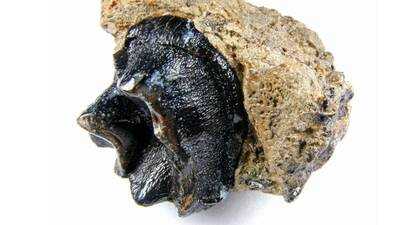
A new study published in Elife Sciences , titled “Brawn before bite in endemic Asian eutherian mammals after the end-Cretaceous extinction”, has now turned attention to that missing chapter. By analysing fossil teeth from a range of extinct mammals that lived in what is now southern China during the Palaeocene, researchers found signs that body size diversification may have preceded the development of more specialised feeding adaptations. The team describes this pattern as “brawn before bite”, suggesting that becoming larger and more varied in size came first, while complex dental functions evolved later. This sequence may have played a significant role in shaping the early success of placental mammals after the extinction event that removed non-avian dinosaurs.
How researchers studied 200 fossil teeth from ancient Asian mammals
The research focused on fossil assemblages from several basins in South China dating to the Palaeocene Epoch, roughly 66 to 56 million years ago. These sites preserve mammals that were largely unique to East Asia, making them valuable for understanding regional evolutionary patterns that cannot be observed in North American fossils alone.
For the study, the researchers examined 200 fossil teeth representing 37 species. The sample included members of several extinct groups, among them pantodonts, arctostylopids and anagalids. High-resolution scans allowed the team to create three-dimensional digital models of the teeth and measure details such as crown complexity, curvature and height.
According to the study, teeth offer an especially useful record because they are often the best-preserved parts of fossil mammals and provide direct clues about how animals processed food. Rather than attempting to assign exact diets, the researchers investigated how tooth form and mechanical performance changed through time.
Fossil teeth support the ‘ Brawn before bite ’ theory in early mammals
One of the clearest patterns emerged when the team compared tooth size with other dental characteristics across the Palaeocene.
The earliest mammals in the dataset already displayed relatively large tooth sizes and high variation in size. Yet the greatest expansion in dental complexity and shape diversity appeared later. Measures linked to tooth curvature, crown complexity and food-processing capabilities increased towards the late Palaeocene, several million years after the initial post-extinction recovery.
According to the study, this indicates that substantial differences in body size appeared before major diversification in feeding-related dental traits. Larger-bodied mammals were already established while more specialised chewing structures were still developing.
The researchers argue that this sequence resembles a broader evolutionary trend observed elsewhere. Previous work has suggested that increases in body size often preceded the evolution of more advanced sensory and ecological adaptations in early mammals. The new findings extend that idea to dental evolution and support a “brawn before bite” scenario for Asian placental mammals.
Climate change and shifting food sources shaped early mammal evolution
The dental transformations did not occur in isolation. Evidence from fossil pollen, climate indicators and geological records points to environmental changes taking place across South China during the Palaeocene.
According to the study, the region experienced fluctuations between more humid and drier conditions while remaining generally warm. As these shifts unfolded, certain groups of mammals developed increasingly complex and curved tooth structures. The changes coincided with signs of expanding drought-tolerant vegetation and broader climatic trends seen elsewhere around the world.
The researchers suggest that evolving food resources may have encouraged a wider range of feeding strategies. Instead of specialising immediately after the extinction event, many mammals appear to have retained considerable ecological flexibility. Their teeth show signs of experimentation with different functional combinations rather than rapid commitment to narrow dietary roles.
A new study published in Elife Sciences , titled “Brawn before bite in endemic Asian eutherian mammals after the end-Cretaceous extinction”, has now turned attention to that missing chapter. By analysing fossil teeth from a range of extinct mammals that lived in what is now southern China during the Palaeocene, researchers found signs that body size diversification may have preceded the development of more specialised feeding adaptations. The team describes this pattern as “brawn before bite”, suggesting that becoming larger and more varied in size came first, while complex dental functions evolved later. This sequence may have played a significant role in shaping the early success of placental mammals after the extinction event that removed non-avian dinosaurs.
How researchers studied 200 fossil teeth from ancient Asian mammals
The research focused on fossil assemblages from several basins in South China dating to the Palaeocene Epoch, roughly 66 to 56 million years ago. These sites preserve mammals that were largely unique to East Asia, making them valuable for understanding regional evolutionary patterns that cannot be observed in North American fossils alone.
Fossil teeth support the ‘ Brawn before bite ’ theory in early mammals
The earliest mammals in the dataset already displayed relatively large tooth sizes and high variation in size. Yet the greatest expansion in dental complexity and shape diversity appeared later. Measures linked to tooth curvature, crown complexity and food-processing capabilities increased towards the late Palaeocene, several million years after the initial post-extinction recovery.
The researchers argue that this sequence resembles a broader evolutionary trend observed elsewhere. Previous work has suggested that increases in body size often preceded the evolution of more advanced sensory and ecological adaptations in early mammals. The new findings extend that idea to dental evolution and support a “brawn before bite” scenario for Asian placental mammals.
Climate change and shifting food sources shaped early mammal evolution
The dental transformations did not occur in isolation. Evidence from fossil pollen, climate indicators and geological records points to environmental changes taking place across South China during the Palaeocene.
According to the study, the region experienced fluctuations between more humid and drier conditions while remaining generally warm. As these shifts unfolded, certain groups of mammals developed increasingly complex and curved tooth structures. The changes coincided with signs of expanding drought-tolerant vegetation and broader climatic trends seen elsewhere around the world.
Next Story