
Budget Travel Tips for Students: You Don't Need a Fortune to Collect Great Travel Stories

Somewhere between assignments, attendance cuts, internship deadlines and the monthly "I'll definitely save money this time" promise, every student dreams of getting away for a few days. It usually begins with someone sending a reel in the group chat. Suddenly everyone wants to visit the mountains, spend a weekend by the beach or explore a city they've only seen online. The excitement is real until someone checks train fares or hotel prices. That's often where the plan quietly disappears.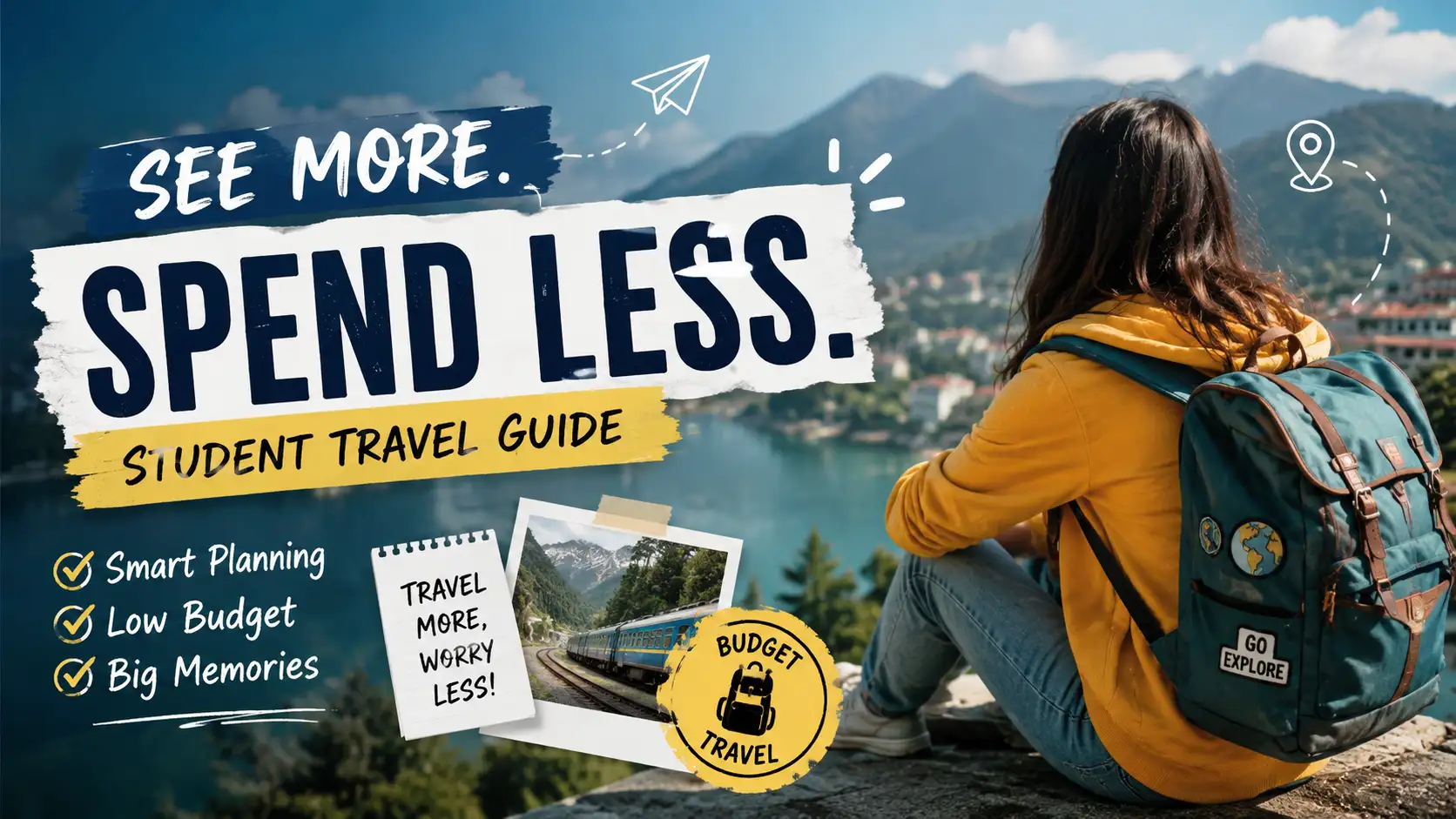
But travel doesn't have to wait until you've landed your first high-paying job. In fact, some of the best journeys happen when your budget is small because they force you to travel differently. You learn to choose experiences over luxury, conversations over comfort, and memories over material things. Years later, those are the trips you remember the most.
Social media has quietly convinced us that a good holiday needs boutique hotels, aesthetic cafés and expensive viewpoints. It's easy to believe that unless your trip looks picture-perfect, it wasn't worth taking.
Reality is usually very different
Ask someone about their favourite trip and they'll rarely begin by talking about the hotel room. Instead, they'll tell you about missing the last bus and laughing about it for hours, finding an incredible roadside café by accident, or watching the sunrise after staying awake the entire night with friends. The moments that stay with us rarely come with a luxury price tag.
Your Biggest Travel Advantage Is Flexibility
Unlike people working full-time jobs, students often have something incredibly valuable, flexibility. If you aren't tied to fixed leave dates, you can choose cheaper travel days, book tickets early and even visit destinations during the off-season. The difference isn't just financial. Popular places become quieter, local people have more time to interact with visitors, and you experience the destination instead of fighting through crowds.
Sometimes changing your departure by just a day or two can save enough money to pay for another experience during the trip.
Travelling on a budget isn't about saying no to everything. It's about knowing what deserves your money. A comfortable pair of shoes is worth spending on because you'll walk for hours. Good local food is almost always worth trying because it's part of understanding a place. But paying extra simply because a café became famous on Instagram often leaves you wondering what exactly you paid for.
Small choices matter too. Carrying a reusable water bottle, opting for public transport over taxis everywhere, or packing light enough to avoid baggage fees might not seem like much. But collectively, they can save enough money to add an extra day to your trip.
Leave Time for the Spontaneous
The most memorable travel experiences aren’t usually the ones you carefully planned. They’re the conversations with strangers on a train ride, discovering a local festival you hadn’t heard of, or getting totally lost and finding a beautiful street that was never on your list. When every moment of a trip is dictated by social media suggestions, there’s little room for the unexpected.
Collect Stories, Not Souvenirs
There’s nothing wrong with buying a souvenir, but the most valuable things you bring home from a trip can’t be packed into a suitcase. Travel teaches you how to adapt when things don’t go according to plan. It makes you comfortable in unfamiliar places and with unfamiliar people. It reminds you that happiness isn’t always found in expensive experiences but in shared laughter, spontaneous decisions, and moments that cannot be recreated for a photograph.
Uncertainty is fun
Sometimes leaving a few hours unplanned leads to experiences no travel guide could have recommended. As a student, you may not have the biggest travel budget, but you have something many people lose as they grow older, curiosity and the freedom to explore. Don't wait for the "perfect time" to see the world. Travel with what you have, spend wisely, and stay open to surprises, and you'll return home with something far more valuable than receipts: stories you'll keep telling for years.
Expensive Doesn't Always Mean Memorable
But travel doesn't have to wait until you've landed your first high-paying job. In fact, some of the best journeys happen when your budget is small because they force you to travel differently. You learn to choose experiences over luxury, conversations over comfort, and memories over material things. Years later, those are the trips you remember the most.
Social media has quietly convinced us that a good holiday needs boutique hotels, aesthetic cafés and expensive viewpoints. It's easy to believe that unless your trip looks picture-perfect, it wasn't worth taking.
Reality is usually very different
Ask someone about their favourite trip and they'll rarely begin by talking about the hotel room. Instead, they'll tell you about missing the last bus and laughing about it for hours, finding an incredible roadside café by accident, or watching the sunrise after staying awake the entire night with friends. The moments that stay with us rarely come with a luxury price tag.
Your Biggest Travel Advantage Is Flexibility
Unlike people working full-time jobs, students often have something incredibly valuable, flexibility. If you aren't tied to fixed leave dates, you can choose cheaper travel days, book tickets early and even visit destinations during the off-season. The difference isn't just financial. Popular places become quieter, local people have more time to interact with visitors, and you experience the destination instead of fighting through crowds.
You may also like
- Micro-dramas are the internet's new obsession — and a Delhi studio is quietly powering the boom
- Arjuna awardee Ronjan Sodhi and Tricone Group join hands for an international level shooting range in Alibaug
- This tech company is changing the scene for smaller hotels in India
- The stunning California destination where redwoods, cliffs and ocean views come together
- Quote of the Day by Socrates: "Strong minds discuss ideas, average minds discuss events, weak minds discuss...."
Sometimes changing your departure by just a day or two can save enough money to pay for another experience during the trip.
Learn to Spend Where It Actually Matters
Travelling on a budget isn't about saying no to everything. It's about knowing what deserves your money. A comfortable pair of shoes is worth spending on because you'll walk for hours. Good local food is almost always worth trying because it's part of understanding a place. But paying extra simply because a café became famous on Instagram often leaves you wondering what exactly you paid for.
Small choices matter too. Carrying a reusable water bottle, opting for public transport over taxis everywhere, or packing light enough to avoid baggage fees might not seem like much. But collectively, they can save enough money to add an extra day to your trip.
Leave Time for the Spontaneous
The most memorable travel experiences aren’t usually the ones you carefully planned. They’re the conversations with strangers on a train ride, discovering a local festival you hadn’t heard of, or getting totally lost and finding a beautiful street that was never on your list. When every moment of a trip is dictated by social media suggestions, there’s little room for the unexpected.
Collect Stories, Not Souvenirs
There’s nothing wrong with buying a souvenir, but the most valuable things you bring home from a trip can’t be packed into a suitcase. Travel teaches you how to adapt when things don’t go according to plan. It makes you comfortable in unfamiliar places and with unfamiliar people. It reminds you that happiness isn’t always found in expensive experiences but in shared laughter, spontaneous decisions, and moments that cannot be recreated for a photograph.
Uncertainty is fun
Sometimes leaving a few hours unplanned leads to experiences no travel guide could have recommended. As a student, you may not have the biggest travel budget, but you have something many people lose as they grow older, curiosity and the freedom to explore. Don't wait for the "perfect time" to see the world. Travel with what you have, spend wisely, and stay open to surprises, and you'll return home with something far more valuable than receipts: stories you'll keep telling for years.






Loving Newspoint? Download the app now
