
February 17 Solar Eclipse Guide: Where It Will Be Seen and How to Watch It Safely

A significant celestial event is taking place today, February 17, 2026, as the first solar eclipse of the year unfolds. This eclipse is of the annular type and gets its nickname “Ring of Fire” because the Moon will move in front of the Sun without fully covering it, leaving a bright and fiery ring visible where the Sun’s outer edges remain lit.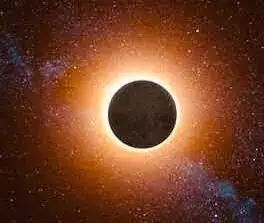
During an annular eclipse, the Moon appears slightly smaller than the Sun in the sky due to its orbit around Earth. This means that even when the Moon is perfectly aligned with the Sun, it does not block all of the Sun’s surface. Instead, a thin circle of light appears around the dark silhouette of the Moon. This visual spectacle is what attracts skywatchers and astronomy enthusiasts from around the world.
According to astronomical timings converted to Indian Standard Time, the eclipse is expected to begin in the afternoon around 3:26 PM IST and end at about 7:57 PM IST, lasting approximately four and a half hours. The peak of the eclipse, when the “Ring of Fire” effect is most pronounced, will occur between approximately 5:13 PM and 6:11 PM IST.
During an annular eclipse, the Moon appears slightly smaller than the Sun in the sky due to its orbit around Earth. This means that even when the Moon is perfectly aligned with the Sun, it does not block all of the Sun’s surface. Instead, a thin circle of light appears around the dark silhouette of the Moon. This visual spectacle is what attracts skywatchers and astronomy enthusiasts from around the world.
According to astronomical timings converted to Indian Standard Time, the eclipse is expected to begin in the afternoon around 3:26 PM IST and end at about 7:57 PM IST, lasting approximately four and a half hours. The peak of the eclipse, when the “Ring of Fire” effect is most pronounced, will occur between approximately 5:13 PM and 6:11 PM IST.
Next Story