
Indian Summer Hacks: Ayurveda-Inspired Lifestyle Tips to Stay Cool Naturally

Indian summers are not just about rising temperatures; they also bring changes in energy levels, digestion and overall wellbeing. Long before modern health trends, Ayurveda offered practical lifestyle guidance to help people adapt to seasonal shifts. These Indian summer hacks are based on balance, focusing on diet, daily routines and natural cooling methods. What makes Ayurvedic wisdom so relevant today is its simplicity and adaptability. Instead of relying only on external cooling systems, it encourages harmony between the body and environment. As heatwaves become more intense, many people are rediscovering these ancient practices for a healthier and more balanced summer lifestyle.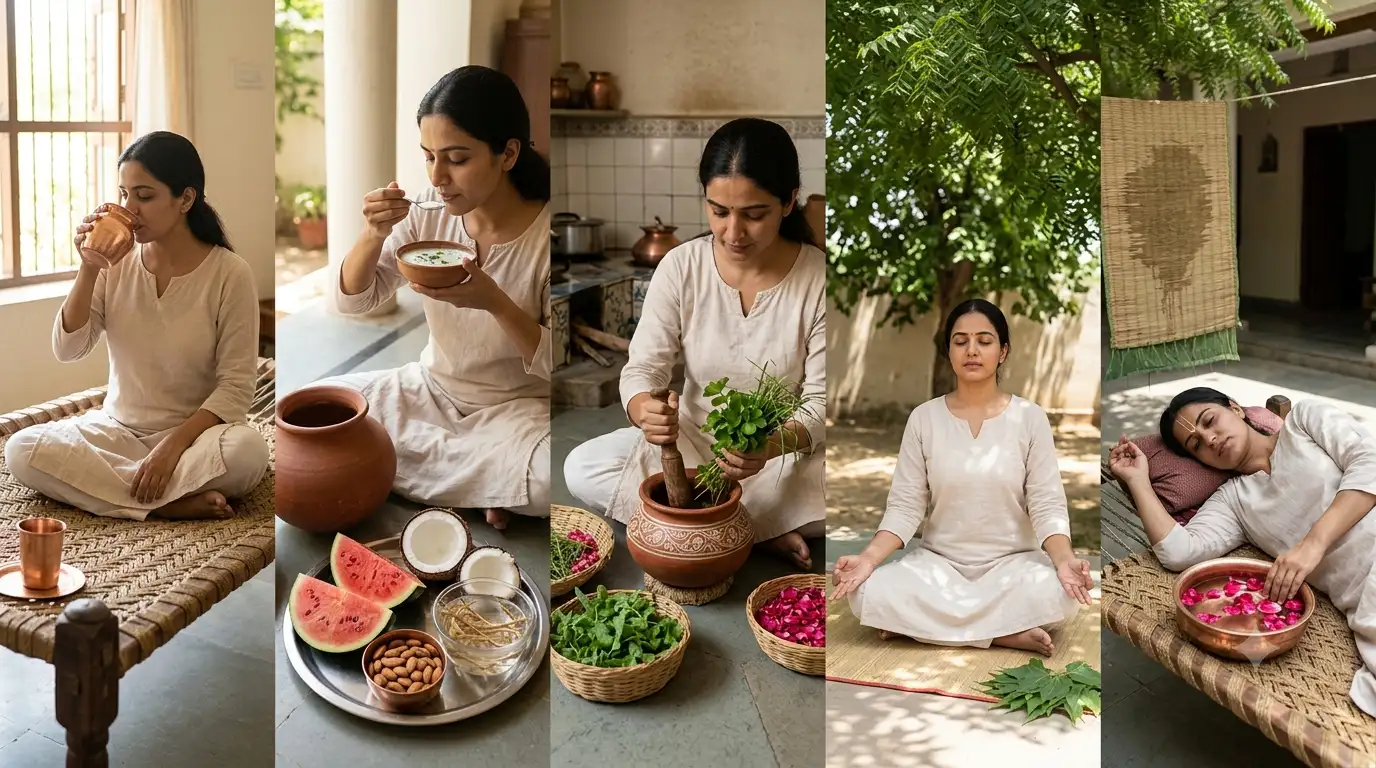
To manage this, Ayurveda recommends cooling foods , calming routines and mindful habits that reduce internal heat. This approach is less about restriction and more about balance, ensuring the body adapts naturally to seasonal changes.
Cucumber, watermelon, coconut, mint and leafy vegetables are commonly recommended. These foods have high water content and help maintain hydration.
Traditional drinks like buttermilk, coconut water and herbal infusions are also encouraged because they are gentle on digestion and help restore electrolytes lost through sweating.
Oil pulling, gentle exercise and meditation are often recommended to prepare the body for the day. Avoiding intense physical activity during peak afternoon hours is also advised, as the body is more sensitive to heat during that time.
These simple adjustments help reduce stress on the body and improve overall comfort.
Fennel water, for example, is commonly consumed to support digestion and reduce internal heat. Similarly, coriander seed water is believed to help detoxify the body and maintain hydration balance.
These drinks are easy to prepare and can be included in daily routines without major dietary changes.
Light colours are preferred as they reflect sunlight rather than absorbing heat. Staying in shaded or well-ventilated spaces also helps maintain a cooler body temperature.
Even simple habits like keeping the feet cool or using natural fabrics can make a noticeable difference during extreme heat.
Ayurvedic Indian summer hacks offer long-term lifestyle benefits. They encourage awareness of food, routine and environment, helping people adapt naturally to seasonal changes.
With increasing heat levels globally, these practices are becoming more relevant than ever.
Understanding Summer Through Ayurveda
In Ayurveda, summer is associated with an increase in “Pitta”, the energy linked with heat and metabolism. When Pitta rises excessively, it can lead to dehydration, fatigue, skin irritation and digestive discomfort.To manage this, Ayurveda recommends cooling foods , calming routines and mindful habits that reduce internal heat. This approach is less about restriction and more about balance, ensuring the body adapts naturally to seasonal changes.
Cooling Foods and Seasonal Eating
One of the most effective Indian summer hacks in Ayurveda is seasonal eating. Foods that are naturally available in summer are believed to support the body’s cooling process.Cucumber, watermelon, coconut, mint and leafy vegetables are commonly recommended. These foods have high water content and help maintain hydration.
Traditional drinks like buttermilk, coconut water and herbal infusions are also encouraged because they are gentle on digestion and help restore electrolytes lost through sweating.
Morning Routines for a Cooler Body
Ayurveda places great importance on daily routines, especially during summer. Waking up early, before the heat intensifies, is considered beneficial for both physical and mental energy.Oil pulling, gentle exercise and meditation are often recommended to prepare the body for the day. Avoiding intense physical activity during peak afternoon hours is also advised, as the body is more sensitive to heat during that time.
These simple adjustments help reduce stress on the body and improve overall comfort.
You may also like
- Psychology says people who are kind to everyone but close to almost no one aren't bad at friendship: They often learned to be useful before they learned to be known
- Psychology says people who read others unusually well aren't simply intuitive: They've developed mental habits that help them notice social cues others overlook
- 'You study, we'll do...': This man pulled a handcart from 4 AM every day; his daughter will now wear the Bihar Police uniform
- Psychology says people who stay quiet during group conversations aren't disengaged: They may be processing what they're hearing before deciding what to say
- 14-Day Cancer Treatment: A new cancer drug has been launched in India, curing the disease within 14 days! Find out how much it costs.
Herbal Drinks and Natural Cooling Methods
Ayurvedic practices often include herbal drinks made from ingredients like fennel, coriander seeds and mint. These natural ingredients are known for their cooling properties.Fennel water, for example, is commonly consumed to support digestion and reduce internal heat. Similarly, coriander seed water is believed to help detoxify the body and maintain hydration balance.
These drinks are easy to prepare and can be included in daily routines without major dietary changes.
Clothing and Lifestyle Choices
Ayurveda also emphasises external comfort. Wearing loose, breathable cotton clothing is recommended during summer to allow proper air circulation.Light colours are preferred as they reflect sunlight rather than absorbing heat. Staying in shaded or well-ventilated spaces also helps maintain a cooler body temperature.
Even simple habits like keeping the feet cool or using natural fabrics can make a noticeable difference during extreme heat.
Why Ayurvedic Summer Hacks Still Matter
In today’s fast-paced world, people often rely on quick solutions for comfort, such as air conditioners or cold drinks. However, these provide temporary relief without addressing overall balance.Ayurvedic Indian summer hacks offer long-term lifestyle benefits. They encourage awareness of food, routine and environment, helping people adapt naturally to seasonal changes.
With increasing heat levels globally, these practices are becoming more relevant than ever.






More from our partners


Loving Newspoint? Download the app now
