
Sweet Success: 7 Expert Tips To Pick The Perfect Muskmelon

Muskmelon—juicy, fragrant, and sweet—is a summer favorite. But picking a truly ripe and flavorful one can be tricky if you don’t know what to look for. Here are 7 super-easy tips to help you bring home a muskmelon that’s bursting with natural sweetness.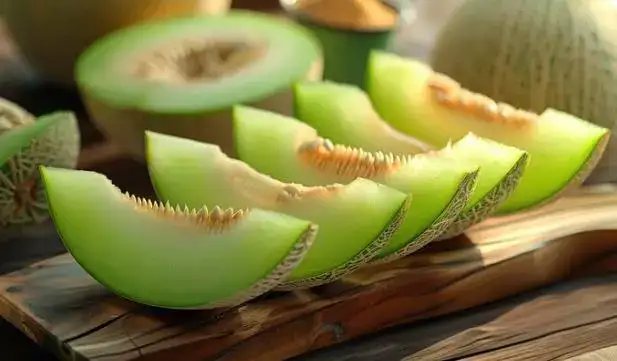
1. Go for a Golden Hue: Skip the green ones. Ripe muskmelons usually have a golden-yellow, creamy, or tan color with a slight net-like pattern. A bright green rind means it's underripe and not yet sweet.
2. Check the Aroma: Smell the blossom end (opposite the stem). A ripe muskmelon gives off a sweet, floral, fruity aroma. If there’s no smell at all, it’s likely not ready to eat.
3. Feel the Texture: The surface should be slightly rough and netted. If the texture is too smooth or shiny, it's not mature. The rind should also feel firm, but not rock-hard.
4. Press the Blossom End: Give a gentle press at the blossom end. If it yields slightly to pressure, that’s a good sign of ripeness. Too soft? It's probably overripe. Too hard? Not ready yet.
5. Pick the Heavy One: A ripe muskmelon feels heavy for its size. That extra weight means it's juicy and full of natural sweetness. Compare a few to spot the heaviest one.
6. Avoid Cracks and Soft Spots: Surface cracks, dents, or mushy areas are red flags. These could mean the fruit is damaged, fermented, or past its prime.
7. Listen for a Hollow Sound: Give it a gentle tap. A dull, hollow sound often indicates that the fruit is ripe and the flesh has separated slightly from the rind—meaning it's sweet and ready to eat.
With these simple tips in mind, you'll never end up with a bland or underripe muskmelon again. Happy fruit picking!
1. Go for a Golden Hue: Skip the green ones. Ripe muskmelons usually have a golden-yellow, creamy, or tan color with a slight net-like pattern. A bright green rind means it's underripe and not yet sweet.
2. Check the Aroma: Smell the blossom end (opposite the stem). A ripe muskmelon gives off a sweet, floral, fruity aroma. If there’s no smell at all, it’s likely not ready to eat.
You may also like
- When Rajdhani Express stopped in Assam: The unusual encounter that held up India's one of the superfast trains
- Karan Johar to Bring R.N. Kao's Spy Story to the Big Screen in August 2028
- Nagaland Film Angh Enters Oscar 2027 Race After Winning TIFF Platform Award
- Inside Uzbekistan's new landmark housing one of the world's oldest Qurans
- Bootcut jeans are back: Why men are embracing the throwback denim trend in 2026
3. Feel the Texture: The surface should be slightly rough and netted. If the texture is too smooth or shiny, it's not mature. The rind should also feel firm, but not rock-hard.
4. Press the Blossom End: Give a gentle press at the blossom end. If it yields slightly to pressure, that’s a good sign of ripeness. Too soft? It's probably overripe. Too hard? Not ready yet.
5. Pick the Heavy One: A ripe muskmelon feels heavy for its size. That extra weight means it's juicy and full of natural sweetness. Compare a few to spot the heaviest one.
6. Avoid Cracks and Soft Spots: Surface cracks, dents, or mushy areas are red flags. These could mean the fruit is damaged, fermented, or past its prime.
7. Listen for a Hollow Sound: Give it a gentle tap. A dull, hollow sound often indicates that the fruit is ripe and the flesh has separated slightly from the rind—meaning it's sweet and ready to eat.
With these simple tips in mind, you'll never end up with a bland or underripe muskmelon again. Happy fruit picking!






Loving Newspoint? Download the app now
