
The 5-Second Rule Everyone Is Using to Beat Phone Addiction in 2026

If you've ever unlocked your phone to check the weather and somehow ended up watching videos 30 minutes later, you're not alone. Smartphone addiction has become one of the biggest lifestyle challenges of the digital age, with people checking their phones hundreds of times a day without even realizing it.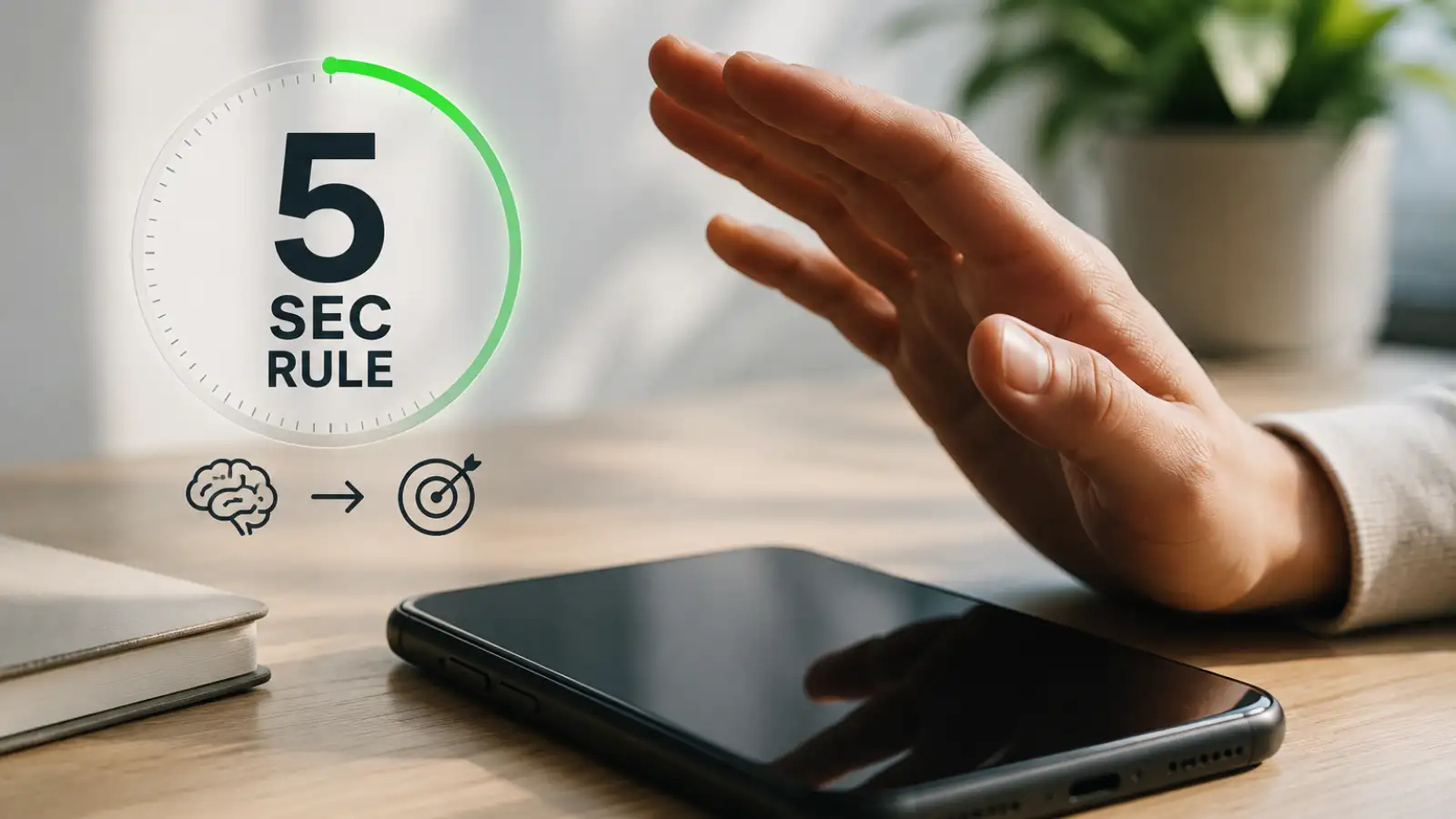
Now, a surprisingly simple habit known as the 5-Second Rule is gaining popularity among productivity experts, digital wellness advocates, and people looking to regain control of their screen time. It doesn't require deleting apps, buying expensive gadgets, or taking a week-long digital detox . Instead, it takes just five seconds.
5...4...3...2...1
Then ask yourself one question:
"Why am I picking up my phone?"
If the answer is clear—such as replying to a message, checking directions, or making a payment—go ahead. If not, put the phone down.
The technique interrupts automatic behavior, forcing your brain to switch from impulsive action to conscious decision-making.
According to global digital reports by DataReportal, internet users spend several hours each day online, with mobile devices accounting for a significant share of that time. Meanwhile, studies published by organizations such as the American Psychological Association and academic journals have linked excessive smartphone use to reduced attention span, poor sleep quality, higher stress levels, and lower productivity.
Behavioral psychologists explain that smartphone use often follows a "cue-routine-reward" loop. A notification, a moment of boredom, or even seeing the phone nearby becomes the cue. Picking it up becomes the routine, while entertainment or social interaction provides the reward.
The five-second pause disrupts this loop before it becomes automatic.
Many users who have adopted the habit report several noticeable changes within weeks:
Young adults are increasingly experimenting with app timers, grayscale phone displays, notification-free mornings, and "phone-free zones" at home. The 5-Second Rule fits naturally into this trend because it's simple, free, and easy to practice anywhere.
Rather than treating phones as the enemy, many users are learning to create healthier boundaries with technology.
Simple techniques like keeping the phone out of reach while working, turning off non-essential notifications, and taking brief pauses before unlocking the screen can significantly reduce compulsive usage over time.
The 5-Second Rule works because it introduces a moment of mindfulness into an otherwise automatic habit.
The 5-Second Rule isn't a miracle cure for phone addiction, nor is it backed by a single clinical study proving its effectiveness as a standalone method. Instead, it draws on well-established principles of habit interruption and mindful decision-making that psychologists have long recognized.
As more people seek healthier relationships with technology in 2026, the biggest change may not come from deleting apps or abandoning smartphones altogether. It may begin with something as simple as counting backward from five before your thumb reaches the screen. That tiny pause could be enough to help you reclaim your attention—one decision at a time.
Now, a surprisingly simple habit known as the 5-Second Rule is gaining popularity among productivity experts, digital wellness advocates, and people looking to regain control of their screen time. It doesn't require deleting apps, buying expensive gadgets, or taking a week-long digital detox . Instead, it takes just five seconds.
What Is the 5-Second Rule?
The 5-Second Rule is based on a simple idea: before unlocking your phone or opening a distracting app, pause and count down from five to one.5...4...3...2...1
Then ask yourself one question:
"Why am I picking up my phone?"
If the answer is clear—such as replying to a message, checking directions, or making a payment—go ahead. If not, put the phone down.
The technique interrupts automatic behavior, forcing your brain to switch from impulsive action to conscious decision-making.
Why It Works
Research suggests that many smartphone interactions are driven by habit rather than necessity.According to global digital reports by DataReportal, internet users spend several hours each day online, with mobile devices accounting for a significant share of that time. Meanwhile, studies published by organizations such as the American Psychological Association and academic journals have linked excessive smartphone use to reduced attention span, poor sleep quality, higher stress levels, and lower productivity.
Behavioral psychologists explain that smartphone use often follows a "cue-routine-reward" loop. A notification, a moment of boredom, or even seeing the phone nearby becomes the cue. Picking it up becomes the routine, while entertainment or social interaction provides the reward.
The five-second pause disrupts this loop before it becomes automatic.
Small Pause, Big Impact
Unlike strict digital detox plans, the 5-Second Rule doesn't ask people to stop using technology altogether. Instead, it encourages intentional phone use.Many users who have adopted the habit report several noticeable changes within weeks:
You may also like
- Skip Expensive Face Washes: 7 Natural Cleansers
- adidas puts comfort at the heart of every run with the new Hyperboost Edge
- Susanna Reid's 'smart' jacket she wore on GMB perfect for summer weddings has £40 off
- Monsoon intensifies across India: IMD warns of extremely heavy rain in Gujarat and Maharashtra, flash flood risk in several regions
- Now, you can make UPI payments even without the internet! The new feature will work on flights and in underground tunnels too..
- Lower daily screen time
- Better focus while working or studying
- Fewer distractions during conversations
- Improved sleep after reducing late-night scrolling
- Greater awareness of unconscious phone-checking habits
Why Gen Z Is Embracing It
Ironically, the generation that grew up with smartphones is also leading the movement toward healthier digital habits.Young adults are increasingly experimenting with app timers, grayscale phone displays, notification-free mornings, and "phone-free zones" at home. The 5-Second Rule fits naturally into this trend because it's simple, free, and easy to practice anywhere.
Rather than treating phones as the enemy, many users are learning to create healthier boundaries with technology.
Experts Say Awareness Is the First Step
Digital wellness experts often stress that overcoming phone addiction begins with awareness rather than willpower alone.Simple techniques like keeping the phone out of reach while working, turning off non-essential notifications, and taking brief pauses before unlocking the screen can significantly reduce compulsive usage over time.
The 5-Second Rule works because it introduces a moment of mindfulness into an otherwise automatic habit.
The Bottom Line
In a world where attention has become one of our most valuable resources, small behavioral changes can make a meaningful difference.The 5-Second Rule isn't a miracle cure for phone addiction, nor is it backed by a single clinical study proving its effectiveness as a standalone method. Instead, it draws on well-established principles of habit interruption and mindful decision-making that psychologists have long recognized.
As more people seek healthier relationships with technology in 2026, the biggest change may not come from deleting apps or abandoning smartphones altogether. It may begin with something as simple as counting backward from five before your thumb reaches the screen. That tiny pause could be enough to help you reclaim your attention—one decision at a time.






Loving Newspoint? Download the app now
