
Why Chennai's Filter Coffee Is Poured from a Height

The tumbler sits on the davara, the decoction is dark and ready, and the hand rises. In Chennai's filter coffee ritual, the pour is not the final step, it is the step everything else was building toward.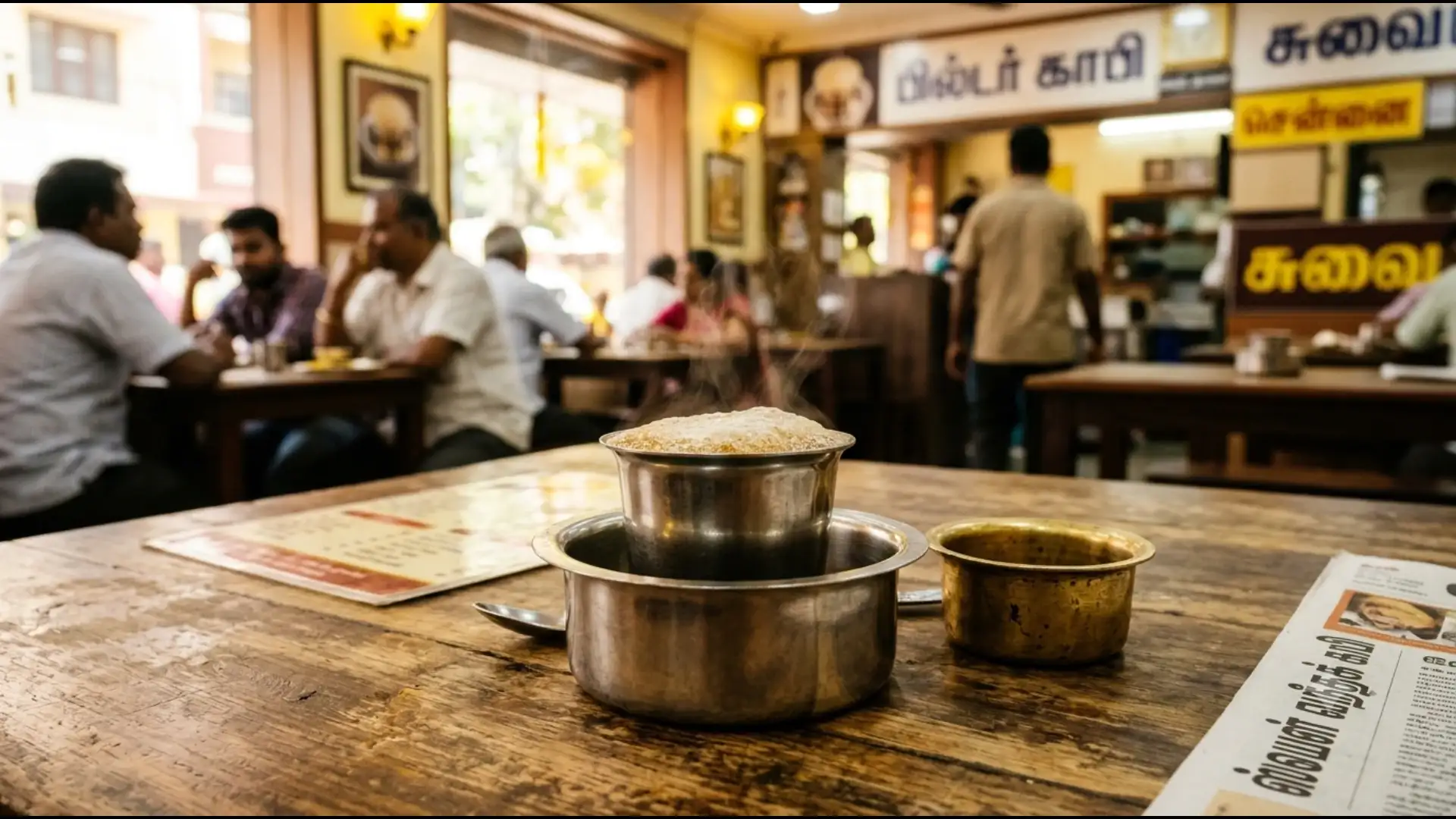
The froth that forms at the surface is not decoration, it carries the most volatile aromatic compounds, the ones that reach the nose before the coffee reaches the lips.
Heat suppresses sweetness and mutes aroma. At the right drinking temperature, the same coffee tastes noticeably more complex than it does straight from the vessel. The davara-tumbler system is, in this sense, a calibration tool as much as a serving set.
Before refrigeration, before precise stoves, the pour was how you controlled what you could not otherwise control. The technique persisted because it worked, and because it was passed from hand to hand in kitchens where no one wrote anything down.
The proportion varies by household and by region, some prefer a light hand with chicory, others want it dominant, but the blend is part of why the high-pour produces such a stable foam. Pure coffee decoction, being thinner, loses its froth faster and requires a more practiced technique to achieve the same result.
The aromatic release that happens when the stream hits the surface never occurs. The ingredients are identical. The coffee is not. This is why people who grew up with the high-pour notice immediately when it has been skipped, not because they are being precious about tradition, but because the cup in their hand is telling them something is missing.
What the height actually does
The liquid falling through air picks up oxygen as it travels. That aeration lightens the texture and softens the edge of a decoction that, on its own, would taste sharp and flat in the mouth. The longer the fall, the more the coffee opens up. A pour from three inches does almost nothing A pour from twelve inches, repeated two or three times between tumbler and davara, produces the layered, almost creamy body that defines the drink.The froth that forms at the surface is not decoration, it carries the most volatile aromatic compounds, the ones that reach the nose before the coffee reaches the lips.
The temperature exchange
Pouring from height also cools the coffee in a controlled way. South Indian filter coffee is drunk hot but not scalding, the milk is added warm, not boiling, and the repeated transfers between tumbler and davara bring the temperature down to a point where the full flavour registers on the palate.Heat suppresses sweetness and mutes aroma. At the right drinking temperature, the same coffee tastes noticeably more complex than it does straight from the vessel. The davara-tumbler system is, in this sense, a calibration tool as much as a serving set.
Where the tradition comes from
The high-pour is not unique to Chennai, but the city and the communities around it, Brahmin households, Chettinad families, the Udupi restaurant culture that spread across the country, kept the practice most visibly alive. The brass or steel davara-tumbler set made the motion practical: the wide davara catches spills, the narrow tumbler concentrates the froth.Before refrigeration, before precise stoves, the pour was how you controlled what you could not otherwise control. The technique persisted because it worked, and because it was passed from hand to hand in kitchens where no one wrote anything down.
The chicory question
South Indian filter coffee almost always blends coffee with chicory root. Chicory adds body and a slight bitterness that balances the milk's sweetness, and it makes the decoction thicker than pure coffee alone. A thicker liquid holds the froth better through the pour.The proportion varies by household and by region, some prefer a light hand with chicory, others want it dominant, but the blend is part of why the high-pour produces such a stable foam. Pure coffee decoction, being thinner, loses its froth faster and requires a more practiced technique to achieve the same result.
What gets lost when you skip it
Stir the same coffee with a spoon and the result is drinkable but different: flatter, a little harsher, without the textural lift that the aeration creates. The froth is absent. The temperature drop is uneven.The aromatic release that happens when the stream hits the surface never occurs. The ingredients are identical. The coffee is not. This is why people who grew up with the high-pour notice immediately when it has been skipped, not because they are being precious about tradition, but because the cup in their hand is telling them something is missing.
Next Story