
Why Brass and Copper Vessels Were Lined with Tin: The Kalai Tradition

A kalaiwala would arrive in the neighbourhood with a small furnace, a cloth, and a block of tin. Housewives brought out their degchis, thaalis, and lotas. Within minutes, the dull interior of a brass pot would flash silver. The vessel went back to the kitchen, safe to cook in for another season.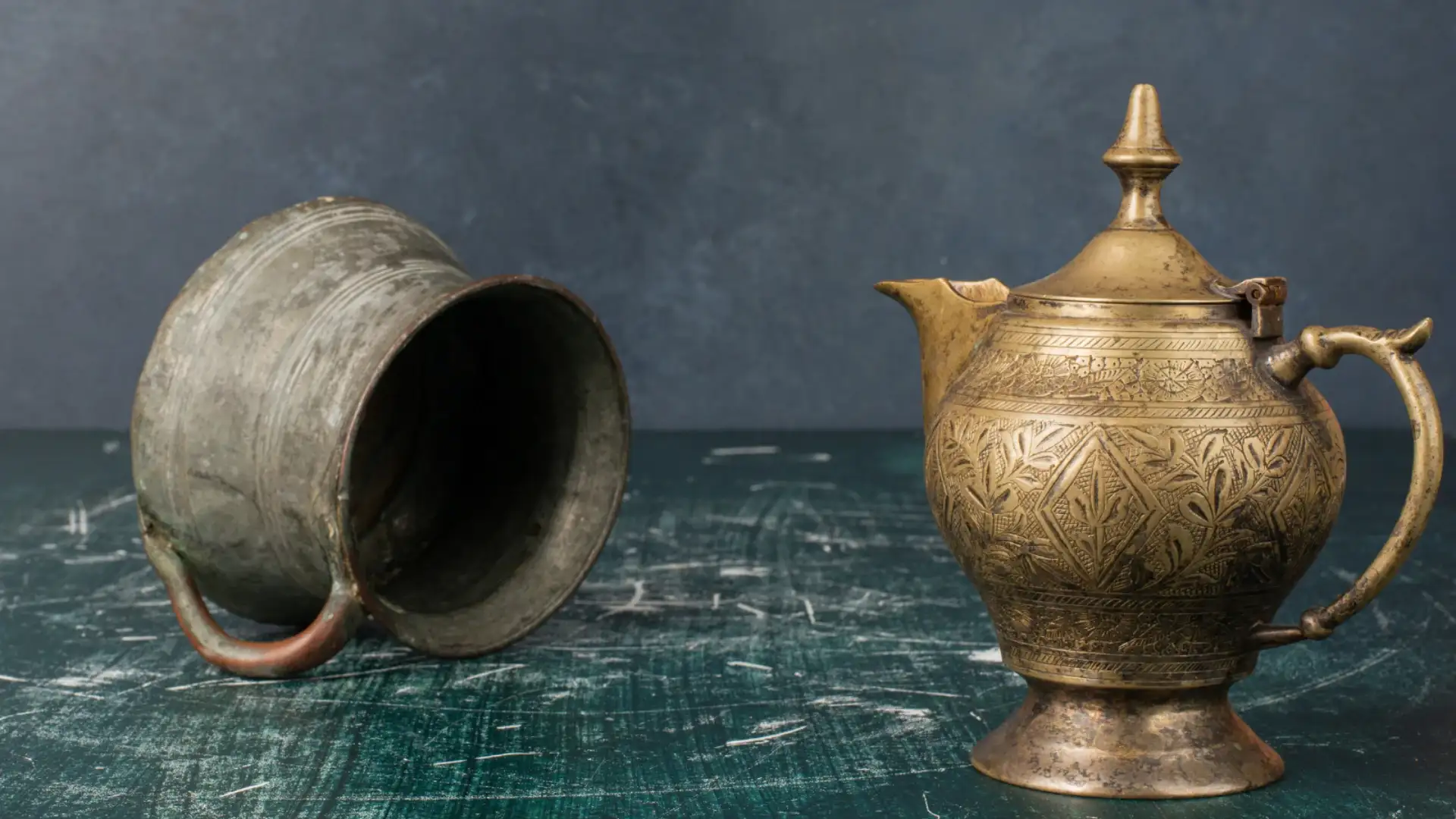
The Chemistry Behind the Coating
Copper and brass, an alloy of copper and zinc, react with acidic and salty foods. When you cook a tamarind dal or a tomato curry in an unlined copper vessel, the acid pulls copper ions into the food. In small amounts, copper is a mineral the body needs. In larger amounts, it causes nausea, vomiting, and, with prolonged exposure, more serious harm. Tin does not react with food acids the way copper does. A thin tin lining sits between the food and the metal beneath it, keeping the chemistry of cooking separate from the chemistry of the vessel.How Kalai Was Done
The craftsman cleaned the vessel's interior with a mild acid, often tamarind paste or a dilute solution, to strip grease and old oxidation. He then heated the vessel over his portable furnace until the metal was hot enough to melt tin on contact. He pressed a block of tin against the hot surface and spread the molten metal quickly with a wad of cotton or cloth, sometimes dusted with ammonium chloride to help adhesion. The tin bonded in a thin, even coat. The whole process for one vessel took a few minutes. The lining lasted roughly a year of daily cooking before it thinned and needed refreshing.The Craftsmen Who Carried the Skill
Kalaiwalas were itinerant. They worked a circuit through mohallas and bazaars, announcing themselves with a call or a bell. In many parts of North India, the craft was carried by specific communities who had practiced it across generations. The portable furnace and the simple toolkit meant the skill could travel. The kalaiwala came to the vessel; the vessel did not go to a workshop. This was practical in an era when households owned a small number of heavy brass and copper pieces that lasted decades and were repaired rather than replaced.Why It Faded
Stainless steel arrived in Indian kitchens through the mid-twentieth century and changed the economics of cookware entirely. A stainless steel vessel does not react with food, does not need lining, and does not require a craftsman's visit once a year. Aluminium followed. The vessels that needed kalai became fewer, and the kalaiwala's circuit shrank. In some old city neighbourhoods and in rural areas where brass cookware persisted, the craft continued. Today it survives in pockets, a few craftsmen still work certain markets in cities like Delhi, Lucknow, and Hyderabad, but the household need that sustained it at scale has largely gone.What the Tradition Reveals
Kalai was a maintenance system built around materials that were expensive, durable, and worth repairing. A brass degchi was not disposable. It was an object a family owned for a generation, and the kalaiwala was part of the infrastructure that kept it functional. The tradition also reflects a practical understanding of food safety that predates laboratory chemistry, households knew, through accumulated experience, that unlined copper changed the taste of sour food and made people unwell. The tin lining was the solution they arrived at and kept refining for centuries. The craft did not disappear because it stopped working. It disappeared because the vessels it served stopped being the centre of the kitchen.Next Story