
The Difference Between a Thirsty Plant and an Overwatered Plant

A plant looking unhappy does not always mean it needs more water. Sometimes, the opposite is true. A thirsty plant and an overwatered plant can show surprisingly similar signs, which makes watering one of the trickier parts of plant care. Drooping leaves, changes in colour and unhealthy-looking growth can all leave you wondering what went wrong. Before reaching for the watering can, take a closer look at what your plant is actually telling you.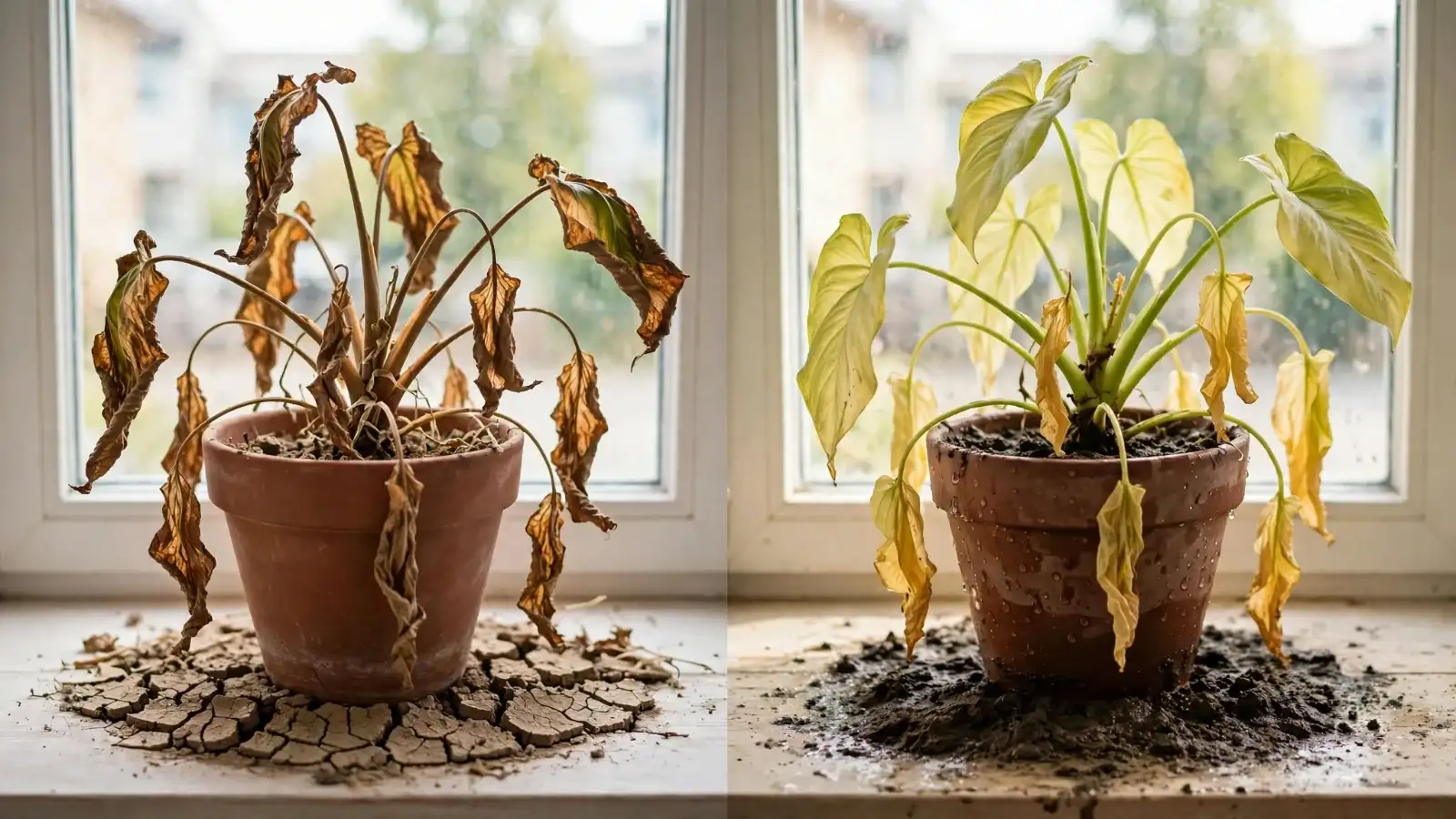
A plant that is short of water may start looking limp or tired. But a plant that has received too much water can also lose its healthy appearance.
This is why simply seeing drooping leaves is not always enough to decide what to do next. Looking at the soil alongside the leaves can give you a clearer picture.
The leaves can also provide useful clues. A thirsty plant may look wilted or limp rather than fresh and firm. The overall plant can appear as though it has lost some of its usual vitality.
However, the important thing is to look at more than one sign. A drooping plant does not automatically mean that the soil is dry.
Checking the soil before watering can help prevent you from treating every drooping leaf as a signal to add more water.
The soil is another important clue. If it remains wet, adding more water may not be what the plant needs.
This is where checking before watering becomes useful. Instead of following a fixed routine, pay attention to the condition of the soil and the plant itself.
If the soil is already wet and the plant is showing signs of stress, simply giving it another drink may not solve the problem.
Before watering, check whether the soil feels dry or remains damp. This simple step can help you understand whether your plant may actually need water.
It also helps explain why a watering schedule does not always work perfectly. Plants can have different needs, and the condition of the soil can change.
Rather than watering automatically because it is a particular day, take a moment to check what is happening around the plant.
Drooping leaves can appear when a plant is thirsty, but they can also be seen when a plant has been overwatered. Yellow leaves may also leave you wondering what is happening.
Instead of treating one symptom as a definite answer, look at the whole picture.
Check the leaves. Feel the soil. Look at the overall condition of the plant. Together, these clues can make it easier to understand what your plant may be experiencing.
A thirsty plant may need water, while an overwatered plant may need you to stop and reassess before watering again. The two situations can look confusingly similar, which is why checking the soil is such a useful habit.
The next time your plant starts drooping, pause before reaching for the watering can. A quick look at the soil could help you work out whether your plant is asking for a drink or whether it has already had enough.
Why It Can Be Hard To Tell
Plants cannot exactly tell us what they need, so their leaves often become the first clue. The problem is that similar symptoms can have different causes.A plant that is short of water may start looking limp or tired. But a plant that has received too much water can also lose its healthy appearance.
This is why simply seeing drooping leaves is not always enough to decide what to do next. Looking at the soil alongside the leaves can give you a clearer picture.
Signs Your Plant May Be Thirsty
One of the first things to check is the soil. If it feels dry, the plant may need water.The leaves can also provide useful clues. A thirsty plant may look wilted or limp rather than fresh and firm. The overall plant can appear as though it has lost some of its usual vitality.
However, the important thing is to look at more than one sign. A drooping plant does not automatically mean that the soil is dry.
Checking the soil before watering can help prevent you from treating every drooping leaf as a signal to add more water.
Signs Your Plant May Be Overwatered
Overwatering can also affect the way a plant looks. Yellowing leaves can be one of the signs that something is not quite right.The soil is another important clue. If it remains wet, adding more water may not be what the plant needs.
This is where checking before watering becomes useful. Instead of following a fixed routine, pay attention to the condition of the soil and the plant itself.
If the soil is already wet and the plant is showing signs of stress, simply giving it another drink may not solve the problem.
Look At The Soil Before The Watering Can
The soil can tell you something that the leaves cannot.Before watering, check whether the soil feels dry or remains damp. This simple step can help you understand whether your plant may actually need water.
You may also like
- “Our handmade snow Bappa”: This is how Indian scientists celebrated Ganesh Chaturthi in Antarctica, one of the coldest places on Earth
- Aspiring actors should understand their strengths and how Bollywood functions, says actor Yash Ahlawat
- Supporting horses, sustaining livelihood: Kolkata warms up to a humane revival of a maidan ritual
- Houseplants that can survive in zero light
- Women's Health Tips: These health tests are essential for women after 30; pay close attention if you experience fatigue or weakness..
It also helps explain why a watering schedule does not always work perfectly. Plants can have different needs, and the condition of the soil can change.
Rather than watering automatically because it is a particular day, take a moment to check what is happening around the plant.
Do Not Rely On One Symptom
One of the easiest mistakes is to focus on a single sign.Drooping leaves can appear when a plant is thirsty, but they can also be seen when a plant has been overwatered. Yellow leaves may also leave you wondering what is happening.
Instead of treating one symptom as a definite answer, look at the whole picture.
Check the leaves. Feel the soil. Look at the overall condition of the plant. Together, these clues can make it easier to understand what your plant may be experiencing.
Finding The Right Balance
Watering plants is less about giving them water whenever they look unhappy and more about paying attention to their condition.A thirsty plant may need water, while an overwatered plant may need you to stop and reassess before watering again. The two situations can look confusingly similar, which is why checking the soil is such a useful habit.
The next time your plant starts drooping, pause before reaching for the watering can. A quick look at the soil could help you work out whether your plant is asking for a drink or whether it has already had enough.






Loving Newspoint? Download the app now
