
The End of the Influencer Era: Are Creators Losing Our Trust?

Not too long ago, influencers felt... different. They weren't celebrities. They were regular people filming in their bedrooms, sharing skincare routines, café recommendations, daily vlogs, or budget fashion finds. That's exactly what made them relatable. Watching them felt less like consuming content and more like taking advice from a friend.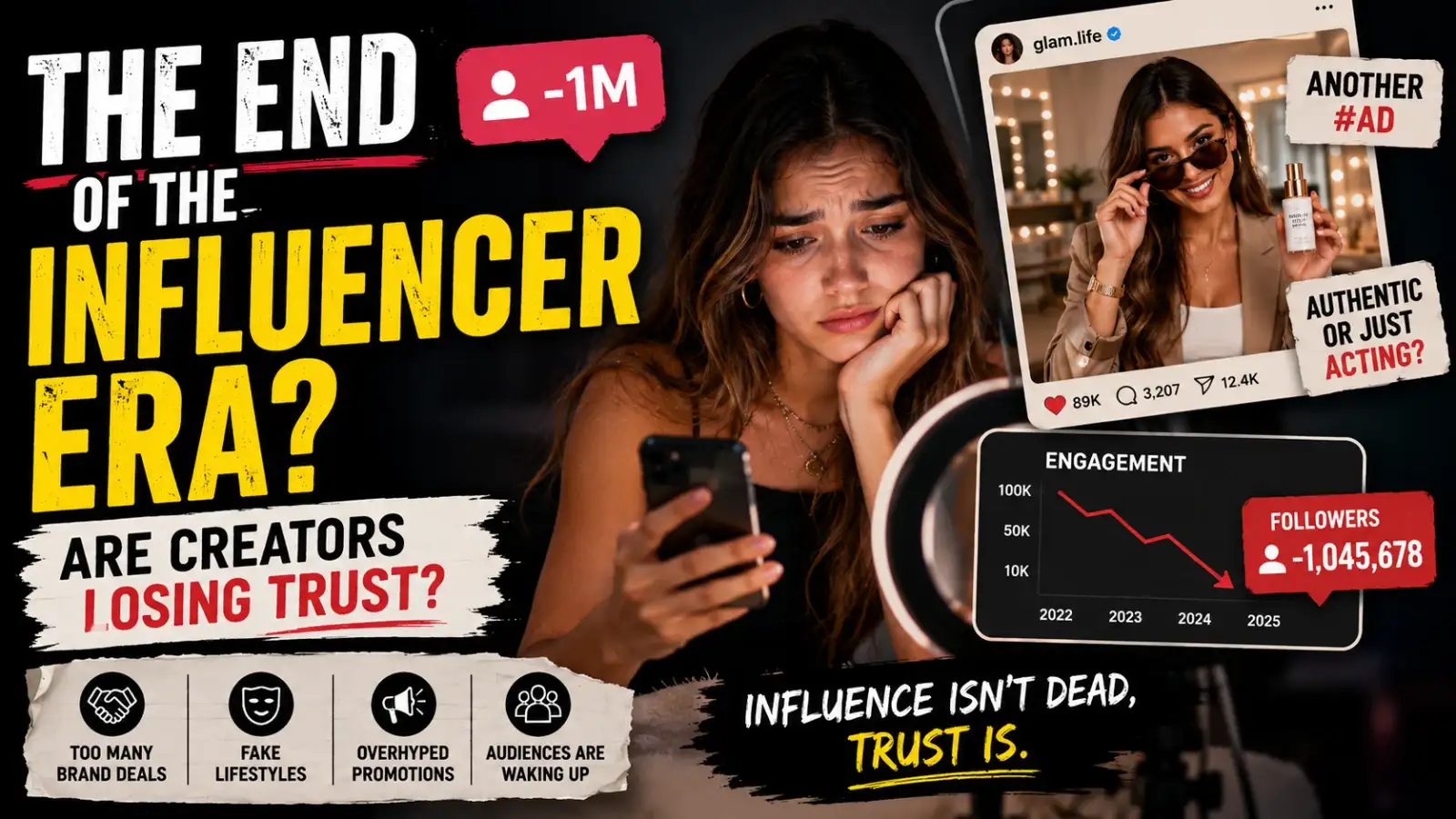
Fast forward to today, and the vibe has changed. Every other post seems to be sponsored. Every "favourite product" comes with a discount code. Even heartfelt morning routines somehow end with, "This video is in partnership with..." It's not that creators have stopped making good content. It's that audiences have become better at spotting when something feels more like a sales pitch than a genuine recommendation.
But as followers turned into millions and collaborations turned into full-time careers, many creators slowly became brands themselves. And brands, by nature, are trying to sell something. That's where the relationship began to change.
Trust isn't disappearing overnight. It's simply becoming harder to earn. People don't mind sponsored content . They mind feeling like they're being sold something without honesty.
Ironically, saying "Don't buy this" often feels more believable than saying, "You need this." And that's exactly why audiences are paying attention.
People aren't looking for perfection anymore. They're looking for proof that the person on the other side of the screen is, well, a person.
They're the ones who admit when they're wrong, disclose paid partnerships, recommend products they actually use, and aren't afraid to say, "This wasn't worth the money." Ironically, honesty has become the newest form of influence.
Followers no longer want someone who simply tells them what to buy. They want someone whose opinion feels earned, whose recommendations feel genuine, and whose content still feels human even after the brand deals start rolling in. Maybe the influencer era isn't ending after all. Maybe it's finally growing up.
Fast forward to today, and the vibe has changed. Every other post seems to be sponsored. Every "favourite product" comes with a discount code. Even heartfelt morning routines somehow end with, "This video is in partnership with..." It's not that creators have stopped making good content. It's that audiences have become better at spotting when something feels more like a sales pitch than a genuine recommendation.
From "People Like Us" to Personal Brands
The biggest reason influencers became successful was authenticity. They were real, and people wanted to be with them. The messy rooms, bad lighting, weird edits and real opinions made them different from the polished world of advertising.But as followers turned into millions and collaborations turned into full-time careers, many creators slowly became brands themselves. And brands, by nature, are trying to sell something. That's where the relationship began to change.
Audiences Are Smarter Than Ever
Social media users today are far more aware than they were five years ago. They notice when every product is suddenly someone's "holy grail". They question luxury lifestyles that don't seem realistic. They can usually tell when a review sounds scripted instead of honest.You may also like
- Want to feel closer to God? These 5 simple habits can help
- Quote of the Day by Seneca, "If a man knows not to which port he sails, no wind...."
- “Once you've been raised by Asian parents, you need therapy for life”: Nvidia CEO Jensen Huang shares why constant criticism by parents made him humble; 5 parenting lessons to take home
- Speech delays and modern parenting: Common habits that could affect your child's language development
- Why does your phone get scorching hot in the car? Here's how to prevent it
Trust isn't disappearing overnight. It's simply becoming harder to earn. People don't mind sponsored content . They mind feeling like they're being sold something without honesty.
The Rise of " De-Influencing "
One of the most interesting trends on social media recently has been the rise of de-influencing. Instead of telling people what to buy, creators have started sharing what isn't worth spending money on. Some are honest about some viral products being overhyped, and others are urging viewers to use what they already have instead of trying to keep up with every fad.Ironically, saying "Don't buy this" often feels more believable than saying, "You need this." And that's exactly why audiences are paying attention.
Perfect Feeds Don't Feel Real Anymore
For years, social media rewarded perfection. Perfect skin. Perfect vacation. Perfect homes. Perfect relationships. But lately, many viewers have started craving something less polished. Creators who showcase bad days, failed recipes, messy apartments and behind-the-scenes struggles tend to get more meaningful engagement than those whose lives look perfect all the time.People aren't looking for perfection anymore. They're looking for proof that the person on the other side of the screen is, well, a person.
Trust Isn't Gone; It's Being Earned Differently
Calling this the end of influencers might be an exaggeration. If anything, it's the end of blind trust. The creators who are thriving today aren't necessarily the loudest or the most glamorous.They're the ones who admit when they're wrong, disclose paid partnerships, recommend products they actually use, and aren't afraid to say, "This wasn't worth the money." Ironically, honesty has become the newest form of influence.
Influence Is Changing, Not Disappearing
People still discover restaurants through creators. They still buy books, clothes, gadgets, and travel destinations after seeing them online. That isn't going away anytime soon. What's changing is the relationship between creators and their audience.Followers no longer want someone who simply tells them what to buy. They want someone whose opinion feels earned, whose recommendations feel genuine, and whose content still feels human even after the brand deals start rolling in. Maybe the influencer era isn't ending after all. Maybe it's finally growing up.






Loving Newspoint? Download the app now
