
Why Khadi Became the Fabric of India's Freedom Movement

When Gandhi picked up a charkha in the early 1920s, he was not making a fashion statement. He was identifying the one act that every Indian, literate or not, rich or poor, from any region or faith, could perform as an act of resistance. Spinning was the answer to a question the freedom movement had been struggling with: how do you include 300 million people in a political programme?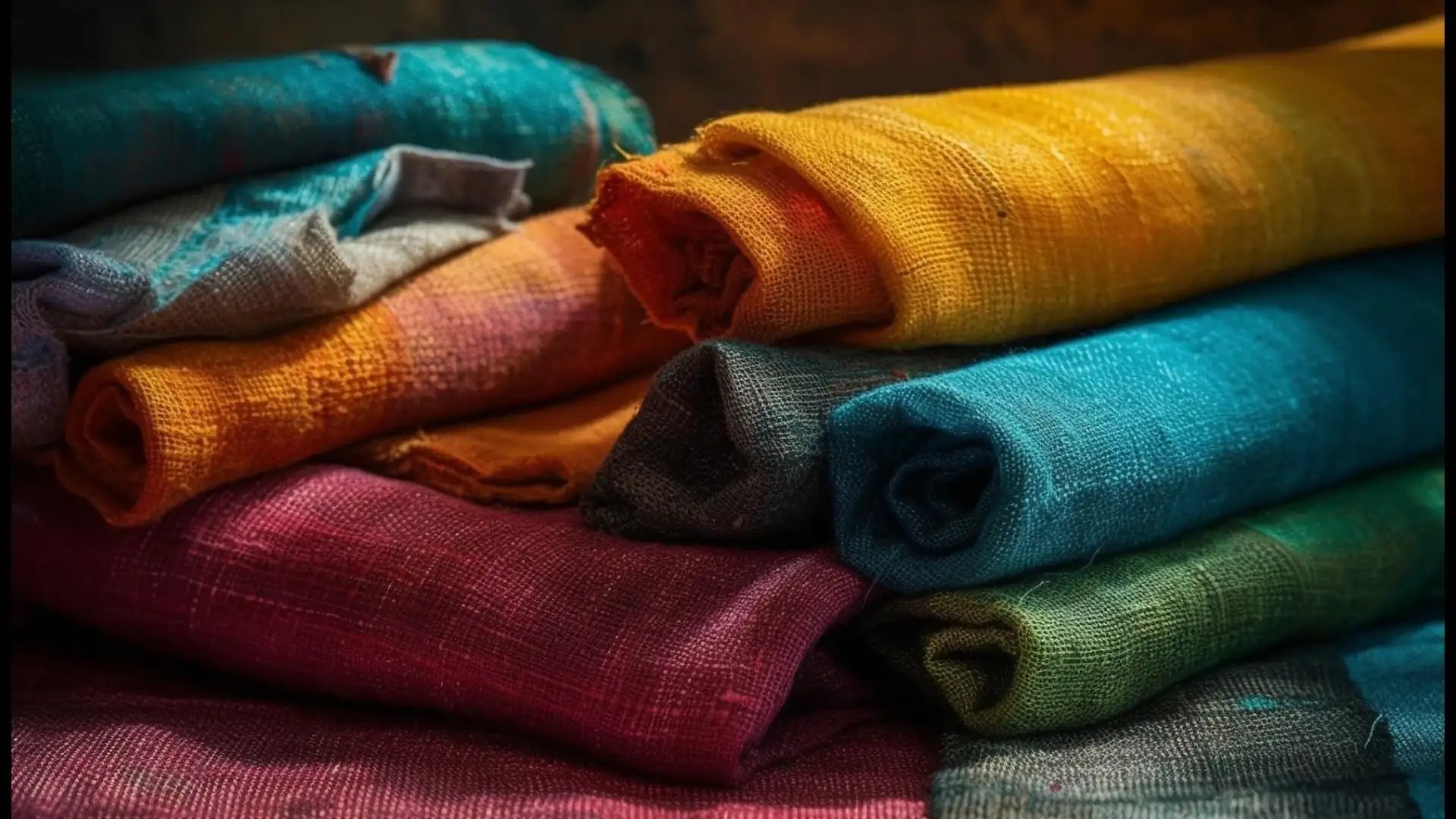
Gandhi understood this as a loop that could be broken at the household level. If Indians spun their own thread and wove their own cloth, they would stop buying British mill cloth. The economic drain, the outflow of Indian money to British manufacturers, would slow. Khadi was, in his framing, not a sacrifice but a restoration: taking back something that had been taken.
The charkha itself was assigned a daily practice: Gandhi asked Congress workers to spin for at least half an hour each day. This was not symbolic. The yarn was real, the cloth was real, and the discipline of sitting with a wheel and producing something tangible was meant to connect the educated nationalist to the labour that most Indians lived by. The act of spinning was a form of solidarity that required no translation.
The charkha could be drawn, printed on a flag, carried in a pocket, or set up in a village courtyard. It became a logo before the word existed in its modern sense. The Congress flag that flew during the independence movement carried the charkha at its centre, the wheel of self-reliance where the Ashoka Chakra would later sit.
A khadi kurta on a public figure still reads as a reference to something, a claim of continuity with the movement, genuine or performed. The cloth carries its history in a way that synthetic fibre simply cannot. It was made political by a specific argument, at a specific moment, and the argument has not been forgotten.The charkha chose khadi not because it was beautiful but because it was democratic.
Any hand could make it, any body could wear it, and wearing it said something that no imported cloth could say. That is why a rough, uneven fabric became the texture of a nation's idea of itself.
The Economic Logic Behind the Symbol
Britain's industrial revolution ran, in significant part, on Indian cotton. Raw cotton left India's ports, was spun and woven in Lancashire's mills, and returned to India as finished cloth, at prices that undercut the local weaver and made India a captive market. By the mid-nineteenth century, India's handloom weaving tradition, which had once produced the finest muslins in the world, had been systematically hollowed out.Gandhi understood this as a loop that could be broken at the household level. If Indians spun their own thread and wove their own cloth, they would stop buying British mill cloth. The economic drain, the outflow of Indian money to British manufacturers, would slow. Khadi was, in his framing, not a sacrifice but a restoration: taking back something that had been taken.
What the Charkha Asked of the Wearer
The Congress adopted khadi as the dress code for its members in 1921. This was a deliberate levelling. A lawyer from Bombay and a farmer from Bihar, both in rough white khadi, looked more alike than different. The cloth erased, or at least softened, the visual markers of class that colonial society had sharpened.The charkha itself was assigned a daily practice: Gandhi asked Congress workers to spin for at least half an hour each day. This was not symbolic. The yarn was real, the cloth was real, and the discipline of sitting with a wheel and producing something tangible was meant to connect the educated nationalist to the labour that most Indians lived by. The act of spinning was a form of solidarity that required no translation.
You may also like
- Celebrating Naraka Chaturdashi: Significance and Rituals
- Understanding the Significance of Kali Chaudas: Traditions and Beliefs
- Hair Loss Shampoos Under Scrutiny as Experts Highlight the Importance of Scalp Health
- Scene Box Office Collection Day 1: Suriya's Film Opens at Rs 19.15 Crore, Beats Karuppu and Vishwanath & Sons
- Why is the night of Kali Chaudas specifically chosen for occult practices (tantra-mantra)? Learn about 5 beliefs..
Khadi and the Swadeshi Tradition
The idea of swadeshi, preferring goods made at home, predates Gandhi. The Swadeshi Movement of 1905, sparked by the partition of Bengal, had already seen bonfires of British cloth in Calcutta's streets. But that movement was largely urban and upper-caste. Its reach was limited.What Gandhi did was graft the swadeshi impulse onto a single, reproducible object.The charkha could be drawn, printed on a flag, carried in a pocket, or set up in a village courtyard. It became a logo before the word existed in its modern sense. The Congress flag that flew during the independence movement carried the charkha at its centre, the wheel of self-reliance where the Ashoka Chakra would later sit.
The Fabric After Independence
When India became independent, khadi carried a complicated inheritance. It was the cloth of the freedom struggle, but it was also coarser and more expensive than mill cloth. The Khadi and Village Industries Commission was established to sustain production and support the artisans who depended on it, but khadi gradually retreated from everyday wear into a specific register: the politician's kurta, the activist's statement, the heritage-conscious consumer's deliberate choice. That retreat did not erase the meaning.A khadi kurta on a public figure still reads as a reference to something, a claim of continuity with the movement, genuine or performed. The cloth carries its history in a way that synthetic fibre simply cannot. It was made political by a specific argument, at a specific moment, and the argument has not been forgotten.The charkha chose khadi not because it was beautiful but because it was democratic.
Any hand could make it, any body could wear it, and wearing it said something that no imported cloth could say. That is why a rough, uneven fabric became the texture of a nation's idea of itself.






Loving Newspoint? Download the app now
