
Why Some Rocks Move by Themselves Across the Desert Without Human Help

Imagine walking across a dry desert and spotting large rocks with long tracks stretching behind them, as though they had quietly travelled across the ground by themselves. There are no footprints, no tyre marks and no obvious explanation. For decades, these mysterious " moving rocks " puzzled scientists, travellers and photographers alike, giving rise to countless theories involving strong winds, magnetic forces and even extraterrestrial activity. The truth, however, turned out to be just as fascinating as the myths. Thanks to years of careful observation and modern technology, researchers have finally uncovered the surprising natural process that allows some rocks to move without anyone pushing them.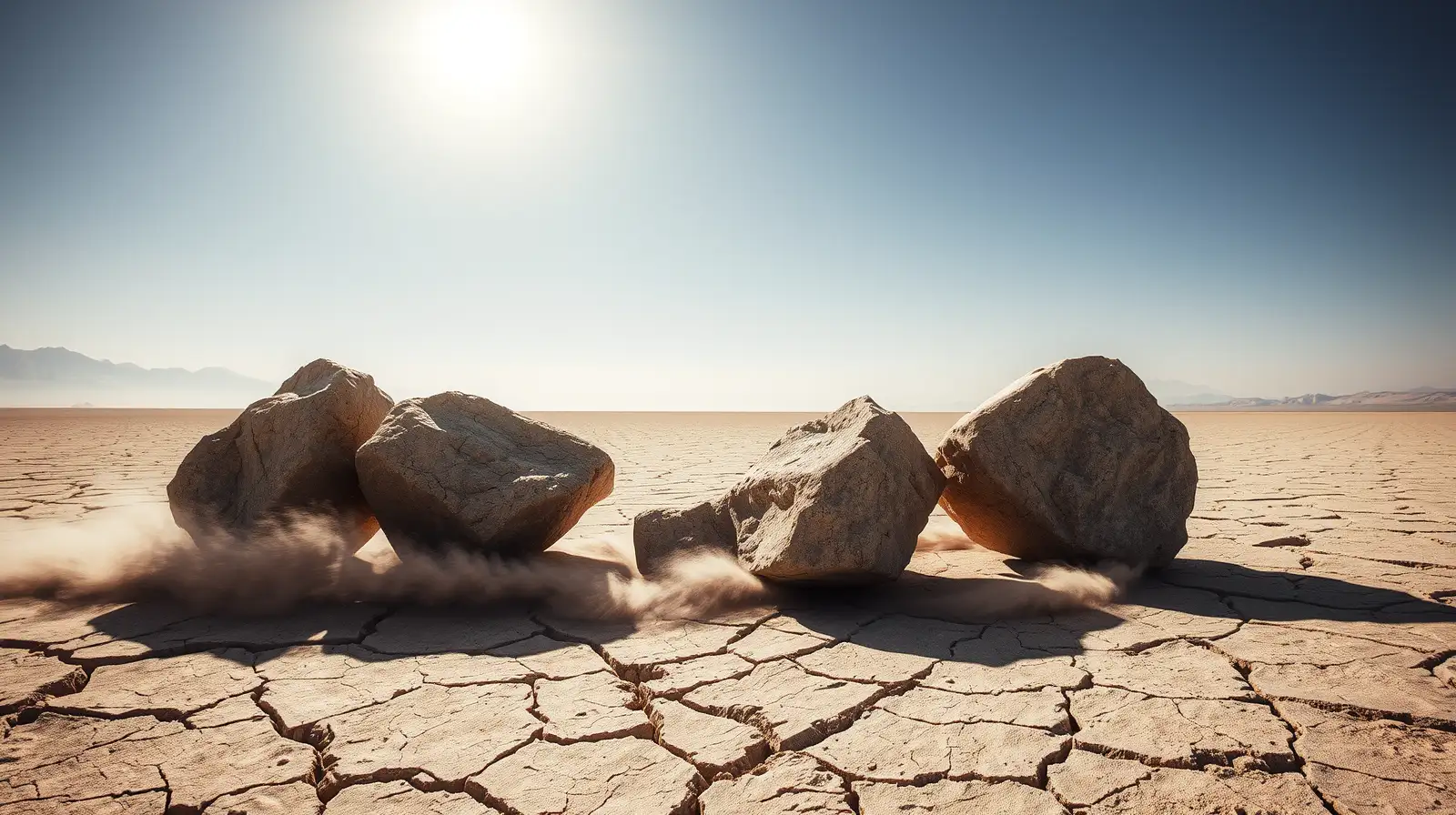
For much of the twentieth century, nobody had actually witnessed the rocks moving. Scientists could see the fresh tracks appearing over time, but the movement itself remained a mystery because it happened so rarely and under very specific conditions.
The unexplained phenomenon sparked worldwide curiosity and became one of nature's most enduring geological puzzles .
Instead, a rare combination of weather conditions creates the perfect environment. During cold winter nights, a shallow layer of water on the lakebed freezes into thin sheets of ice. As temperatures rise the following morning, the fragile ice begins to break apart while gentle winds slowly push the floating ice panels across the wet surface.
The rocks become trapped within these moving sheets of ice and are gradually pushed along the slippery mud, often travelling several metres at a time. The movement is surprisingly slow, usually only a few centimetres per second, making it almost impossible to notice with the naked eye.
The tracks themselves can last for years in the dry desert climate until strong winds or seasonal rainfall erase them. Some trails are straight, while others curve sharply, showing that changing wind directions influence each rock differently.
Interestingly, similar rock movements have been observed in a handful of other locations around the world, although none are as well documented as those at Racetrack Playa.
Studying these moving rocks has improved our understanding of weather, geology and the subtle interactions between ice, wind and landscape. More importantly, it demonstrates that even in an age of satellites and artificial intelligence, our planet still has remarkable secrets waiting to be uncovered.
The next time you see a photograph of a lonely rock with a long trail behind it, remember that it was not magic or mystery that set it in motion, but the quiet and extraordinary forces of nature working together.
The Mystery That Captivated Scientists
The most famous examples of rocks that appear to move by themselves can be found on the dry lakebed known as Racetrack Playa in Death Valley , California. Here, rocks weighing anything from a few hundred grams to more than 300 kilograms leave long, winding trails across the cracked desert floor.For much of the twentieth century, nobody had actually witnessed the rocks moving. Scientists could see the fresh tracks appearing over time, but the movement itself remained a mystery because it happened so rarely and under very specific conditions.
The unexplained phenomenon sparked worldwide curiosity and became one of nature's most enduring geological puzzles .
The Science Behind the Moving Rocks
The breakthrough came in 2014, when researchers captured the movement using GPS equipment and time-lapse cameras. Contrary to earlier theories, the rocks do not move because of exceptionally strong winds alone.You may also like
- Expensive birthday party or a holiday with kids? This family chose the latter and explains why it became the best parenting formula
- Kids can 'drown' in sleep hours after their swimming lesson: Australian mom shares warning every parent should know
- Haaland Lookalike Julia Grop Goes Viral During FIFA World Cup
- Psychology says people who take spiritual journeys instead of only beach holidays often experience deeper and longer-lasting stress relief
- Shopping for engagement rings? Taylor Swift's one-of its-kind rare diamond should be on your wishlist
Instead, a rare combination of weather conditions creates the perfect environment. During cold winter nights, a shallow layer of water on the lakebed freezes into thin sheets of ice. As temperatures rise the following morning, the fragile ice begins to break apart while gentle winds slowly push the floating ice panels across the wet surface.
The rocks become trapped within these moving sheets of ice and are gradually pushed along the slippery mud, often travelling several metres at a time. The movement is surprisingly slow, usually only a few centimetres per second, making it almost impossible to notice with the naked eye.
Lesser-Known Facts About the Phenomenon
One of the most surprising discoveries is that several rocks can move simultaneously, while others sitting only a few metres away remain completely still. This depends on the size of the ice sheets, the direction of the wind and the exact shape of the ground beneath each rock.The tracks themselves can last for years in the dry desert climate until strong winds or seasonal rainfall erase them. Some trails are straight, while others curve sharply, showing that changing wind directions influence each rock differently.
Interestingly, similar rock movements have been observed in a handful of other locations around the world, although none are as well documented as those at Racetrack Playa.
Why This Matters Today
The mystery of why some rocks move by themselves is a reminder that nature often hides simple explanations behind seemingly impossible events. It also highlights the importance of patience in scientific research. Some questions cannot be answered overnight and require years of observation before the evidence becomes clear.Studying these moving rocks has improved our understanding of weather, geology and the subtle interactions between ice, wind and landscape. More importantly, it demonstrates that even in an age of satellites and artificial intelligence, our planet still has remarkable secrets waiting to be uncovered.
The next time you see a photograph of a lonely rock with a long trail behind it, remember that it was not magic or mystery that set it in motion, but the quiet and extraordinary forces of nature working together.






Loving Newspoint? Download the app now
