
How Forests Help Create Rain and Shape the Weather

Forests are often described as ecosystems shaped by rainfall, temperature, and sunlight. But in some of the world's largest rainforests, the relationship works both ways. The forest does not simply respond to weather; it can actively influence it. The Amazon rainforest is one of the clearest examples, using billions of trees to move water from the ground into the atmosphere and helping create the conditions for clouds and rain.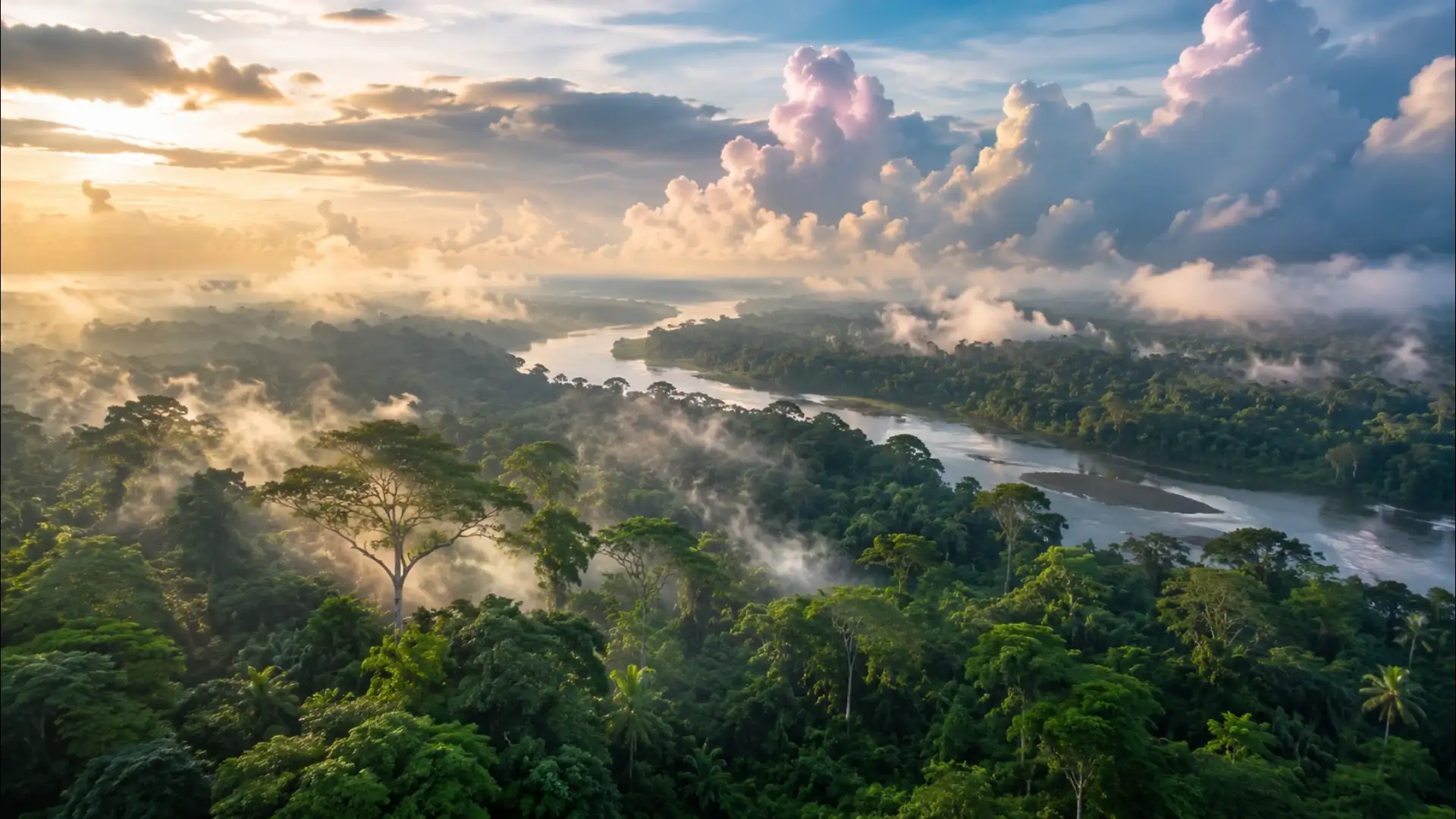
Together with evaporation from soil and vegetation, this process is known as evapotranspiration. Across a vast rainforest, the amount of moisture returned to the atmosphere can be enormous. The moisture rises into the atmosphere, where it can contribute to cloud formation and eventually return to the ground as rainfall.
This creates a repeating cycle: rain falls on the forest, trees and soil absorb the water, vegetation releases moisture back into the atmosphere, clouds develop, and more rain falls. In this sense, the forest acts like a giant biological water-recycling system.
NASA research has also provided evidence that vegetation can help trigger the Amazon's rainy season. Water vapour released by trees can make the air above the forest more buoyant, helping it rise and form clouds and thunderstorms.
These atmospheric flows carry moisture from the Amazon toward other parts of South America, influencing rainfall far beyond the rainforest itself. The forest therefore has an impact not only on its immediate surroundings but also on regional water availability.
Recent research continues to show that forest-generated moisture is important for maintaining rainfall and forest resilience. In parts of the Amazon, locally generated precipitation can account for a significant proportion of total rainfall.
How Trees Put Water Into the Sky
The process begins with transpiration. Trees absorb water from the soil through their roots and transport it upward. Some of this water is eventually released through tiny openings in their leaves as water vapour.Together with evaporation from soil and vegetation, this process is known as evapotranspiration. Across a vast rainforest, the amount of moisture returned to the atmosphere can be enormous. The moisture rises into the atmosphere, where it can contribute to cloud formation and eventually return to the ground as rainfall.
A Natural Rain-Making Cycle
The Amazon demonstrates how powerful this recycling system can become. Research has found that a substantial share of Amazonian rainfall originates within the basin itself. One study estimated that roughly one-third of Amazonian rainfall originates within the basin, with much of that water having previously been transpired by trees.This creates a repeating cycle: rain falls on the forest, trees and soil absorb the water, vegetation releases moisture back into the atmosphere, clouds develop, and more rain falls. In this sense, the forest acts like a giant biological water-recycling system.
You may also like
- Understanding Menstrual Pain: Causes and Remedies
- How to Support Your Gut and Vaginal Microbiome Before Pregnancy
- Spilling water for luck! How India, Turkey and Iran share this ancient farewell ritual
- “It's OK mommy, it's OK”: 7-year-old American boy called 'hero' after calmly calling 911 when his mother suffered seizure; parenting lesson to take home
- Kerala to be renamed 'Keralam': Rajya Sabha clears name change bill; what it means for travellers
NASA research has also provided evidence that vegetation can help trigger the Amazon's rainy season. Water vapour released by trees can make the air above the forest more buoyant, helping it rise and form clouds and thunderstorms.
The Forest's 'Flying Rivers'
Not all of this moisture falls back onto the same patch of forest. Winds can transport water vapour across enormous distances, creating what scientists and environmental researchers often describe as 'flying rivers'.These atmospheric flows carry moisture from the Amazon toward other parts of South America, influencing rainfall far beyond the rainforest itself. The forest therefore has an impact not only on its immediate surroundings but also on regional water availability.
What Happens When Forests Disappear?
This natural weather-making system also explains why deforestation can have consequences beyond the loss of trees and wildlife. Removing large areas of forest reduces transpiration and disrupts the recycling of moisture. A drier environment can then make the remaining forest more vulnerable to drought, heat, and fire.Recent research continues to show that forest-generated moisture is important for maintaining rainfall and forest resilience. In parts of the Amazon, locally generated precipitation can account for a significant proportion of total rainfall.






Loving Newspoint? Download the app now
