
The Rise of Shopping Malls: More Than Just Shopping Centers

Think about the last time you went to a shopping mall. Did you actually buy something? Or did you grab a coffee, watch a movie, try a new restaurant, wander through a few stores, and call it a day? For a lot of us, it's probably the second one. That's what makes malls interesting right now. Of course it is easier than ever to buy things online, but still the malls seem to be full on the weekends. Parking lots are full. Cafés are booked out. The cinema is full of people. It almost feels strange. If everything can be delivered to our doorstep, why are people still making the effort to go to a mall? The answer is simple. We don't just miss shopping. Sometimes, we miss going out.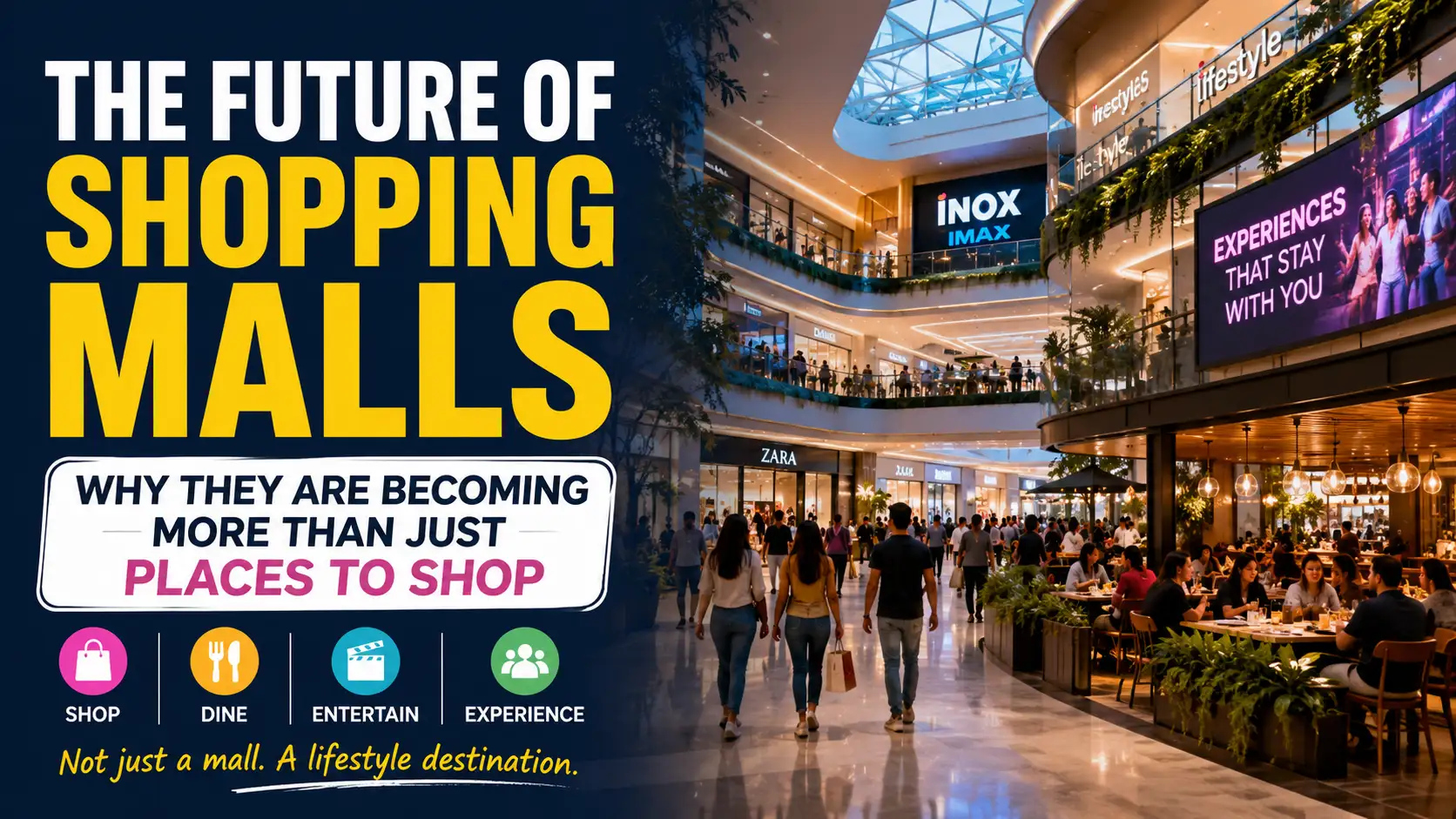
Online shopping has mastered convenience. Need new shoes? Done. Forgot to buy a birthday gift? It'll arrive tomorrow. Running out of groceries? A few taps and they're on the way. Shopping itself has become incredibly easy. But spending an evening with your friends? Laughing over fries in a food court?
Walking around aimlessly after a movie? That's something no app can deliver. That's where malls still have an advantage. People aren't always looking for products. Sometimes they're just looking for plans.
If you look around carefully, you'll notice something changing. People aren't rushing from one store to another anymore. Some are working on their laptops in cafés. Kids are spending hours in play zones.
Couples are window shopping without buying anything. Groups of teenagers are sitting on benches talking about life. Parents are letting their children burn off energy while they finally get a moment to relax. The mall has quietly become one of the few places where everyone can spend time together without needing a special occasion. It's less about shopping and more about simply being somewhere.
Years ago, people ate at the food court because they got hungry after shopping. Now it's often the other way around. Someone suggests trying a new Korean restaurant. Another person wants dessert from the café; everyone's posting on Instagram.
Someone else wants bubble tea. Before you know it, you've spent three hours at the mall without entering a single clothing store. Restaurants and cafés have become one of the biggest reasons people visit malls today, and developers know it. That's why food sections are getting bigger, more creative, and far more exciting than they used to be.
The malls that are doing well aren't relying only on retail stores anymore. They're adding bowling alleys, arcades, trampoline parks, escape rooms, concerts, workshops, art installations, and pop-up markets. Because let's be honest, most people can buy the same pair of sneakers online.
But they can't recreate an afternoon filled with games, music, food, and friends through a delivery app. That's the difference. One gives you a package. The other gives you a memory.
Technology will definitely shape the malls of the future, but not in the way many people imagine. Instead of replacing people, it'll simply make things smoother. Finding your parked car. Checking whether your size is available before walking into a store.
Trying on clothes virtually. Paying without standing in long queues. The goal isn't to make malls feel more digital. It's to make them less frustrating.
After spending so much of our lives staring at screens, something has changed. People want reasons to step outside. A concert. A weekend market. A gaming tournament. A seasonal festival.
Even something as simple as sitting with friends over coffee feels refreshing when most conversations happen through phones. That's why the future of malls isn't really about shopping. It's about giving people a place where life happens offline.
For years, people predicted that online shopping would kill malls. It didn't. It forced them to change. The malls that survive won't be the ones with the biggest number of stores. They'll be the ones people genuinely enjoy spending time in. Because at the end of the day, no matter how fast deliveries become, people still want to laugh with friends, try a new restaurant, catch a movie, or simply walk around without a destination. Maybe that's what the future of shopping malls really looks like. Not a place where we go to buy things. A place where we go to live a little.
You Can Order Clothes Online, But You Can't Order an Evening Out
Online shopping has mastered convenience. Need new shoes? Done. Forgot to buy a birthday gift? It'll arrive tomorrow. Running out of groceries? A few taps and they're on the way. Shopping itself has become incredibly easy. But spending an evening with your friends? Laughing over fries in a food court?
Walking around aimlessly after a movie? That's something no app can deliver. That's where malls still have an advantage. People aren't always looking for products. Sometimes they're just looking for plans.
The Mall Is Slowly Becoming the City's Living Room
If you look around carefully, you'll notice something changing. People aren't rushing from one store to another anymore. Some are working on their laptops in cafés. Kids are spending hours in play zones.
Couples are window shopping without buying anything. Groups of teenagers are sitting on benches talking about life. Parents are letting their children burn off energy while they finally get a moment to relax. The mall has quietly become one of the few places where everyone can spend time together without needing a special occasion. It's less about shopping and more about simply being somewhere.
You may also like
- The hidden purpose of clothespin holes: How this overlooked design helps clothes stay secure and reduces peg marks
- Cooker Hacks: Cooker Whistle Spraying Water? These Simple Tricks Will Fix It!
- Ghosting has left dating apps — now we ghost friends, colleagues and family
- Got an upper berth on the train? Here's how you can get a lower berth.
- India PMI Data: Service sector growth hits a 4-year low in July; here's why
Food Has Become the Main Event
Years ago, people ate at the food court because they got hungry after shopping. Now it's often the other way around. Someone suggests trying a new Korean restaurant. Another person wants dessert from the café; everyone's posting on Instagram.
Someone else wants bubble tea. Before you know it, you've spent three hours at the mall without entering a single clothing store. Restaurants and cafés have become one of the biggest reasons people visit malls today, and developers know it. That's why food sections are getting bigger, more creative, and far more exciting than they used to be.
Shopping Is Becoming Entertainment
The malls that are doing well aren't relying only on retail stores anymore. They're adding bowling alleys, arcades, trampoline parks, escape rooms, concerts, workshops, art installations, and pop-up markets. Because let's be honest, most people can buy the same pair of sneakers online.
But they can't recreate an afternoon filled with games, music, food, and friends through a delivery app. That's the difference. One gives you a package. The other gives you a memory.
Technology Will Make Visits Easier, Not Replace Them
Technology will definitely shape the malls of the future, but not in the way many people imagine. Instead of replacing people, it'll simply make things smoother. Finding your parked car. Checking whether your size is available before walking into a store.
Trying on clothes virtually. Paying without standing in long queues. The goal isn't to make malls feel more digital. It's to make them less frustrating.
People Are Looking for Experiences Again
After spending so much of our lives staring at screens, something has changed. People want reasons to step outside. A concert. A weekend market. A gaming tournament. A seasonal festival.
Even something as simple as sitting with friends over coffee feels refreshing when most conversations happen through phones. That's why the future of malls isn't really about shopping. It's about giving people a place where life happens offline.
More Than Just a Place to Shop
For years, people predicted that online shopping would kill malls. It didn't. It forced them to change. The malls that survive won't be the ones with the biggest number of stores. They'll be the ones people genuinely enjoy spending time in. Because at the end of the day, no matter how fast deliveries become, people still want to laugh with friends, try a new restaurant, catch a movie, or simply walk around without a destination. Maybe that's what the future of shopping malls really looks like. Not a place where we go to buy things. A place where we go to live a little.






Loving Newspoint? Download the app now
