
The Mountain Where Clouds Form Below You: The Science Behind the Sea of Clouds

Imagine climbing a mountain before sunrise and reaching a viewpoint where the landscape below has completely disappeared. Instead of valleys, forests and towns, you see a vast white blanket stretching towards the horizon, with a few mountain peaks poking through it like islands. From above, the clouds appear to be sitting beneath your feet. This spectacular phenomenon is often called a " sea of clouds ", and it can occur in mountain regions around the world. One of Japan's most famous examples can be seen around Takeda Castle in Hyogo Prefecture, where the ancient ruins appear to float above a cloud-filled valley on certain autumn mornings. (japan.travel)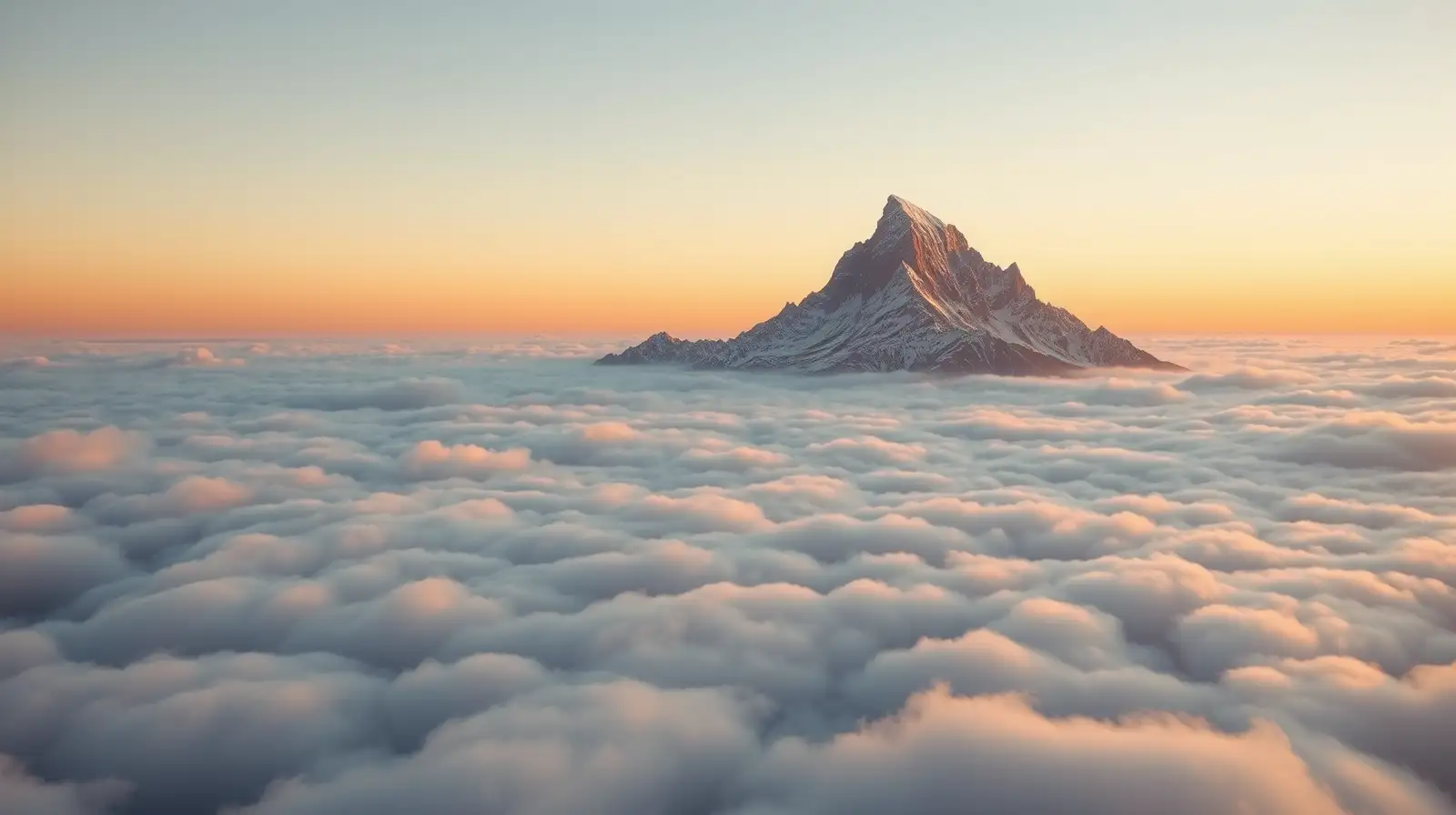
One common explanation is a temperature inversion . Under normal conditions, air generally becomes cooler as altitude increases. During an inversion, however, warmer air sits above colder air near the ground. The cooler, moisture-rich air becomes trapped in valleys, where it can condense into fog or low cloud. (science.nasa.gov
When you climb above this layer, you can suddenly find yourself in clear, sunny air while the clouds remain spread across the valley beneath you.
On suitable mornings, mist fills the surrounding valleys while the castle remains above the cloud layer. From nearby Ritsuunkyo viewpoints, the ruins can appear to float in the middle of a white sea. Japan's National Tourism Organisation says the phenomenon is particularly common around sunrise in October and November, although it is not guaranteed. (japan.travel
Clear, cool nights can cause the ground to lose heat rapidly. Moist air near the surface then cools, while a warmer layer above prevents that air from rising and mixing freely. The result can be a broad layer of fog or cloud sitting inside the valleys.
This is why photographers often arrive before sunrise. At Takeda Castle, late September through early December can provide favourable conditions, with October and November particularly associated with the spectacle. (hyogo-tourism.jp
So mountains can both influence the formation of clouds and provide the perfect vantage point from which to look down upon them.
For travellers, the phenomenon can transform a familiar mountain landscape into something that looks almost otherworldly. For scientists, it offers an easy-to-see example of how temperature, moisture and terrain interact.
The next time you look up at a mountain surrounded by clouds, remember that the view can work in reverse. With the right weather conditions and enough altitude, you may not be looking at clouds around the mountain at all. You could be standing above an entire cloud-filled valley.
How Clouds End Up Below a Mountain
Clouds do not actually have to be higher than every mountain around them. Their height depends on atmospheric temperature, moisture and pressure.One common explanation is a temperature inversion . Under normal conditions, air generally becomes cooler as altitude increases. During an inversion, however, warmer air sits above colder air near the ground. The cooler, moisture-rich air becomes trapped in valleys, where it can condense into fog or low cloud. (science.nasa.gov
When you climb above this layer, you can suddenly find yourself in clear, sunny air while the clouds remain spread across the valley beneath you.
The Mountain Behind Japan's Famous View
Takeda Castle in Hyogo Prefecture provides one of the most striking examples. The ruined fortress stands on a 353-metre-high mountain and is sometimes called the "castle in the sky".You may also like
- Kareena Kapoor Khan Celebrates Sara Ali Khan's Birthday with Sweet Wishes
- I'll always choose a good script over a paycheck, says Saiyami Kher
- 1972–2022: Michael Heizer spent 50 years building a mile-long 'city' in the Nevada desert that stayed hidden from the public
- “She wanted us to rise from poverty”: This grieving father carried his late daughter's life-size cutout to her college graduation; he wanted to honour her final milestone
- 'Inexplicable joy': Tamannaah Bhatia's reaction to Nayanthara wearing her jewellery is just too sweet!
On suitable mornings, mist fills the surrounding valleys while the castle remains above the cloud layer. From nearby Ritsuunkyo viewpoints, the ruins can appear to float in the middle of a white sea. Japan's National Tourism Organisation says the phenomenon is particularly common around sunrise in October and November, although it is not guaranteed. (japan.travel
Why Autumn Mornings Are Special
The conditions have to be just right for a sea of clouds to develop.Clear, cool nights can cause the ground to lose heat rapidly. Moist air near the surface then cools, while a warmer layer above prevents that air from rising and mixing freely. The result can be a broad layer of fog or cloud sitting inside the valleys.
This is why photographers often arrive before sunrise. At Takeda Castle, late September through early December can provide favourable conditions, with October and November particularly associated with the spectacle. (hyogo-tourism.jp
Mountains Can Help Create Clouds Too
There is another fascinating connection between mountains and clouds. When moist air encounters a mountain, the terrain forces the air upwards. As the air rises, it expands and cools, allowing water vapour to condense and form clouds. This process is known as orographic cloud formation . (scied.ucar.eduSo mountains can both influence the formation of clouds and provide the perfect vantage point from which to look down upon them.
More Than a Beautiful View
The sea of clouds is not merely a photographic trick. It is a visible demonstration of atmospheric physics that normally happens without anyone noticing.For travellers, the phenomenon can transform a familiar mountain landscape into something that looks almost otherworldly. For scientists, it offers an easy-to-see example of how temperature, moisture and terrain interact.
The next time you look up at a mountain surrounded by clouds, remember that the view can work in reverse. With the right weather conditions and enough altitude, you may not be looking at clouds around the mountain at all. You could be standing above an entire cloud-filled valley.






Loving Newspoint? Download the app now
