
The Mystery Of 3 And 13: Why These Numbers Are Thought To Be Unlucky

Numbers often carry more than just mathematical value, they can hold cultural and mystical significance. Across India and the world, 3 and 13 are widely regarded as unlucky, influencing traditions, architecture, and daily life. But what makes these numbers so feared?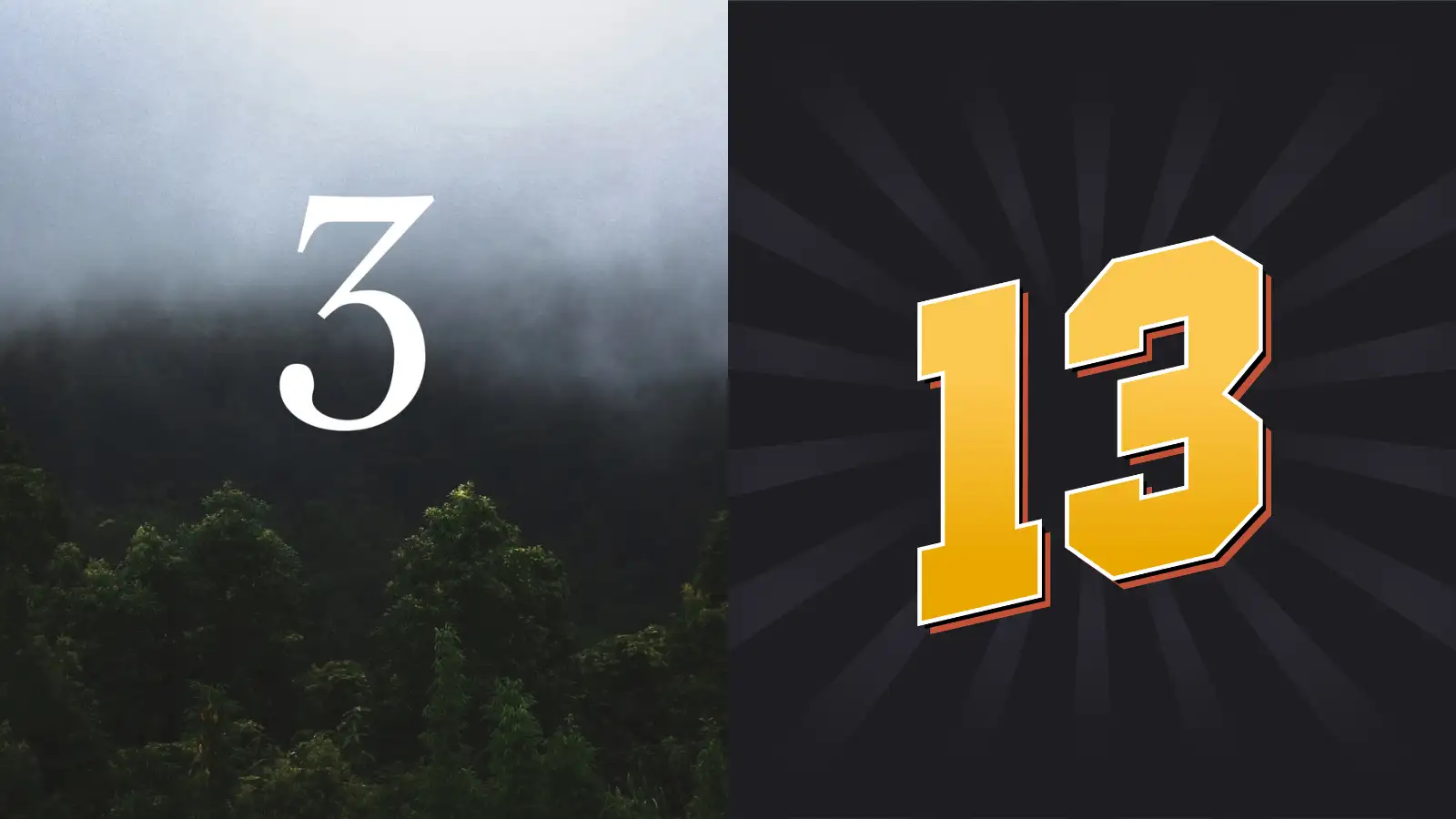
The Uneasy Power of Number 3
In India, many are familiar with the saying “Teen Tigada Kaam Bigada,” meaning anything done in threes is likely to fail or face obstacles. This superstition appears in daily life, from avoiding serving three rotis on a plate to hesitating to step out in a group of three. The logic behind it is simple: two and four are seen as balanced and stable, while three is perceived as an incomplete or unstable number. Though some also consider 3 auspicious in certain rituals, its association with hurdles has persisted for generations.
The Global Fear of Number 13
The number 13 has a notorious reputation worldwide, a phenomenon known as triskaidekaphobia . Western culture links 13 to betrayal and misfortune, most famously because Judas, the 13th guest at the Last Supper, betrayed Jesus. This belief has permeated modern society: many hotels skip the 13th floor, airlines avoid seat number 13, and even dates like Friday the 13th are considered unlucky.
Read More: Why Serving Three Rotis Together Is Considered Bad Luck In India
Why These Superstitions Endure
The persistence of these beliefs is largely due to human psychology. Confirmation bias makes us remember negative events linked to 3 or 13, while forgetting when nothing bad happens. Additionally, hearing about these superstitions from elders during childhood normalises the fear, embedding it into cultural practice.
Are 3 and 13 Truly Unlucky?
In reality, 3 and 13 are just numbers. Their “bad luck” reputation is a mix of history, myth, and perception. Success, positivity, and hard work are far more powerful than any number, proving that these superstitions hold influence only if we allow them.
Disclaimer: This article discusses cultural beliefs and superstitions surrounding the numbers 3 and 13 for informational purposes only. These views are rooted in folklore and tradition and have no scientific validation. Newspoint is not responsible for any decisions or actions taken based on this content.
The Uneasy Power of Number 3
In India, many are familiar with the saying “Teen Tigada Kaam Bigada,” meaning anything done in threes is likely to fail or face obstacles. This superstition appears in daily life, from avoiding serving three rotis on a plate to hesitating to step out in a group of three. The logic behind it is simple: two and four are seen as balanced and stable, while three is perceived as an incomplete or unstable number. Though some also consider 3 auspicious in certain rituals, its association with hurdles has persisted for generations. The Global Fear of Number 13
The number 13 has a notorious reputation worldwide, a phenomenon known as triskaidekaphobia . Western culture links 13 to betrayal and misfortune, most famously because Judas, the 13th guest at the Last Supper, betrayed Jesus. This belief has permeated modern society: many hotels skip the 13th floor, airlines avoid seat number 13, and even dates like Friday the 13th are considered unlucky.You may also like
- Gulf flight operations from Kerala hit for third day amid West Asia conflict
- Loan Moratorium: EMI relief or a costly deal? Understand the math before taking a loan moratorium..
- When Is the Best Time to Test LH and Progesterone for Ovulation
- Why Is Everyone Suddenly Talking About Aloe Vera for Skin and Hair
- Not NPS or UPS… This state government is offering the option of choosing APS, learn about the benefits; effective April 1.
Read More: Why Serving Three Rotis Together Is Considered Bad Luck In India
Why These Superstitions Endure
The persistence of these beliefs is largely due to human psychology. Confirmation bias makes us remember negative events linked to 3 or 13, while forgetting when nothing bad happens. Additionally, hearing about these superstitions from elders during childhood normalises the fear, embedding it into cultural practice.Are 3 and 13 Truly Unlucky?
In reality, 3 and 13 are just numbers. Their “bad luck” reputation is a mix of history, myth, and perception. Success, positivity, and hard work are far more powerful than any number, proving that these superstitions hold influence only if we allow them. Disclaimer: This article discusses cultural beliefs and superstitions surrounding the numbers 3 and 13 for informational purposes only. These views are rooted in folklore and tradition and have no scientific validation. Newspoint is not responsible for any decisions or actions taken based on this content.






More from our partners


Loving Newspoint? Download the app now
