
The Mystery of Déjà Vu: What If Your Brain Is Telling You a Story That Never Happened?

It lasts only a few seconds. You're talking to someone, walking through a place you've never visited, or maybe just standing in line at a coffee shop. Then, out of nowhere, a strange thought hits you. "I've done this before. " Not just something similar. This exact moment. The words, the sounds, the people around you,d it all feels weirdly familiar. Déjà Vu: Why Your Brain Thinks You've Been Here and Seen This Scene Already. Then, just as suddenly as it appeared, the feeling disappears. You know it wasn't real. But it felt real. That's the strange world of déjà vu. It's something that everyone has at least once, but no one can be 100% sure why. Yet for something so common, it is surprisingly mysterious. And maybe that is why people have spent centuries trying to crack it.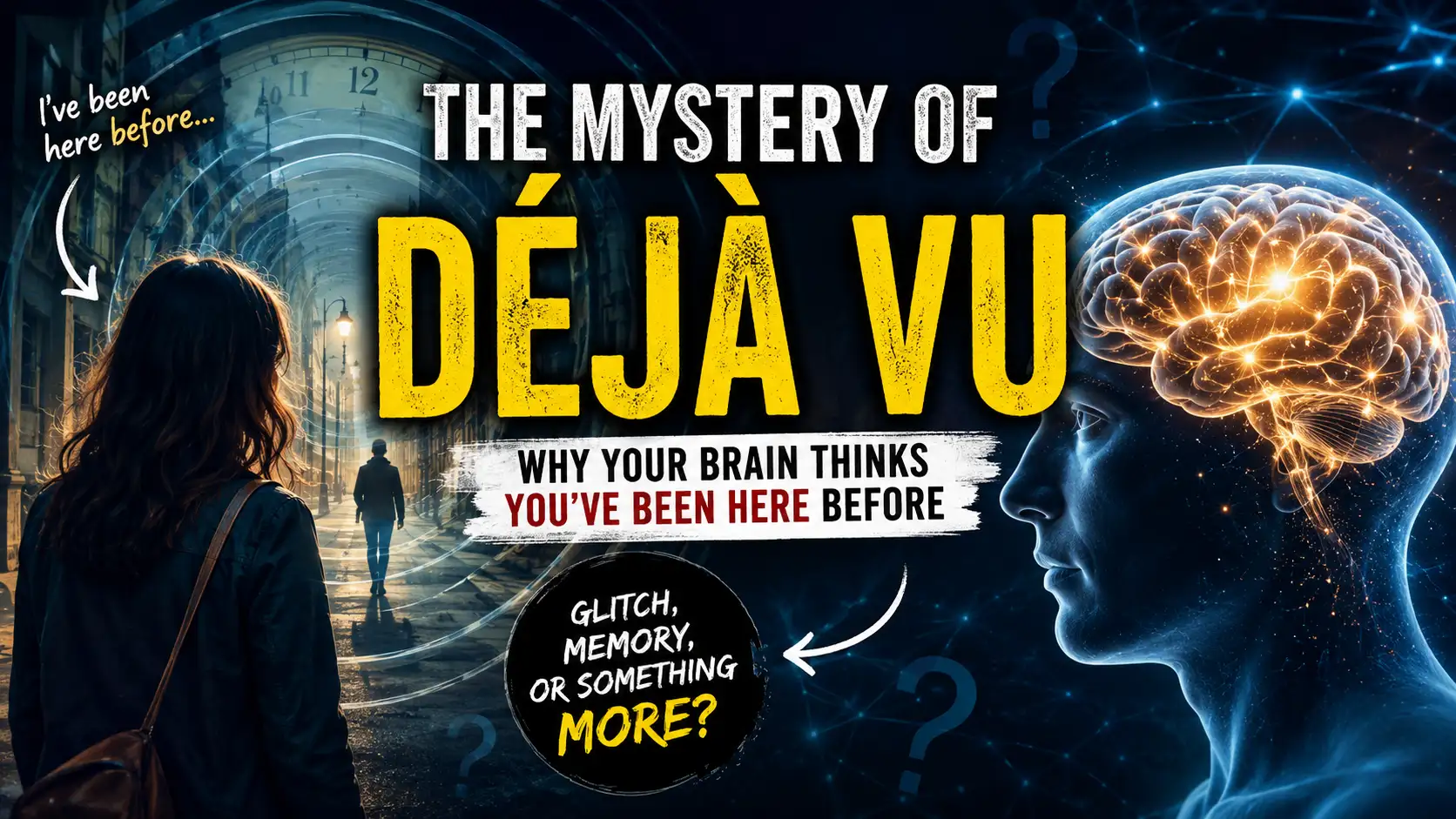
We often imagine the brain as a perfect machine, but that's far from the truth. It's processing millions of tiny details every second. Faces. Voices. Smells. Background noises. Emotions. Memories. It somehow manages to organise all of it without us even noticing. Every once in a while, though, it slips. Not in a dramatic way. Just enough to make a brand-new moment feel like an old memory.
Think about accidentally saving a brand-new photo into an album from years ago. The picture is new, but because it's sitting in the wrong place, your brain treats it like something you've already seen. That tiny mix-up could be all it takes to create déjà vu.
Here's something interesting. Your brain doesn't remember life the way your phone stores pictures. It remembers patterns. Maybe the café you're sitting in smells like your grandmother's house. Maybe the lighting reminds you of a classroom from years ago. Maybe someone's laugh sounds almost identical to someone you once knew.
Individually, these things don't mean much. But together? Your brain quietly connects those tiny similarities and whispers, "We've been here before. "Except... you haven't. It isn't replaying a memory. It's building a feeling.
One theory is surprisingly simple. Imagine hearing someone repeat the same sentence because your internet froze for half a second. Scientists believe something similar might occasionally happen inside the brain.
Information could arrive through two slightly different pathways. One reaches your awareness a tiny fraction of a second before the other. By the time the second signal arrives, your brain mistakes it for something you've already experienced. The delay is so incredibly small that you'd never notice it consciously. But your brain does. And for those few seconds, reality feels strangely familiar.
If you've been having déjà vu more often as a teen or in your early 20s, you're not imagining it. Researchers have found that younger people report it far more frequently than older adults. No one knows the exact reason, but it makes sense. As we grow older, we continue to gather new experiences, new places, new people, and new things to learn. Our brains are busy making fresh connections every single day.
The more new information your brain processes, the more chances there are for these little "memory hiccups" to happen. As life settles into routines, those strange moments often become less frequent.
Despite years of research, scientists still don't have one perfect answer. Some believe déjà vu is simply a harmless memory error. Others think it's connected to the brain checking whether an experience feels familiar. A few researchers are still exploring whether there are explanations we haven't discovered yet.
And honestly, that's what makes it so fascinating. In a world where we can send spacecraft into space and build AI that writes articles, our own brains can still surprise us with a feeling we can't fully explain.
Maybe déjà vu isn't trying to tell us we've lived another life. Maybe it's just a reminder that the human brain is far more complex than we give it credit for.
The next time you get that strange feeling you've been there before, don't be so quick to look for a supernatural explanation. Instead, stop and marvel at the mystery of it all. Because sometimes, the most unbelievable thing isn't that reality feels strange. It's that our own minds can make it feel that way.
Your Brain Isn't Broken; It's Just Incredibly Busy
We often imagine the brain as a perfect machine, but that's far from the truth. It's processing millions of tiny details every second. Faces. Voices. Smells. Background noises. Emotions. Memories. It somehow manages to organise all of it without us even noticing. Every once in a while, though, it slips. Not in a dramatic way. Just enough to make a brand-new moment feel like an old memory.
Think about accidentally saving a brand-new photo into an album from years ago. The picture is new, but because it's sitting in the wrong place, your brain treats it like something you've already seen. That tiny mix-up could be all it takes to create déjà vu.
Sometimes Familiar Doesn't Mean Remembered
Here's something interesting. Your brain doesn't remember life the way your phone stores pictures. It remembers patterns. Maybe the café you're sitting in smells like your grandmother's house. Maybe the lighting reminds you of a classroom from years ago. Maybe someone's laugh sounds almost identical to someone you once knew.
Individually, these things don't mean much. But together? Your brain quietly connects those tiny similarities and whispers, "We've been here before. "Except... you haven't. It isn't replaying a memory. It's building a feeling.
You may also like
- Should you give your baby a pacifier? What science says about the benefits, hidden risks of using them and what parents need to know
- Using credit and debit cards abroad to become costlier; banks hike overseas fees..
- Protecting Children in Today's World: Recognising Red Flags and Understanding Rights
- Snake Prevention Tips: Follow these easy tips to prevent snakes from coming in the rain
- Home Loan: Opting for a low down payment? Here are the downsides
Could It Be a Split-Second Timing Error?
One theory is surprisingly simple. Imagine hearing someone repeat the same sentence because your internet froze for half a second. Scientists believe something similar might occasionally happen inside the brain.
Information could arrive through two slightly different pathways. One reaches your awareness a tiny fraction of a second before the other. By the time the second signal arrives, your brain mistakes it for something you've already experienced. The delay is so incredibly small that you'd never notice it consciously. But your brain does. And for those few seconds, reality feels strangely familiar.
Why Does It Happen More When We're Young?
If you've been having déjà vu more often as a teen or in your early 20s, you're not imagining it. Researchers have found that younger people report it far more frequently than older adults. No one knows the exact reason, but it makes sense. As we grow older, we continue to gather new experiences, new places, new people, and new things to learn. Our brains are busy making fresh connections every single day.
The more new information your brain processes, the more chances there are for these little "memory hiccups" to happen. As life settles into routines, those strange moments often become less frequent.
The Best Part? We Still Don't Know Everything
Despite years of research, scientists still don't have one perfect answer. Some believe déjà vu is simply a harmless memory error. Others think it's connected to the brain checking whether an experience feels familiar. A few researchers are still exploring whether there are explanations we haven't discovered yet.
And honestly, that's what makes it so fascinating. In a world where we can send spacecraft into space and build AI that writes articles, our own brains can still surprise us with a feeling we can't fully explain.
Why Some Questions Are Better Left Unanswered
Maybe déjà vu isn't trying to tell us we've lived another life. Maybe it's just a reminder that the human brain is far more complex than we give it credit for.
The next time you get that strange feeling you've been there before, don't be so quick to look for a supernatural explanation. Instead, stop and marvel at the mystery of it all. Because sometimes, the most unbelievable thing isn't that reality feels strange. It's that our own minds can make it feel that way.






Loving Newspoint? Download the app now
