
Why We Love Free Samples Even When We Never Planned to Buy

Picture this. You're strolling through a supermarket with one mission: grab a loaf of bread and head home. Then someone offers you a tiny cube of chocolate. "It's free," they smile. You weren't hungry. You weren't even thinking about chocolate. But a few minutes later, there's a full-sized box sitting in your shopping cart. Coincidence? Probably not. We've all been there. Whether it's a perfume sample at the mall, a free coffee tasting, or a seven-day streaming trial, those little freebies have a strange way of changing our minds. And no, it's not because we're easily fooled. It's because our brains are surprisingly predictable.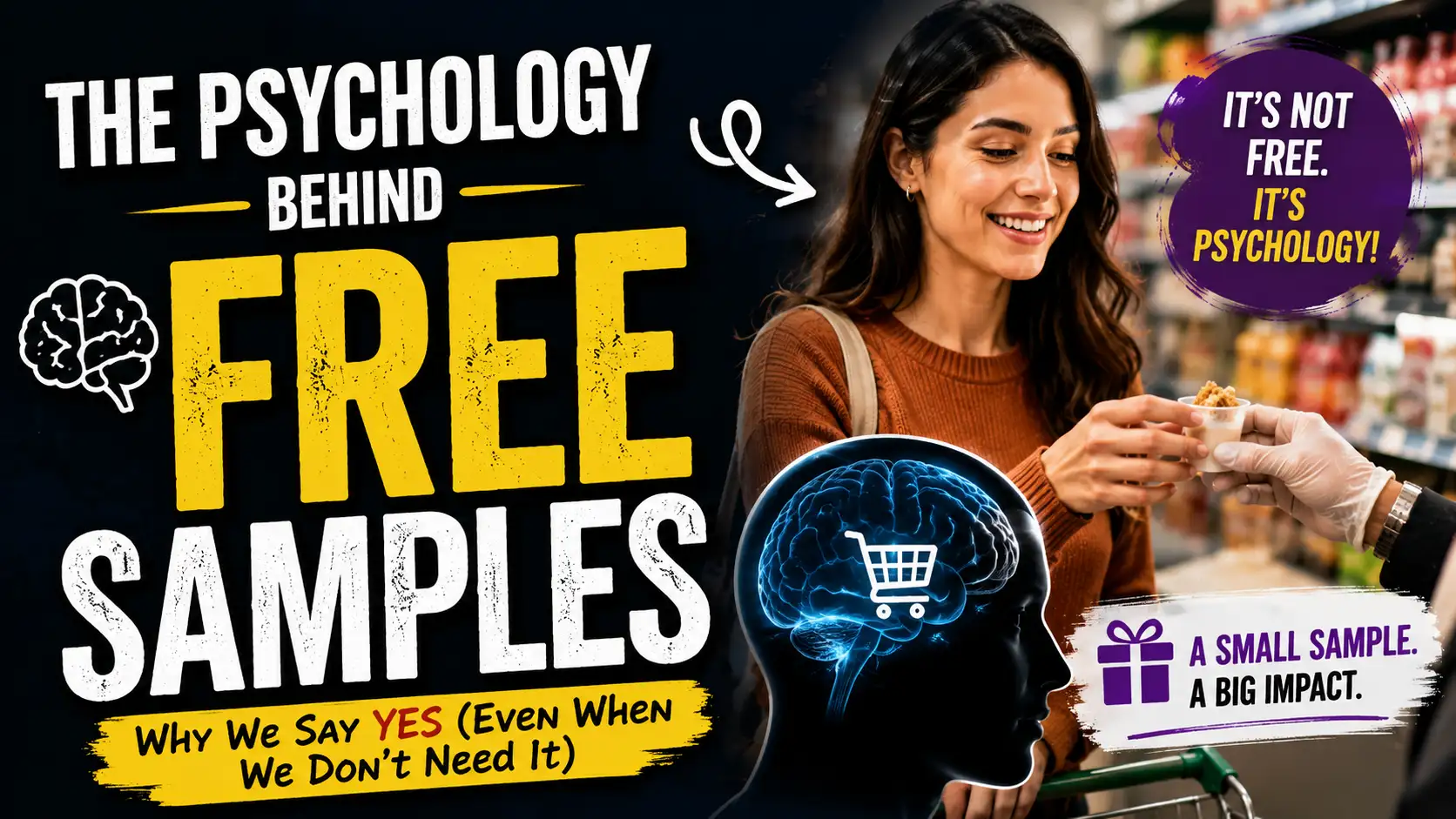
If someone offered you a chocolate for ₹20, you'd stop and think. Is it worth it? Do I really want it? But the moment the price becomes zero, something changes. That tiny word, free, does more than save us money. It removes the fear of making a bad decision. There's no financial risk, so our brain treats the opportunity as a win before we've even thought it through. Ironically, many of us end up spending money only because the first step didn't cost anything.
Have you ever accepted a free sample and then felt awkward walking away without buying anything? That's not just politeness. Psychologists call it the principle of reciprocity. When someone gives us something, even something small, we naturally feel a subtle urge to return the favour.
No one forces us to buy. Yet many people do, simply because accepting a gift creates a tiny feeling of obligation. It's one of the oldest and most powerful psychological principles in marketing, and it works far more often than we'd like to admit.
Free samples don't just let us try something. They create an experience. The smell of fresh coffee, the softness of a face cream, the crisp bite of a snack, our senses get involved before logic does.
By the time we reach the price tag, we've already imagined using the product in our own lives. We're no longer buying an item. We're buying the feeling it gave us a few moments earlier.
Suddenly, cancelling felt like losing something you already owned. That's exactly why free trials are so effective. The hardest part isn't getting people to pay. It's getting them to start.
Not really. Our brains are designed to look for rewards, reduce risk, and build habits. Free samples simply tap into those natural tendencies. In many cases, they're genuinely useful. They help us discover products we'd never have tried otherwise and prevent us from wasting money on something we don't like. The problem isn't the free sample itself. It's forgetting that it was designed to influence a decision.
It's Never Just About the Freebie
The next time someone offers you a free cookie, a skincare sample, or a month-long trial, take a second before saying yes. Not because it's a trick, but because it's interesting. That tiny freebie is doing much more than introducing you to a product. It's quietly shaping the way you think, feel, and choose.
And perhaps that's the real lesson. The most expensive decisions we make don't always begin with a price tag. Sometimes, they begin with something that feels completely free.
The Word "Free" Has a Different Kind of Power
If someone offered you a chocolate for ₹20, you'd stop and think. Is it worth it? Do I really want it? But the moment the price becomes zero, something changes. That tiny word, free, does more than save us money. It removes the fear of making a bad decision. There's no financial risk, so our brain treats the opportunity as a win before we've even thought it through. Ironically, many of us end up spending money only because the first step didn't cost anything.
Why Saying "Thank You" Often Turns Into "I'll Buy It"
Have you ever accepted a free sample and then felt awkward walking away without buying anything? That's not just politeness. Psychologists call it the principle of reciprocity. When someone gives us something, even something small, we naturally feel a subtle urge to return the favour.
No one forces us to buy. Yet many people do, simply because accepting a gift creates a tiny feeling of obligation. It's one of the oldest and most powerful psychological principles in marketing, and it works far more often than we'd like to admit.
Sometimes the Sample Is Better Than the Product
Free samples don't just let us try something. They create an experience. The smell of fresh coffee, the softness of a face cream, the crisp bite of a snack, our senses get involved before logic does.
You may also like
- Should you give your baby a pacifier? What science says about the benefits, hidden risks of using them and what parents need to know
- Using credit and debit cards abroad to become costlier; banks hike overseas fees..
- Protecting Children in Today's World: Recognising Red Flags and Understanding Rights
- Snake Prevention Tips: Follow these easy tips to prevent snakes from coming in the rain
- Home Loan: Opting for a low down payment? Here are the downsides
By the time we reach the price tag, we've already imagined using the product in our own lives. We're no longer buying an item. We're buying the feeling it gave us a few moments earlier.
Free Trials Work the Same Way
Think about the last time you signed up for a "free" streaming service or fitness app. You probably told yourself you'd cancel before the trial ended. Then life got busy. The app became part of your routine, your playlists were saved, or your workout streak was growing.Suddenly, cancelling felt like losing something you already owned. That's exactly why free trials are so effective. The hardest part isn't getting people to pay. It's getting them to start.
Does This Mean We're Easy to Manipulate?
Not really. Our brains are designed to look for rewards, reduce risk, and build habits. Free samples simply tap into those natural tendencies. In many cases, they're genuinely useful. They help us discover products we'd never have tried otherwise and prevent us from wasting money on something we don't like. The problem isn't the free sample itself. It's forgetting that it was designed to influence a decision.
It's Never Just About the Freebie
The next time someone offers you a free cookie, a skincare sample, or a month-long trial, take a second before saying yes. Not because it's a trick, but because it's interesting. That tiny freebie is doing much more than introducing you to a product. It's quietly shaping the way you think, feel, and choose.
And perhaps that's the real lesson. The most expensive decisions we make don't always begin with a price tag. Sometimes, they begin with something that feels completely free.






Loving Newspoint? Download the app now
