
The Rise of "Brain Rot" Content: Why We Can't Look Away

A few years ago, people would ask, "What's your favourite TV show?" Now the answer is more likely to be, "I don't know... I just scroll." That's probably the biggest shift social media has brought into our lives. We're not sitting down to watch one thing anymore. We're consuming hundreds of tiny videos every single day. Some are funny. Some are informative. And then there are the ones that make absolutely no sense.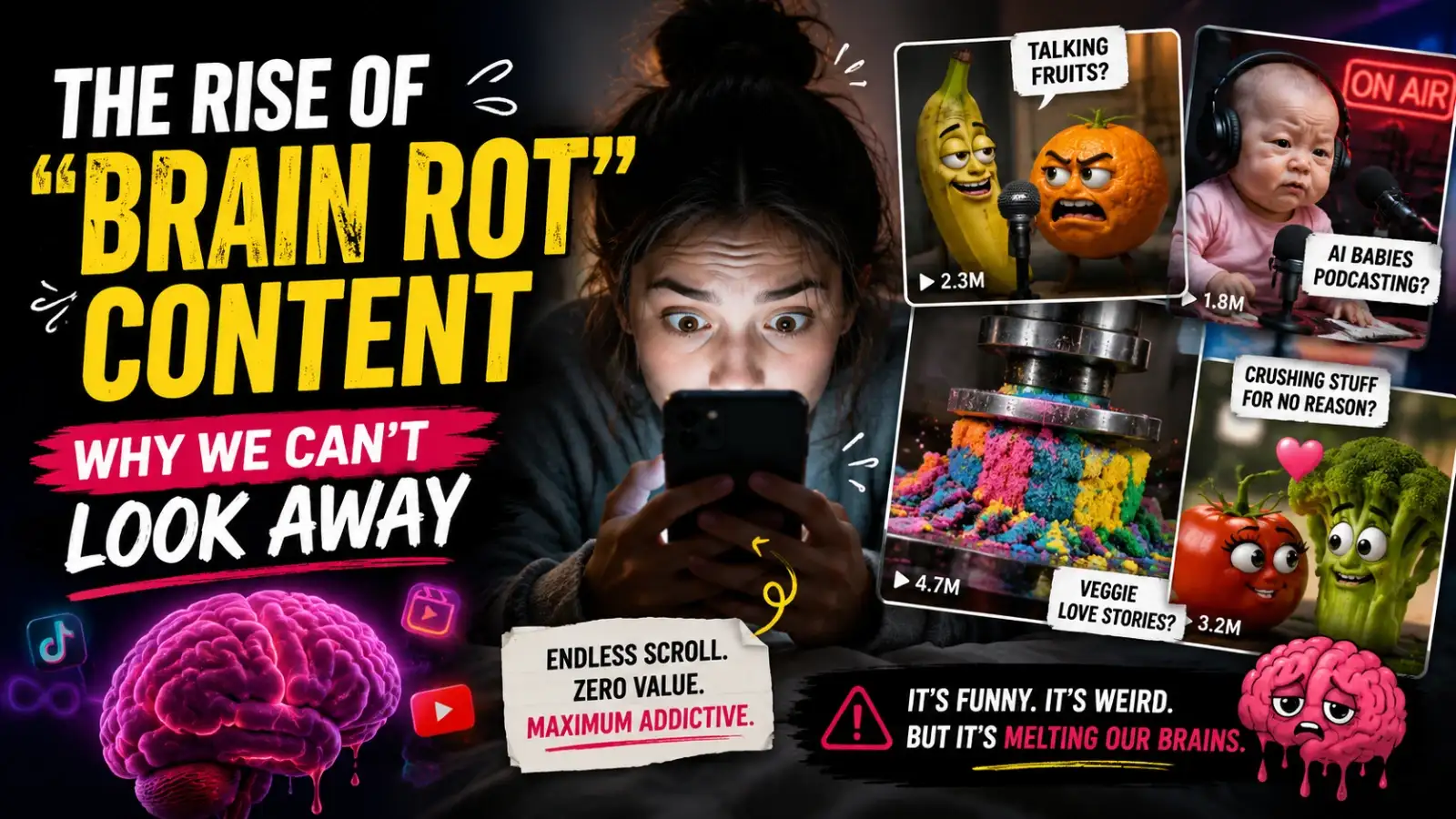
The weird part? Those are often the hardest to scroll past. A talking orange roasting a banana. A dramatic love story between two vegetables. AI-generated babies hosting podcasts. Someone slicing colourful kinetic sand for no reason at all. A few years ago, these ideas would've sounded completely ridiculous. Today? They're pulling in millions of views, and somehow, we're all watching.
The stranger it is, the better. Creators have realised that people don't always stop for quality. They stop for surprise. If a video is weird enough to interrupt your scrolling for three seconds, the algorithm notices. And once the algorithm notices, everyone else starts seeing it too.
Your brain never gets bored because something different is always coming. The downside? Real life doesn't move that fast. Reading ten pages of a book suddenly feels difficult. A twenty-minute YouTube video feels "too long". Even watching a movie without checking your phone starts to feel like a challenge.
And honestly, there's nothing wrong with that. The internet has become our escape. Brain rot content is like junk food; it isn't nutritious, but every once in a while, it hits the spot. The problem starts when it becomes breakfast, lunch and dinner.
The more time you spend watching a certain kind of content, the more it serves you. Before you know it, you've entered a loop where every video feels oddly familiar, yet you keep watching anyway. It's less about what you searched for and more about what kept your thumb from scrolling.
It's successful because it's perfectly built for today's internet, fast, unpredictable, and available 24 hours a day. Maybe that's why so many of us end up losing track of time without even noticing.
The internet will always find another bizarre trend tomorrow. The real challenge isn't avoiding brain rot altogether. It's making sure your entire digital life doesn't become one endless scroll of things that entertained you for a moment but stayed with you for none.
The weird part? Those are often the hardest to scroll past. A talking orange roasting a banana. A dramatic love story between two vegetables. AI-generated babies hosting podcasts. Someone slicing colourful kinetic sand for no reason at all. A few years ago, these ideas would've sounded completely ridiculous. Today? They're pulling in millions of views, and somehow, we're all watching.
The Internet Has Stopped Making Sense, and That's the Point
There's a good chance you've watched something and immediately sent it to a friend with the caption, "I have no idea why this is so funny." That's exactly how brain rot content works. It isn't trying to tell a story or teach you something. It just wants one thing, your attention.The stranger it is, the better. Creators have realised that people don't always stop for quality. They stop for surprise. If a video is weird enough to interrupt your scrolling for three seconds, the algorithm notices. And once the algorithm notices, everyone else starts seeing it too.
Our Attention Span Is Being Trained
Here's something most of us don't even realise. Every swipe teaches our brain to expect something new. One second it's football highlights. Then cooking videos. Then celebrity gossip. Then an oddly satisfying carpet-cleaning video. Then a baby goat wearing sunglasses.You may also like
- Quote of the Day by Seneca, "If a man knows not to which port he sails, no wind...."
- “Once you've been raised by Asian parents, you need therapy for life”: Nvidia CEO Jensen Huang shares why constant criticism by parents made him humble; 5 parenting lessons to take home
- Speech delays and modern parenting: Common habits that could affect your child's language development
- Why does your phone get scorching hot in the car? Here's how to prevent it
- UPSSSC Releases 2026 Exam Calendar; Dates Announced from PET to Mains
Your brain never gets bored because something different is always coming. The downside? Real life doesn't move that fast. Reading ten pages of a book suddenly feels difficult. A twenty-minute YouTube video feels "too long". Even watching a movie without checking your phone starts to feel like a challenge.
Sometimes We Just Want Our Brains to Rest
Not everything needs to have a deeper meaning. After a stressful day, most people aren't looking for a documentary on economics. They're looking for something that makes them laugh without having to think too much.And honestly, there's nothing wrong with that. The internet has become our escape. Brain rot content is like junk food; it isn't nutritious, but every once in a while, it hits the spot. The problem starts when it becomes breakfast, lunch and dinner.
The Algorithm Knows Us Better Than We Think
Ever noticed how you watch one random video and suddenly your entire feed starts looking exactly the same? That's no accident. Social media platforms are constantly learning what makes you pause, replay, or laugh.The more time you spend watching a certain kind of content, the more it serves you. Before you know it, you've entered a loop where every video feels oddly familiar, yet you keep watching anyway. It's less about what you searched for and more about what kept your thumb from scrolling.
Maybe the question isn't "Why Do We Watch It?"
The better question might be, why does it feel so hard to stop? Brain rot content isn't successful because people have suddenly become less intelligent.It's successful because it's perfectly built for today's internet, fast, unpredictable, and available 24 hours a day. Maybe that's why so many of us end up losing track of time without even noticing.
There's Nothing Wrong With Laughing; Just Don't Live There
No one is saying you should delete TikTok or stop watching ridiculous memes. Sometimes those videos genuinely make a bad day better. But it's worth paying attention to how much of your online time is spent consuming content you'll forget five minutes later.The internet will always find another bizarre trend tomorrow. The real challenge isn't avoiding brain rot altogether. It's making sure your entire digital life doesn't become one endless scroll of things that entertained you for a moment but stayed with you for none.






Loving Newspoint? Download the app now
