
Why Ghee Keeps for Months Without a Fridge

Pull the lid off a jar of ghee that has been sitting on your kitchen shelf since last Diwali and it smells exactly as it should. No sourness, no rancid edge, nothing off. A block of butter left out for two days in the same kitchen would be ruined. The difference between them is not the brand or the cow, it is what got cooked out during the clarification process.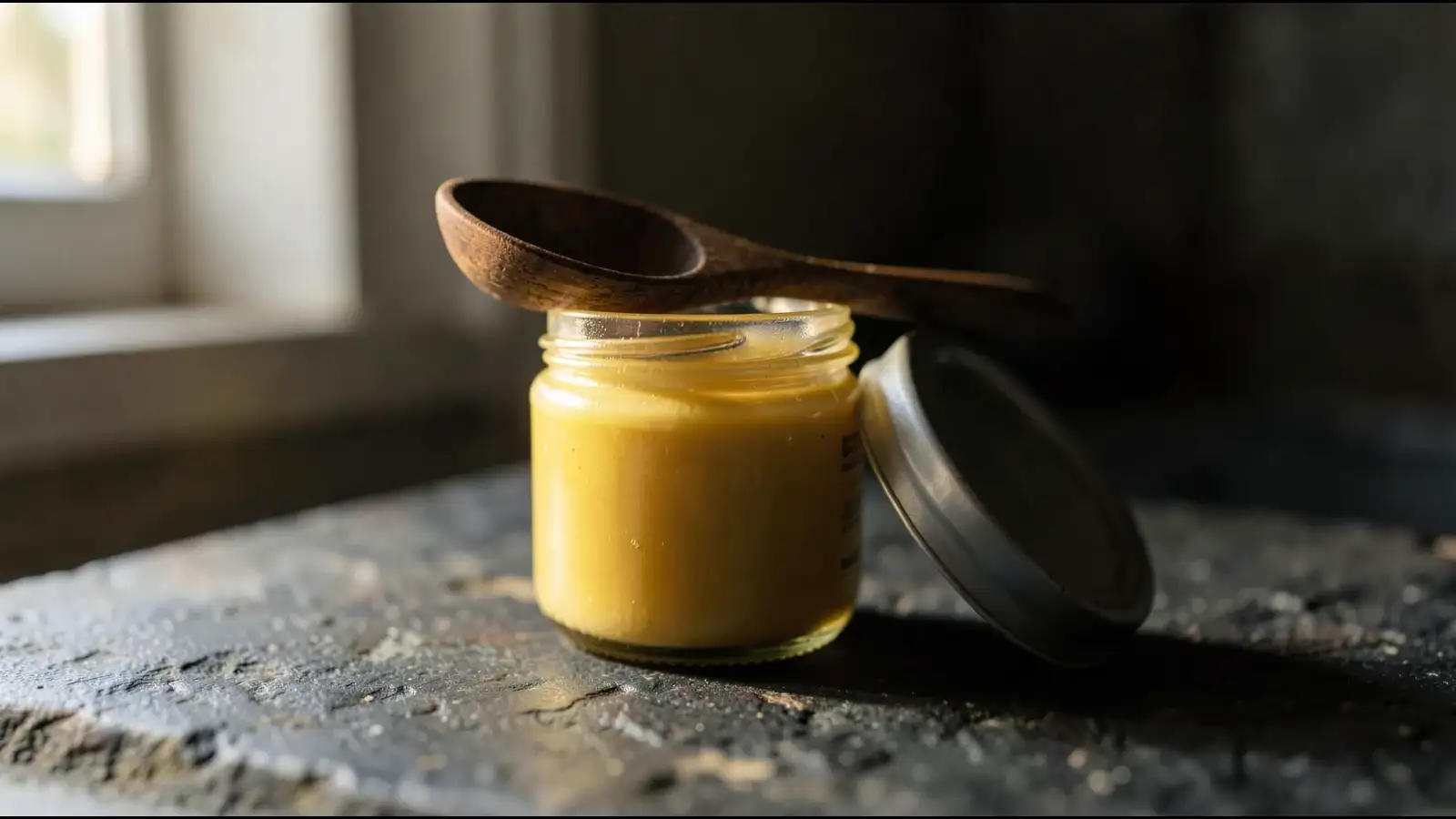
The milk solids are the second issue. Lactose, the sugar in milk, and the milk proteins are what bacteria and moulds feed on most readily. They are also what turns rancid fastest when exposed to heat and air. Ghee removes both. The fat that remains is chemically stable, particularly when the ghee is made from cultured butter or dahi, which introduces natural antioxidants during fermentation.
Old texts and household practice both describe ghee aged for years, even decades, used in ritual and medicine. Extended aging concentrates the flavour and may increase certain fat-soluble compounds, though the ghee you use for cooking does not need years on the shelf, a few months at room temperature is well within its natural stability.
Commercial ghee adds one more layer: the clarification is done at precise temperatures with controlled moisture testing, so the water content is driven even lower than most home-made batches. That is why a sealed commercial jar can carry a shelf life of nine to twelve months at room temperature, not because of additives, but because the process is more complete.
The jar on your shelf is not defying food science. It is the result of food science done right, a simple process that removes exactly the things that make other dairy products fragile, and leaves behind a fat stable enough to outlast almost everything else in the kitchen.
What Ghee Actually Is
Butter is roughly 80 percent fat, 16 to 18 percent water, and the rest milk solids, proteins and sugars that give butter its flavour and its colour. When you make ghee, you heat butter slowly until the water boils away and the milk solids sink to the bottom and turn golden. What you pour off and strain is almost pure fat. No water. No milk solids. That distinction is everything.Why Water and Milk Solids Are the Problem
Food spoils through two main routes: microbial growth and oxidation. Bacteria and moulds need water to survive and reproduce. Remove the water completely, and you remove the conditions they require. Butter spoils partly because its water content gives microbes a place to live. Ghee, with water driven out during clarification, offers them nothing to work with.The milk solids are the second issue. Lactose, the sugar in milk, and the milk proteins are what bacteria and moulds feed on most readily. They are also what turns rancid fastest when exposed to heat and air. Ghee removes both. The fat that remains is chemically stable, particularly when the ghee is made from cultured butter or dahi, which introduces natural antioxidants during fermentation.
The Role of Saturated Fat
Not all fats age the same way. Oils high in polyunsaturated fats, sunflower, corn, flaxseed, go rancid quickly because their molecular structure has multiple double bonds that react easily with oxygen. Ghee is dominated by saturated and monounsaturated fats, which have fewer or no double bonds. They are far slower to oxidise. This is the same reason coconut oil, another saturated fat, keeps well at room temperature. The fat structure resists the chemical reaction that produces the sour, acrid smell of rancidity.Traditional Storage and Why It Worked
Indian households stored ghee in brass or clay pots, kept in cool, dark corners of the kitchen. Both choices were sound. Darkness slows oxidation because light accelerates the breakdown of fats. Cool temperatures slow every chemical reaction. The wide-mouthed pot was always wiped dry before the spoon went in, because introducing water, even from a damp utensil, is the fastest way to shorten ghee's life. The tradition of keeping a dedicated dry spoon for the ghee jar was practical chemistry long before anyone used that phrase.Old texts and household practice both describe ghee aged for years, even decades, used in ritual and medicine. Extended aging concentrates the flavour and may increase certain fat-soluble compounds, though the ghee you use for cooking does not need years on the shelf, a few months at room temperature is well within its natural stability.
What Actually Shortens Ghee's Life
Three things work against it: water, light, and heat above cooking temperature. A wet spoon introduces moisture and the microbes that ride with it. A jar left near the stove or in direct sunlight accelerates oxidation. A lid left off lets atmospheric moisture back in. None of these ruin ghee instantly, but each one chips away at the conditions that make it shelf-stable in the first place.Commercial ghee adds one more layer: the clarification is done at precise temperatures with controlled moisture testing, so the water content is driven even lower than most home-made batches. That is why a sealed commercial jar can carry a shelf life of nine to twelve months at room temperature, not because of additives, but because the process is more complete.
The jar on your shelf is not defying food science. It is the result of food science done right, a simple process that removes exactly the things that make other dairy products fragile, and leaves behind a fat stable enough to outlast almost everything else in the kitchen.
Next Story