
Why Milk Boils Over but Water Never Does

Leave a pot of water on high heat and it will boil away steadily, sending up bubbles that break at the surface without drama. Put milk on the same burner and walk away for a minute, and you come back to a foamy overflow running down the sides. Same flame, same pot, completely different behaviour. The reason is in what milk actually is.
Water boils over only when a pot is completely full and left unattended; milk can overflow from a pot that is barely half full. That gap is the protein skin doing its work. Once you know it is there, the habit of staying close to the stove when milk is on the flame stops feeling like superstition and starts making sense.
Milk Is Not a Simple Liquid
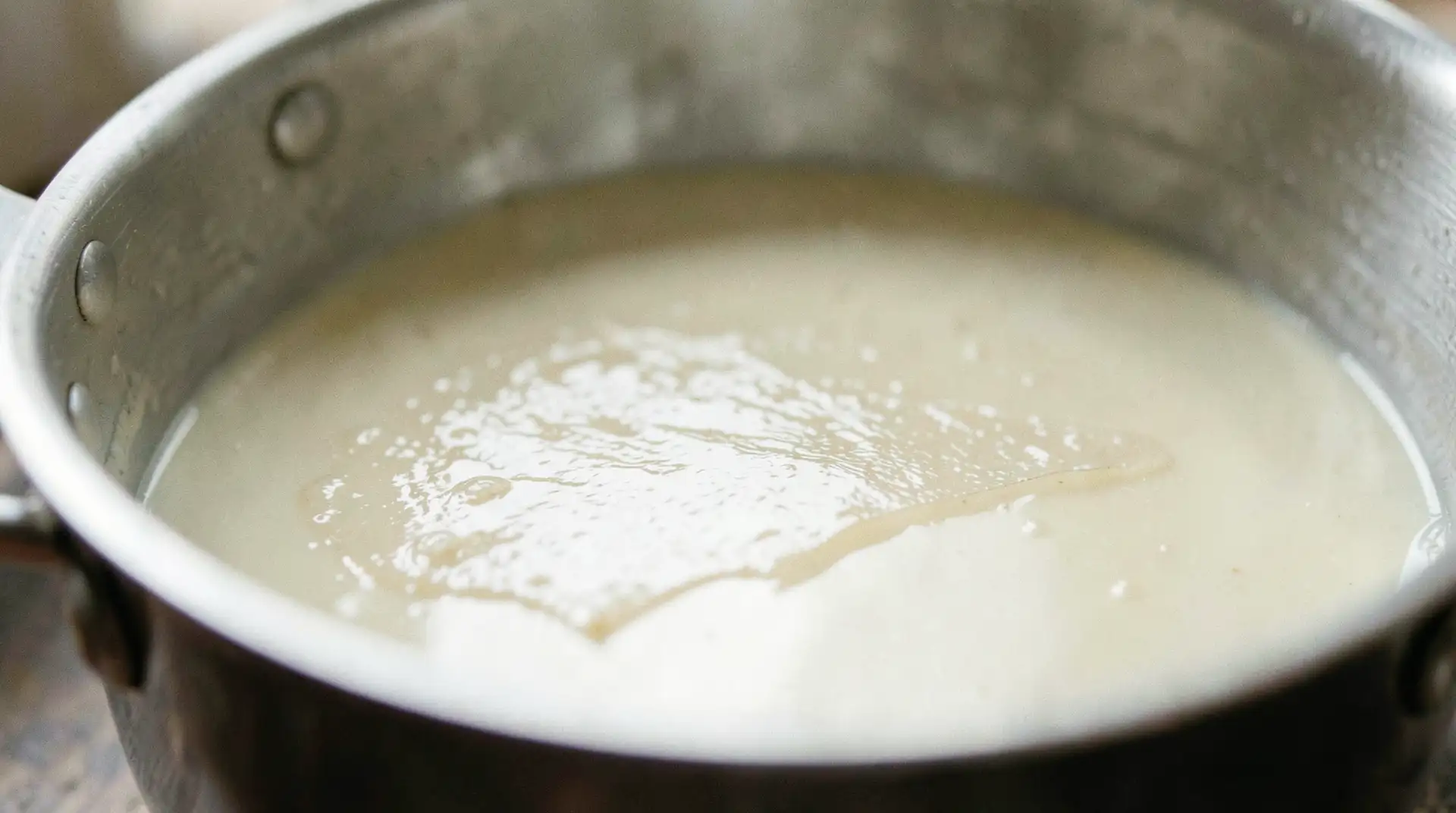
Water is one thing: H₂O molecules that heat up, turn to vapour, and escape freely from the surface. Milk is a suspension of fat globules, proteins, and sugars dissolved in water. Of these, the proteins, mainly casein and whey, are what cause the trouble. As milk heats, these proteins begin to denature and clump together. They drift upward and collect at the surface, forming a thin, elastic film. This film is the skin you see on hot milk, and it is the reason everything else goes wrong.The Skin Traps Steam and Builds Pressure
Beneath the protein skin, the water in milk is still trying to boil. Steam bubbles form at the bottom of the pot, rise through the liquid, and hit the skin at the top. Unlike the open surface of water, where bubbles simply pop and release, the skin holds them back. More bubbles arrive, trapped underneath, and the foam layer grows thicker and faster than you expect. Within seconds, the pressure is enough to push the whole foamy mass up and over the rim. The overflow happens not because milk boils hotter than water, but because it cannot release its steam freely.Fat Makes It Worse, and Skimming Helps Only a Little
Full-fat milk froths more dramatically than toned or skimmed milk because fat stabilises the foam bubbles, making them harder to break. This is the same principle behind whipped cream: fat traps air and holds it. In boiling milk, the fat in the foam layer gives each bubble a tougher wall, so the foam persists longer and builds higher before it collapses. Skimmed milk still boils over, just slightly less violently, because the protein skin forms regardless of fat content. Removing the fat does not remove the proteins that build the lid.Why Stirring and a Wooden Spoon Actually Work
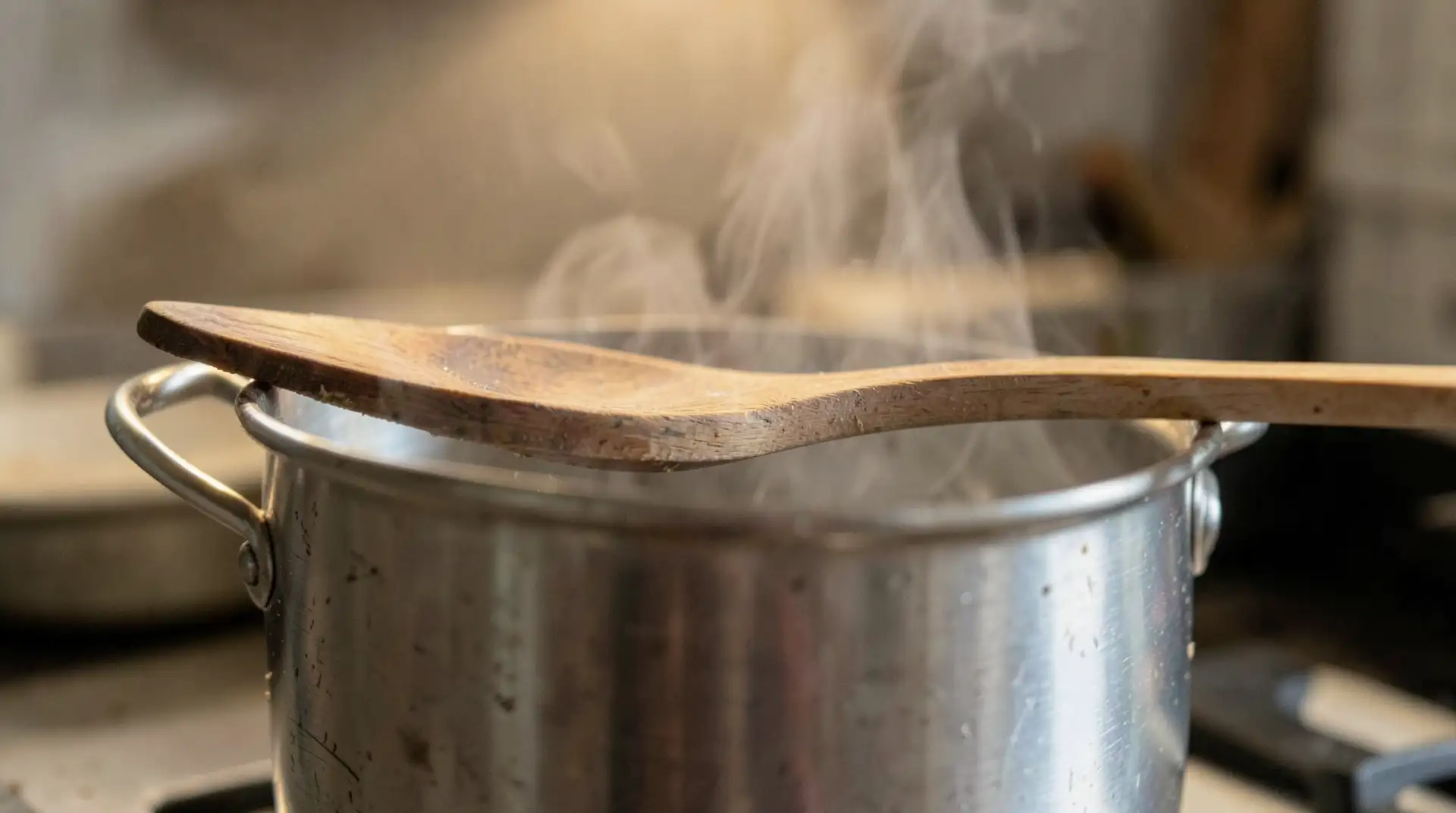
Two common kitchen habits have a real physical basis. Stirring breaks the protein skin before it can seal completely, letting steam escape continuously rather than building up underneath. A wooden spoon laid across the rim of the pot works differently: when foam rises and touches the dry wood, the surface tension of the bubbles breaks on contact, collapsing the foam before it spills. The wood also conducts heat poorly, so it stays cool enough to pop bubbles on touch. Neither trick stops the skin from forming, they just keep it from becoming a lid.Water boils over only when a pot is completely full and left unattended; milk can overflow from a pot that is barely half full. That gap is the protein skin doing its work. Once you know it is there, the habit of staying close to the stove when milk is on the flame stops feeling like superstition and starts making sense.
Next Story