
Why a Roti Puffs Up Over an Open Flame

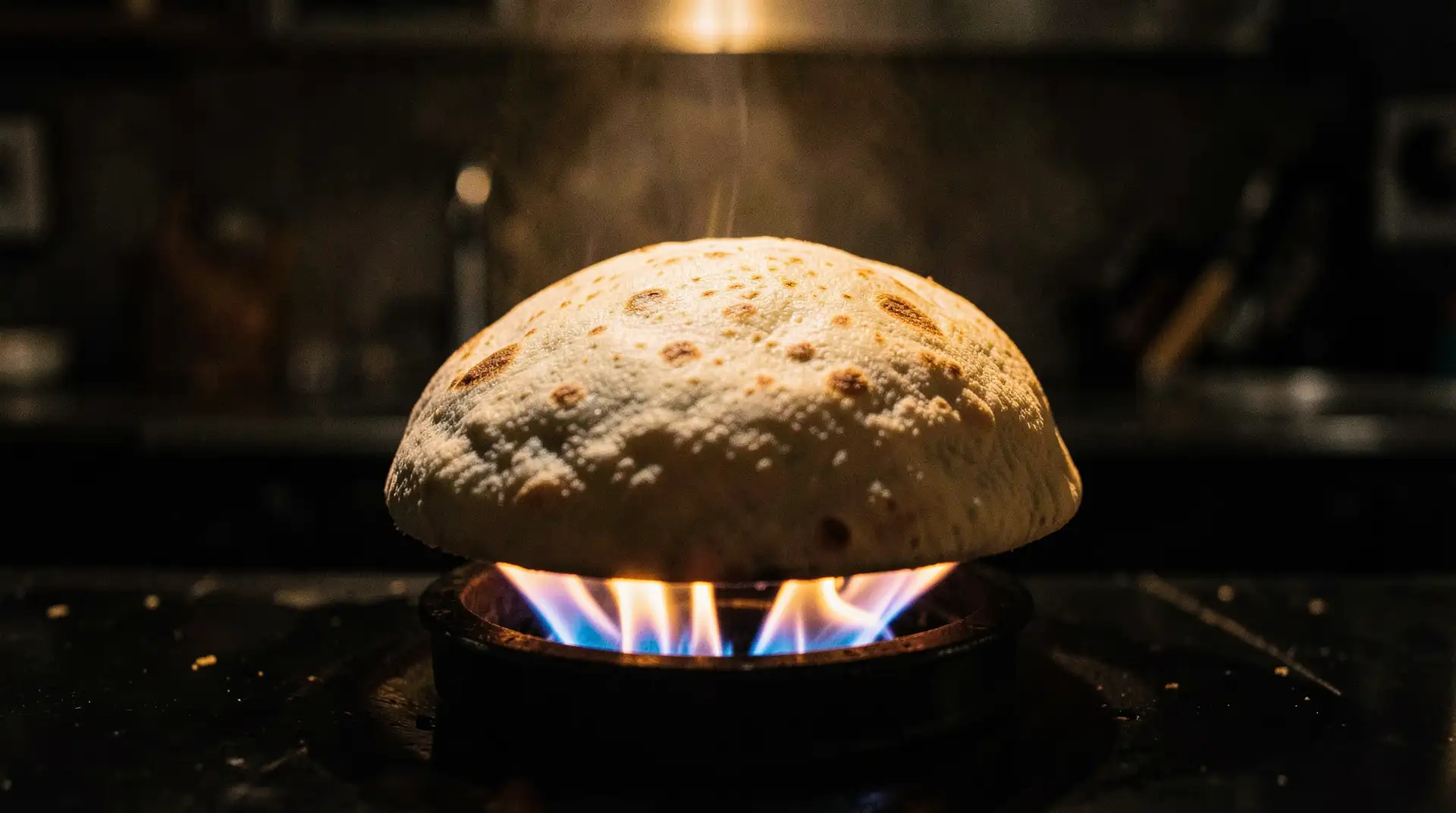
Place a half-cooked roti on a direct flame and something quietly extraordinary happens. The edges firm up, the centre lifts, and within seconds a taut balloon of steam holds the whole thing aloft. It is one of the most reliable small miracles in an Indian kitchen, and it happens for reasons that have nothing to do with luck or experience alone.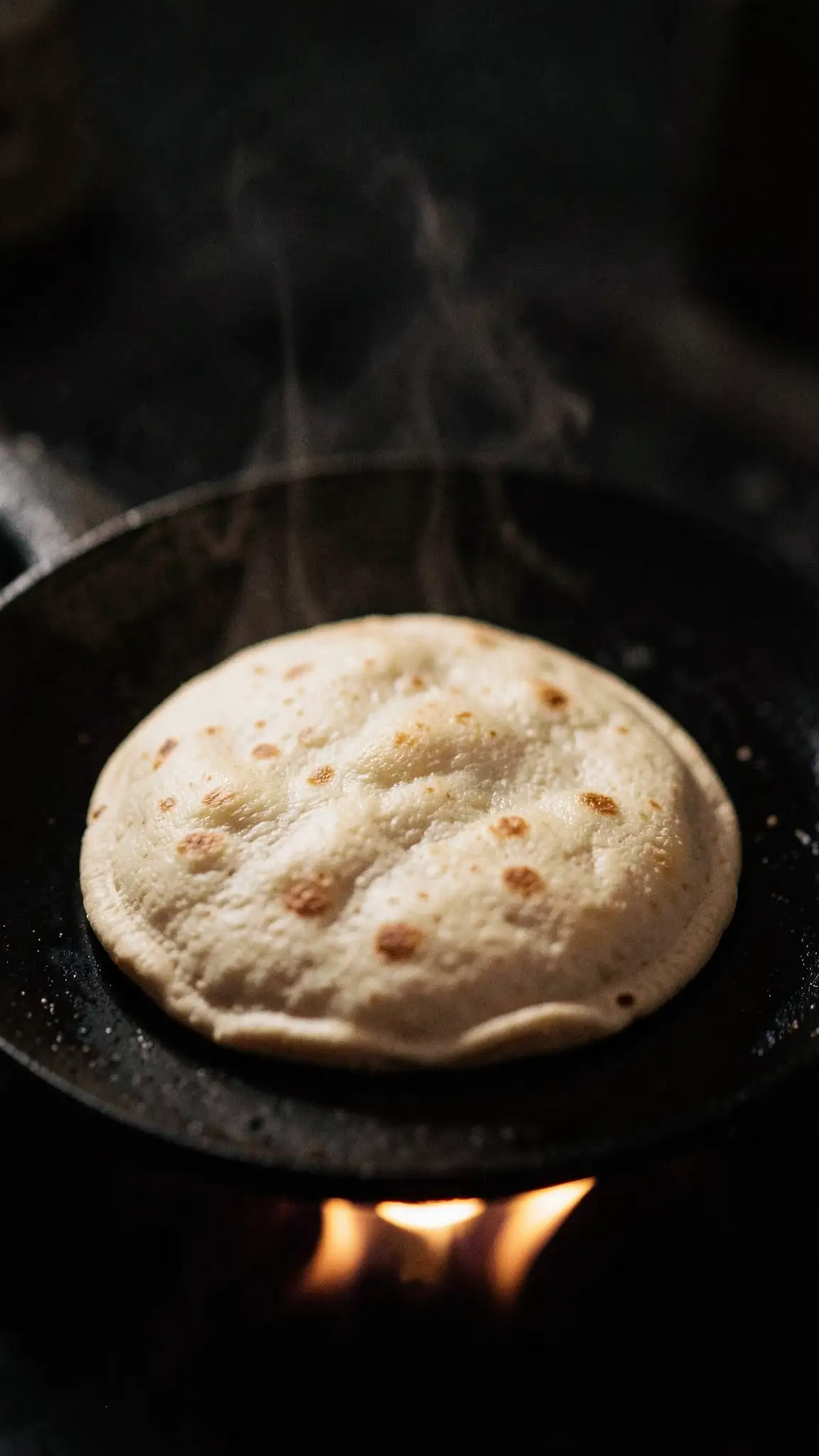
On the tawa, the outer surface of the roti dries and firms into a crust on both sides. The interior stays moist. By the time the roti moves to the open flame, you have a sealed pouch: two cooked, relatively airtight layers with wet, hot dough sandwiched between them.
The puff is not decorative. It is the steam cooking the interior of the roti evenly from the inside, the way a convection oven uses circulating air. A roti that puffs fully is a roti that is cooked through without being charred on the outside.
Pressing the roti gently with a folded cloth while it is on the flame helps in two ways: it seals any small tears before they widen, and it distributes heat so the steam builds evenly across the surface rather than concentrating in one corner. This is what the cloth is actually doing. It is not ceremony.
Chapati flour, atta, is milled from whole wheat and retains the bran. The bran interrupts the gluten network slightly, which is why atta dough needs a resting period after kneading, it gives the gluten time to relax and become more extensible. A rested dough puffs more reliably than one rolled immediately after kneading.
Steam, gluten, and heat are doing the same work in every kitchen where a roti puffs. The open flame is not a trick. It is the final condition that lets the dough finish what the kneading started.
Water Trapped Inside the Dough
When you knead wheat flour with water, the water does not simply sit in the dough, it is absorbed into the gluten network and held between layers of starch. A well-kneaded dough has water distributed evenly throughout. This matters because when heat arrives suddenly, that water has nowhere to go except upward.On the tawa, the outer surface of the roti dries and firms into a crust on both sides. The interior stays moist. By the time the roti moves to the open flame, you have a sealed pouch: two cooked, relatively airtight layers with wet, hot dough sandwiched between them.
The Flame Does the Rest
Direct flame is far hotter than a tawa surface. The moment the roti meets it, the residual water inside converts rapidly to steam. Steam expands to roughly 1,600 times the volume of liquid water at that temperature. The gluten network, made elastic by kneading, stretches rather than tears. The roti inflates from the inside out, the steam pressing uniformly against both layers until the whole disc is one continuous pocket of hot gas.The puff is not decorative. It is the steam cooking the interior of the roti evenly from the inside, the way a convection oven uses circulating air. A roti that puffs fully is a roti that is cooked through without being charred on the outside.
You may also like
- Broken pledges
- Psychology says people who prefer physical books over e-books may value sensory experiences, emotional connections, and personal rituals more than convenience. Here is what their love for printed pages reveals about them
- More than 10 Tamil Nadu villages have celebrated a cracker-free Diwali for 21 years to protect birds; here's why Vellode Birds Sanctuary in Erode is special
- Ramayana Box Office Collection Day 5: Ranbir Kapoor's Film Makes History With Rs 107.50 Crore Monday Earnings
- Gold and Silver Prices Drop on Govardhan Puja; Check the Latest Rates in Your City
Why Some Rotis Won't Puff
The failure modes are mechanical. If the dough is too dry, there is not enough water to generate sufficient steam. If it is too wet, the surface layers never firm up properly on the tawa and the steam escapes through weak spots rather than inflating the whole disc. If the roti is rolled unevenly, thicker at the centre, thinner at the edges, the steam finds the thin path and breaks through instead of building pressure uniformly.Pressing the roti gently with a folded cloth while it is on the flame helps in two ways: it seals any small tears before they widen, and it distributes heat so the steam builds evenly across the surface rather than concentrating in one corner. This is what the cloth is actually doing. It is not ceremony.
The Role of Gluten
Wheat contains two proteins, glutenin and gliadin, that combine with water during kneading to form gluten. Gluten is both strong and elastic, strong enough to hold the steam inside, elastic enough to stretch without splitting. This is why roti made from wheat flour puffs reliably, while a flatbread made from rice flour or chickpea flour behaves differently. Those flours have little to no gluten, so the structure cannot stretch under pressure. The steam escapes rather than inflating the bread.Chapati flour, atta, is milled from whole wheat and retains the bran. The bran interrupts the gluten network slightly, which is why atta dough needs a resting period after kneading, it gives the gluten time to relax and become more extensible. A rested dough puffs more reliably than one rolled immediately after kneading.
What the Puff Tells You
A full, even puff is a readout of the dough's hydration, the evenness of rolling, and the heat of the flame. Experienced cooks read it without thinking. An uneven puff, a half-puff that deflates quickly, or a roti that chars without lifting are all telling you something specific about what went wrong upstream, in the water ratio, the kneading, or the rolling. The flame is just where the information surfaces.Steam, gluten, and heat are doing the same work in every kitchen where a roti puffs. The open flame is not a trick. It is the final condition that lets the dough finish what the kneading started.






Loving Newspoint? Download the app now
