
Why Money Plant Grows in a Bottle of Water on Indian Windowsills

The money plant on an Indian windowsill is one of those things so familiar it stops being seen. A glass bottle, a cutting dropped into water, a stem that keeps climbing with almost no help. Most households have one. Very few people have been told why the setup works the way it does.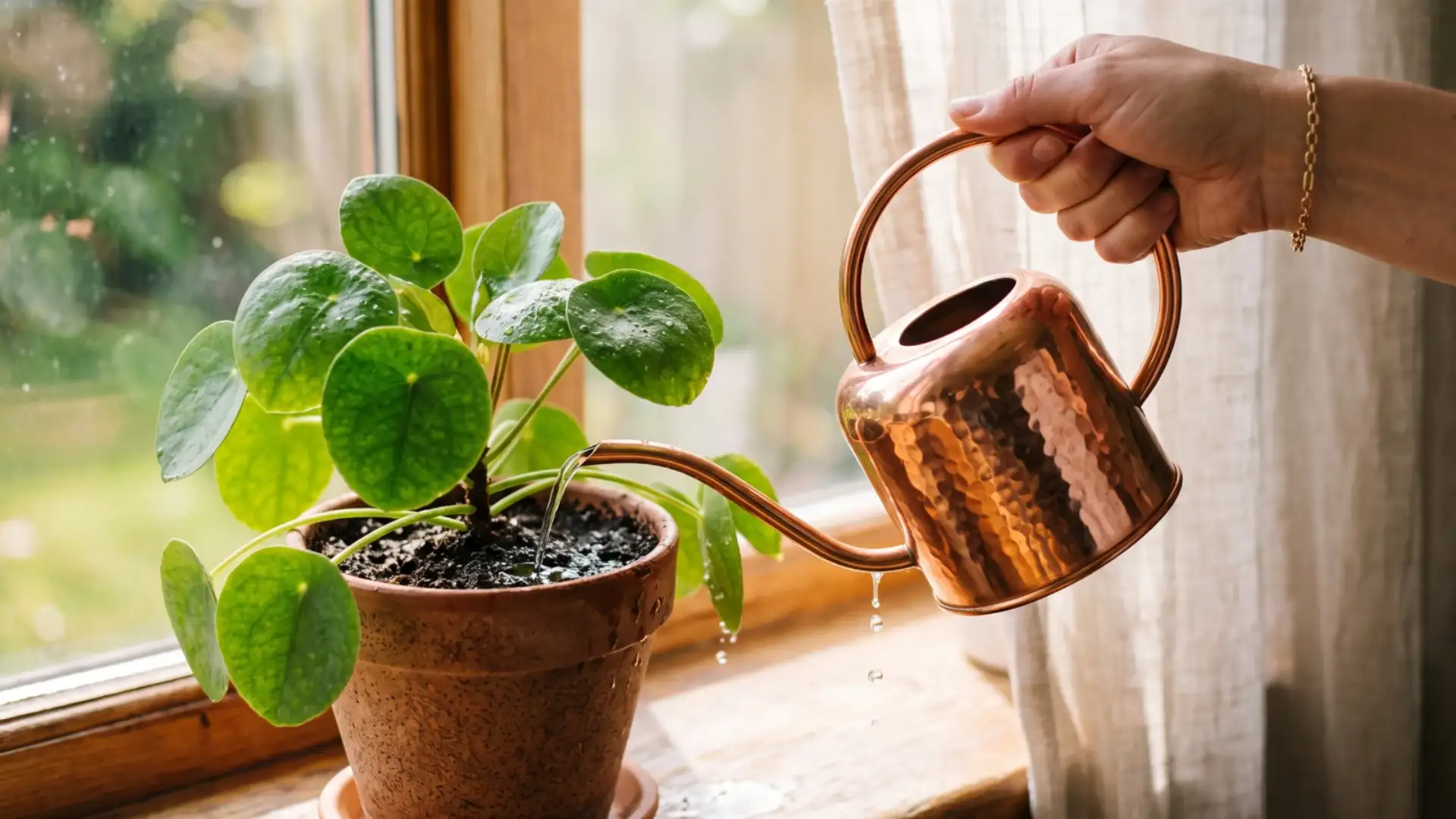
This is why a single cutting dropped into a bottle will not rot and die the way a rose cutting would. The money plant is genuinely built for it.
Glass also lets light through to the roots in a diffused way, which encourages algae growth over time, the green tinge you see on older bottles. That algae is not harmful to the plant, though it does mean the water needs changing every week or two to keep it from going stagnant. A stagnant bottle smells, and stagnant water eventually starves the roots of oxygen. The weekly water change is the one real task this plant asks for.
The plant can survive in low light, and many do in darker corners of rooms, but the growth slows and the leaves lose their variegation. On a well-lit windowsill, it climbs fast, produces larger leaves, and roots more vigorously. The windowsill is not a decorative choice. It is where the plant actually performs.
Vastu shastra also holds that the plant should grow upward rather than trail downward, that it should not touch the floor, and that it should be kept healthy, a wilting or yellowing plant is considered inauspicious in this belief system. None of these are scientific claims. They are what the tradition holds, and millions of households arrange their plants accordingly.
The windowsill, it turns out, satisfies both the practical and the belief-based requirement at once. The plant gets the light it needs, and the climbing stem naturally grows upward toward the window.
The glass bottle on the windowsill is, in the end, a small piece of design that has been quietly optimised over generations, by the plant's own biology, by the physics of glass and water, by the logic of where light falls in an Indian home, and by a belief system that gave the whole arrangement a name worth remembering.
The Plant That Drinks Without Soil
Money plant, known botanically as Epipremnum aureum, belongs to a group of plants that root just as well in water as in soil. The stem has nodes, small swollen joints spaced along its length, and from each node, roots can push out into whatever medium surrounds them. In water, those roots spread freely, drawing in oxygen dissolved in the water along with whatever minerals happen to be present. The plant does not need the structural and microbial support that soil provides for most species. It is, in the language of horticulture, highly adaptable to hydroponic conditions.This is why a single cutting dropped into a bottle will not rot and die the way a rose cutting would. The money plant is genuinely built for it.
Why a Glass Bottle and Not a Pot
The glass bottle solves a practical problem. Terracotta and plastic pots drain water and dry out. A glass bottle holds water at a stable level, keeps the roots dark and cool, and lets whoever tends the plant see exactly when to top it up. The narrow mouth slows evaporation and holds the cutting upright without any soil or gravel needed.Glass also lets light through to the roots in a diffused way, which encourages algae growth over time, the green tinge you see on older bottles. That algae is not harmful to the plant, though it does mean the water needs changing every week or two to keep it from going stagnant. A stagnant bottle smells, and stagnant water eventually starves the roots of oxygen. The weekly water change is the one real task this plant asks for.
You may also like
- Losing Muscle as You Age? How Strength Training Can Slow It Down
- Making these mistakes while opening an FD will reduce your returns! Understand the full math before investing your money..
- UP woman: fatal injection at government health centre, what sparked the tragedy?
- Government spending on health has increased, easing the financial burden of medical treatment on the public..
- Inflation has heightened the RBI's concerns; EMIs for home and car loans may see another increase..
The Windowsill Is Chosen for Light, Not Luck
Money plant grows best in bright, indirect light. A windowsill gives it exactly that, the diffused light that comes through a pane of glass, without the direct afternoon sun that would scorch its leaves. In Indian homes, the east or north-facing windowsill is the classic placement, where morning light comes in gently and the harsh western sun never reaches.The plant can survive in low light, and many do in darker corners of rooms, but the growth slows and the leaves lose their variegation. On a well-lit windowsill, it climbs fast, produces larger leaves, and roots more vigorously. The windowsill is not a decorative choice. It is where the plant actually performs.
What Vastu Shastra Says About It
The belief that a money plant brings financial wellbeing into a home is rooted in vastu shastra, the traditional Indian system of spatial arrangement. Vastu shastra holds that the money plant, when placed in the south-east corner of a room or home, channels the energy associated with prosperity. The south-east direction is considered the zone of the element of fire and of Venus in this tradition, both associated with wealth and material comfort.Vastu shastra also holds that the plant should grow upward rather than trail downward, that it should not touch the floor, and that it should be kept healthy, a wilting or yellowing plant is considered inauspicious in this belief system. None of these are scientific claims. They are what the tradition holds, and millions of households arrange their plants accordingly.
The windowsill, it turns out, satisfies both the practical and the belief-based requirement at once. The plant gets the light it needs, and the climbing stem naturally grows upward toward the window.
A Plant That Earns Its Place
Beyond belief and biology, the money plant has a third reason for its popularity: it is genuinely hard to kill. It tolerates irregular watering, low light, forgotten fertiliser, and the occasional neglect that comes with a busy household. For a culture that values plants in the home but cannot always give them daily attention, a plant that asks for almost nothing and gives back a trail of green is a practical choice as much as a symbolic one.The glass bottle on the windowsill is, in the end, a small piece of design that has been quietly optimised over generations, by the plant's own biology, by the physics of glass and water, by the logic of where light falls in an Indian home, and by a belief system that gave the whole arrangement a name worth remembering.






Loving Newspoint? Download the app now
