
Why Grandmothers Kept Dried Neem Leaves in Clothes Trunks

The trunk sat in the corner of the room, heavy and latched, and every time it opened the smell came out with the clothes. Bitter, green, unmistakably neem. Most of us remember it without being able to say exactly what it was for. The answer turns out to be both simpler and more interesting than it looks.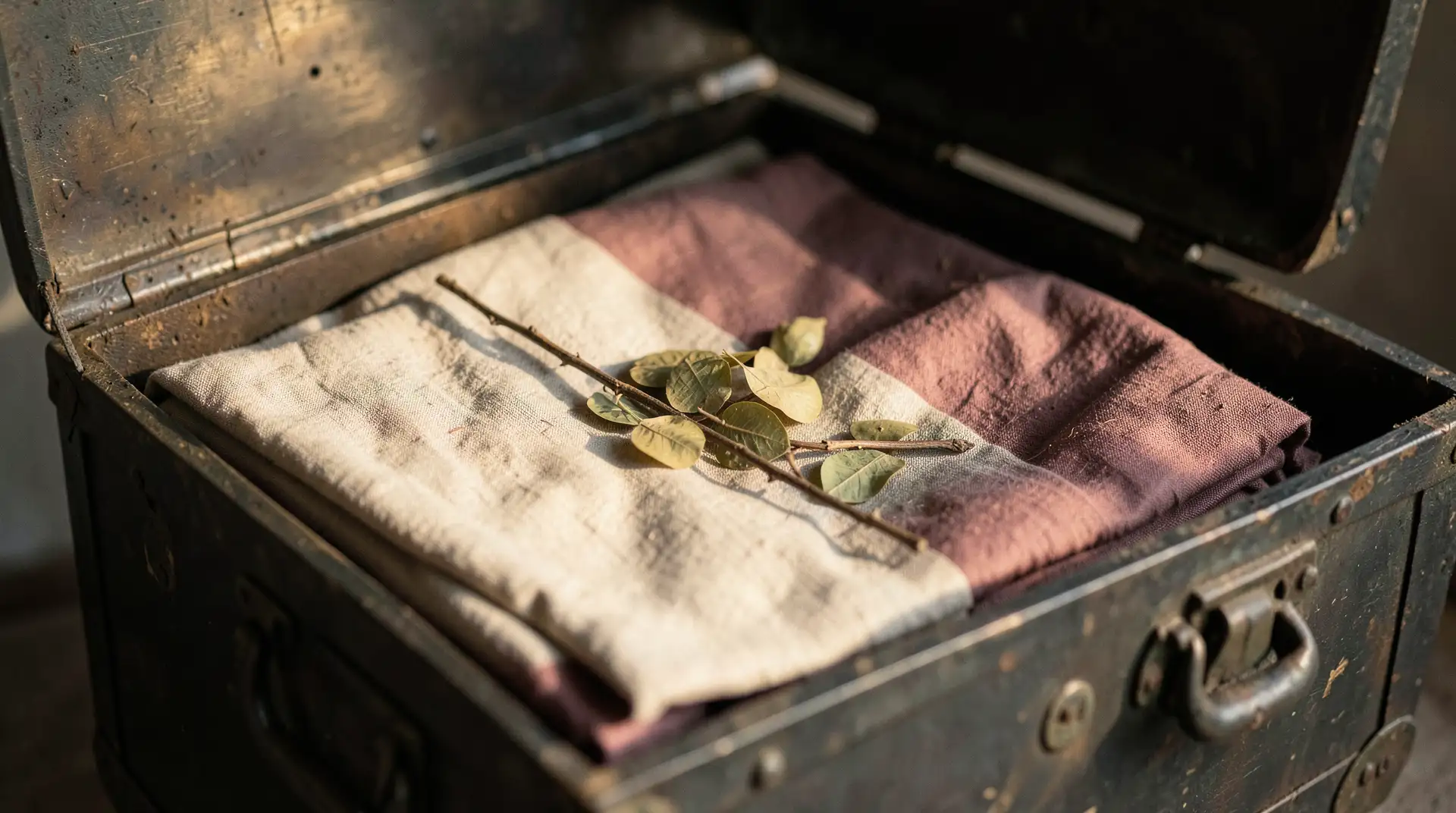
The Problem the Leaves Were Solving
Stored fabric is a feeding ground. Silverfish eat the starch in cotton and silk. Woolens attract moth larvae. In a humid Indian climate, a trunk sealed for months becomes exactly the warm, undisturbed, dark environment these insects need to breed. Before synthetic naphthalene balls became common, households needed something that worked, cost nothing beyond the effort of picking it, and did not leave a chemical residue on cloth worn next to skin. Neem was already in the courtyard.What Neem Actually Contains
The neem tree produces a compound called azadirachtin, concentrated in its seeds but present in smaller amounts across its leaves. Azadirachtin interferes with the moulting cycle of insects, the process by which larvae shed their skin to grow. An insect that cannot moult cannot mature and cannot reproduce. The dried leaves also release volatile oils as they slowly desiccate, and these oils act as a contact and fumigant repellent for several common household pests. The bitterness that makes neem leaves unpleasant to eat is the same chemistry that makes them inhospitable to insects. Drying the leaves concentrates the oils rather than destroying them, which is why dried leaves work and fresh ones would simply rot and stain.Why the Trunk, Specifically
The steel trunk or wooden sandook created a semi-sealed environment. Airflow was low, which meant the volatile compounds released by the leaves built up rather than dispersing. A few handfuls of dried leaves placed between layers of folded cloth were enough to maintain a concentration that deterred insects throughout the trunk. The same logic applied to the heavy wooden almirahs found in older homes, drawers lined with neem leaves, or a few sprigs tucked into the corners. The placement was deliberate: leaves between layers rather than only at the bottom, so the protection was distributed through the stack of cloth rather than confined to one level.What Else the Leaves Did
Neem has antifungal properties as well. In humid months, stored cloth is vulnerable to mildew, a slow grey bloom that weakens fibre and leaves a smell that washing rarely fully removes. The oils in neem leaves inhibit the fungal growth that causes this. Grandmothers who kept neem in the trunk were solving two problems at once without necessarily naming either of them. The practice also left the clothes with a faint smell that many insects find aversive on its own, a secondary layer of protection once the cloth left the trunk and was worn or aired.Why It Stopped, and What It Left Behind
Naphthalene balls were cheap, required no preparation, and smelled strong enough to feel effective. They replaced neem in many urban households through the middle of the twentieth century, and later mothballs with different chemistry followed. What was lost in the replacement was a repellent that left no toxic residue, needed no manufacturing, and worked through the same biological mechanism that the neem tree evolved to protect itself. The trunk practice was not folk belief dressed up as remedy. It was applied observation, someone noticed that cloth stored near neem stayed intact, and the habit spread and held for generations because it worked. The chemistry that explains why it worked was identified much later, but the observation came first.Next Story