
Why Indian Cooks Drop Cut Brinjal and Potato Into Water

A cut brinjal left on the chopping board turns brown within minutes. A peeled potato does the same. Both vegetables share a vulnerability that water quietly fixes, and most cooks learn the habit before they ever learn the reason.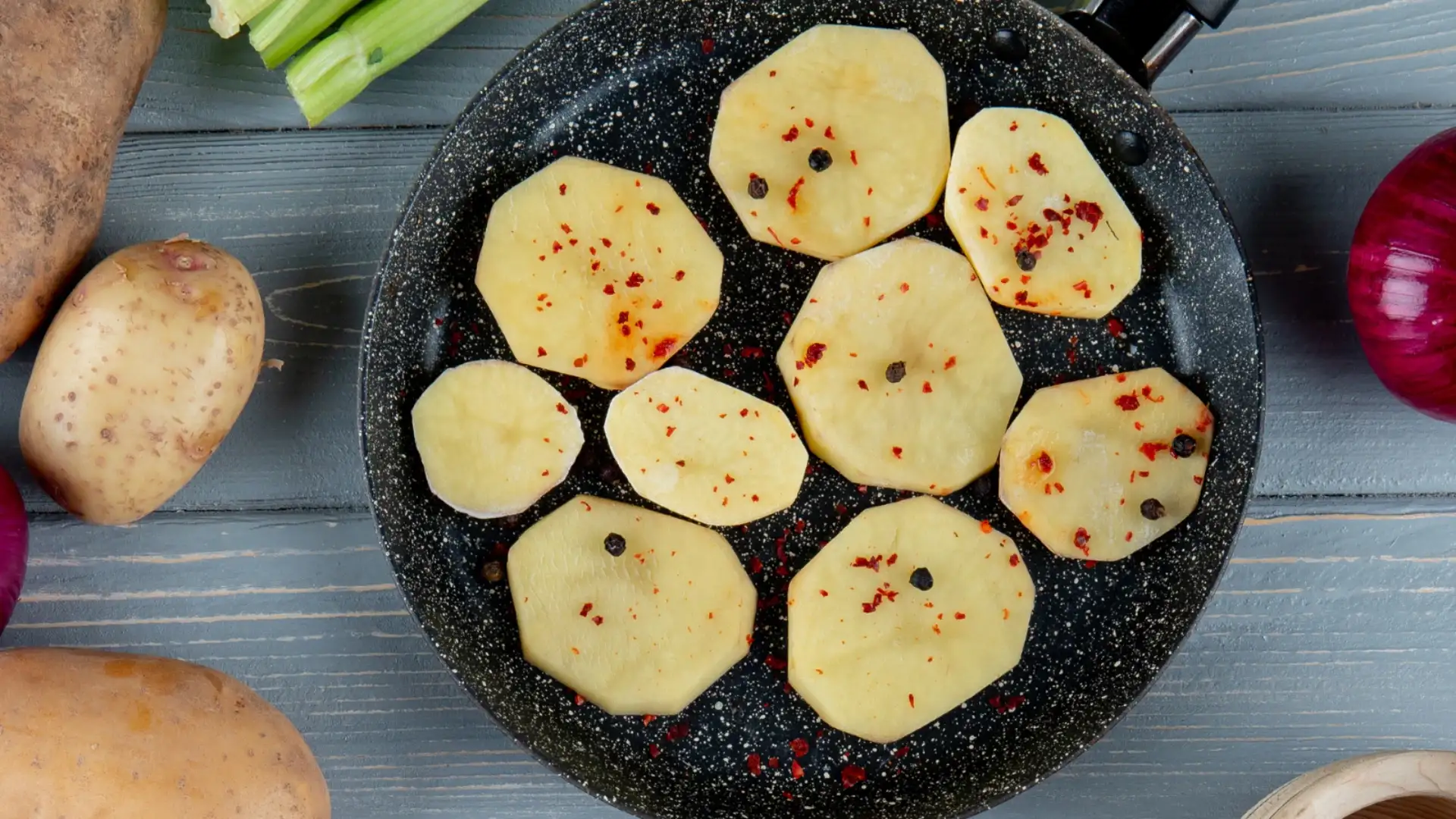
The browning is not rot. It does not make the vegetable unsafe to eat. But it changes the texture slightly, gives the flesh a bitter edge, and turns a pale curry a muddy, unappetising colour.
The water does not deactivate the enzymes, they are still present when the pieces come out. But cooking does. Heat denatures the enzymes quickly, which is why a potato that browns slightly on the board goes into the pan white and comes out looking exactly as it should.
Some cooks add a pinch of salt or a few drops of lemon juice to the soaking water. Salt draws out a little moisture from the surface, which slightly dilutes the enzyme concentration near the cut edge. Lemon juice lowers the pH, and polyphenol oxidases work poorly in an acidic environment. Both additions extend the window before browning begins, but plain water alone is enough for the time it takes to finish a typical preparation.
There is also a texture consideration with potato. If pieces soak too long, the surface starch washes away entirely, which is actually useful for making crisp fried potatoes, the drier and starch-free the surface, the crisper the result. For a curry, where you want the starch to thicken the gravy slightly, a shorter soak and a good drain is the better approach.
The bowl of water on the Indian kitchen counter is not superstition or ritual. It is a practical solution to a specific chemical problem, arrived at through generations of observation long before anyone named the enzyme responsible.
What Happens the Moment You Cut Them
When a knife breaks open the cells of a brinjal or potato, it exposes enzymes inside those cells, primarily a group called polyphenol oxidases, to the oxygen in the air. These enzymes immediately begin reacting with phenolic compounds also present in the flesh. The product of that reaction is melanin, the same dark pigment responsible for browning in a cut apple or a sliced avocado. The process is called enzymatic browning, and it begins within seconds of the cut.The browning is not rot. It does not make the vegetable unsafe to eat. But it changes the texture slightly, gives the flesh a bitter edge, and turns a pale curry a muddy, unappetising colour.
How Water Stops It
Submerging the cut pieces in water creates a physical barrier between the exposed flesh and the air. Without oxygen, the polyphenol oxidase enzymes cannot complete their reaction. The browning slows dramatically and, for the time it takes to finish the rest of the prep, stops almost entirely.The water does not deactivate the enzymes, they are still present when the pieces come out. But cooking does. Heat denatures the enzymes quickly, which is why a potato that browns slightly on the board goes into the pan white and comes out looking exactly as it should.
You may also like
- Psychology explains why some people are obsessed with crime thrillers: Does their fascination with murder mysteries, serial killers, and dark human behaviour reflect curiosity, a need to solve puzzles or an attraction to the darker side of human psychology?
- Effective Natural Remedies for Reducing Dark Spots
- Kangana Ranaut steals the show at friend's wedding in colourful gharara suit and purple lehenga
- Cricket Brings Players of All Abilities Together for an Inclusive Match in Kolkata
- Moles on the Face: What Makes One Worth a Second Look
Why Brinjal Needs It More Than Potato
Brinjal browns faster and more visibly than potato because it contains a higher concentration of phenolic compounds, particularly chlorogenic acid. It also has a more porous flesh, which means more surface area exposed per cut. A potato, being denser and starchier, browns more slowly, but the starch itself creates a second problem: it oxidises on the surface and turns the flesh gummy and sticky when it dries out. Water prevents both the browning and the stickiness in one step.Some cooks add a pinch of salt or a few drops of lemon juice to the soaking water. Salt draws out a little moisture from the surface, which slightly dilutes the enzyme concentration near the cut edge. Lemon juice lowers the pH, and polyphenol oxidases work poorly in an acidic environment. Both additions extend the window before browning begins, but plain water alone is enough for the time it takes to finish a typical preparation.
The Practical Limits of the Habit
Water soaking works well for the ten to thirty minutes of a normal cooking session. Beyond that, water-soluble vitamins, particularly vitamin C and some B vitamins, begin to leach out of the cut surfaces into the soaking water. For a short prep, the loss is negligible. Leaving cut vegetables submerged for hours, or overnight, is where the habit stops paying off.There is also a texture consideration with potato. If pieces soak too long, the surface starch washes away entirely, which is actually useful for making crisp fried potatoes, the drier and starch-free the surface, the crisper the result. For a curry, where you want the starch to thicken the gravy slightly, a shorter soak and a good drain is the better approach.
The bowl of water on the Indian kitchen counter is not superstition or ritual. It is a practical solution to a specific chemical problem, arrived at through generations of observation long before anyone named the enzyme responsible.






Loving Newspoint? Download the app now
